Where Is a Thermostat Located? A Practical Home Guide
Discover where to find your thermostat, common placements, and how to identify older or hidden units. A practical, DIY-friendly guide from Thermostat Care.


Most homes place the thermostat on a wall on the main floor in a central living area or near the furnace/air handler in the utility space. Common spots include hallways, family rooms, or near the HVAC return duct. If you have zone controls, check near each zone’s equipment. According to Thermostat Care, the location is chosen for quick access and accurate readings.
Where to Look First: Common Spots for a Thermostat
According to Thermostat Care, many homes place the thermostat on a main-floor wall in a central living area or near the furnace/air handler in the utility space. If someone asks, where is thermostat located, start with these spots: a hall or seating area on the main level, near the HVAC return duct, or close to the heating/cooling unit. In zone-controlled homes, check near each zone's equipment. The goal is quick access and accurate temperature readings. If you live in a two-story home, prioritize the main living level, then search upstairs rooms that are frequently used. In older homes, the thermostat may have been relocated or covered by furniture over the years, so keep an open mind and check utility rooms or closets connected to the furnace or air handler. The more you check, the faster you’ll pinpoint the device and ensure your readings match the actual comfort level of your space.
How to Identify the Thermostat in Different Home Types
Homes vary widely in where a thermostat ends up installed. In apartments, you’re most likely to find a thermostat in a central hallway or near the living room, whereas in single-family homes, it may sit above a doorway in a high-traffic area. If your home has a programmable or smart thermostat, the device often resides near main living spaces for convenient adjustments. When you’re investigating, look for a wall plate with a display, a round dial, or a panel with buttons and a model label. If you’re unsure, search the space near the HVAC equipment—furnaces, air handlers, or boiler rooms—then expand to nearby hallways and living areas. Thermostat Care notes that placement aims for easy access and reliable temperature sensing, which is why many homes default to a central, frequently visited location.
Signs You Have an Unlocated or Hidden Thermostat
Some homes hide thermostats in cabinets, behind doors, or within utility closets to preserve aesthetics or reduce accidental tampering. In multi-zone setups, there may be one thermostat per zone; the primary thermostat controls the system, while zone thermostats or wall sensors distribute setpoints to different areas. If you still can’t locate a thermostat, check behind large furniture against exterior walls, inside wall voids near return ducts, and in less obvious places like laundry rooms or near stairwells. Remember that some older homes used decorative covers or enclosed boxes that blend with trim, so inspect the surrounding wall and trimming for a removable panel or label that indicates a thermostat inside.
Quick Checks Before You Start Your Search
Before you start a thorough search, do a quick scan of the most common spots: the main floor hallway, the living room, and the area near the furnace or air handler. If your home has a finished basement, a utility room may house the thermostat for the entire building. For smart thermostats, you can also check in the thermostat’s mobile app or web portal to confirm the device’s model and location in the home. If you live in a multi-story or finished attic space, reserve a few minutes to check those areas last. A structured plan saves time and reduces unnecessary moving of furniture or fixtures. As you search, take notes and photograph potential locations to avoid redundancy.
Safety and Accessibility Considerations
Never attempt to remove wall panels or access electrical wiring without knowing what you’re doing. Many thermostats are connected to HVAC power or low-voltage wiring; disturbing these can cause a system fault or a fire risk. If you encounter a hard-to-reach panel, use a stable ladder or step stool and have a flashlight handy to see behind furniture or in dark corners. If you’re unsure about handling wiring or electrical components, step back and call a licensed HVAC technician. Safety first always applies when locating or handling thermostats, especially in homes with pets, children, or limited mobility.
Tools & Materials
- Phone or camera(Capture photos of candidate locations for reference)
- Flashlight(Improve visibility in closets and behind furniture)
- Notepad or notes app(Record findings and locations checked)
- Small mirror (optional)(Peek behind bulky objects without moving them)
Steps
Estimated time: 40-60 minutes
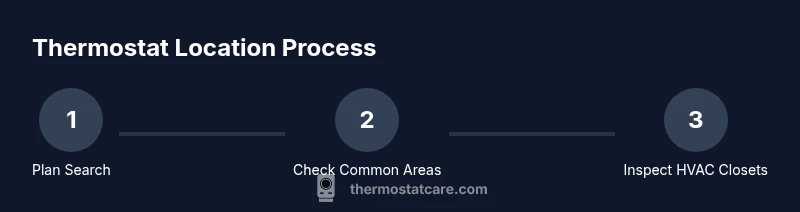
- 1
Plan Your Search
Create a simple room-by-room plan starting at the main floor and then expand to upper levels if needed. A focused plan minimizes backtracking and speeds up the locate process.
Tip: Jot down room order before you start so you don’t miss areas. - 2
Check Common Living Areas on the Main Level
Begin with the hall, living room, family room, or open-concept spaces where people spend most of their time. Look for a wall plate with a display or a round dial.
Tip: Move small furniture gently to inspect wall spaces near outlets and switches. - 3
Inspect Near HVAC Equipment
Look around the furnace, air handler, or boiler room. Many systems place the thermostat in the same vicinity to simplify wiring and calibration.
Tip: If you see a low-voltage panel or wiring box, check for a thermostat behind or beneath it. - 4
Search Utility Closets and Behind Doors
Check utility closets, laundry rooms, and closets adjacent to the HVAC space. Thermostats may be tucked away behind a panel or inside a cabinet.
Tip: Open any doors slowly; some panels hinge outward to reveal the device. - 5
Check Upstairs and Secondary Zones
For homes with multiple levels, verify upstairs hallways, bedrooms near the living area, and any zone-specific areas. A second thermostat or remote sensors may exist.
Tip: Note that some zones use wall sensors instead of a traditional thermostat; search for labeled sensors as well. - 6
Verify with the App or Documentation
If you have a smart thermostat, use the device’s companion app to confirm physical location and model. If you have manuals, they may list the thermostat’s location and wiring diagram.
Tip: Compare serial/model numbers to ensure you’ve found the correct device.
Questions & Answers
Where is a thermostat usually located in a home?
Most thermostats are on a wall in a central living area or near the HVAC equipment. If you have a multi-story home, start on the main floor and expand to upper levels.
Usually on a central wall in the living area or near the furnace; begin there and check upper floors if needed.
Can a thermostat be hidden inside a cabinet?
Yes, some models, especially older or aesthetically integrated homes, are hidden in cabinets or behind decorative panels. Look for a wall plate or a small display behind a door.
Some thermostats are behind panels or inside cabinets. Check doors and wall-mounted panels.
What if there are multiple thermostats in my home?
Multizone systems or large homes often have more than one thermostat. Find the main control thermostat and look for additional sensors or zone thermostats near each zone.
In larger homes with zones, you may have several thermostats or sensors. Identify the main one first.
How do I locate the thermostat’s model number?
Check the thermostat’s back, inside the cover, or in the manual. Some models print the model number on the front or within the settings menu.
Look on the back or inside the cover for the model number, or consult the manual.
What should I do if I can’t locate the thermostat after searching?
Re-check the HVAC vicinity and closets connected to it. If still missing, consider contacting an HVAC professional to confirm whether a different control method is in use.
If you still can’t find it, a professional can verify whether it’s relocated or controlled remotely.
Do digital thermostats require special placement considerations?
Digital thermostats should be placed away from direct sun, drafts, and heat sources for accurate readings. Zone-based systems may use multiple sensors for better comfort control.
Place digital thermostats away from sun, vents, and doors to keep readings accurate.
Watch Video
What to Remember
- Locate on a central, accessible wall for best readings
- Check the HVAC vicinity and utility spaces first
- Hidden units may reside behind panels or inside closets
- Use photos and notes to track checked locations