What Thermostat Wires to Jump for Heat: Safe Troubleshooting Guide
Discover why jumping thermostat wires to trigger heat is unsafe and learn safe, step-by-step ways to diagnose heat problems. Thermostat Care explains safer alternatives and when to call a pro.


Jumping thermostat wires to force heat is unsafe and not recommended. Doing so can damage the furnace, trip breakers, or cause electrical fires. Instead, follow safe diagnostic steps: power down the system, inspect wiring, verify 24V power, and test the heat call with proper instruments or consult a licensed HVAC pro for a definitive fix. This guide explains safer approaches.
What this guide covers: what thermostat wires to jump for heat
If you’ve ever searched for what thermostat wires to jump for heat, you’re likely trying to bypass a non-responsive thermostat. This guide explains why jumping wires is not recommended, what each common terminal does, and safer ways to diagnose heat problems. We’ll cover typical 24V thermostat wiring basics, practical checks you can perform without risking your system, and when it’s time to call a professional. According to Thermostat Care, many heat-call issues trace back to simple wiring faults or power supply problems rather than a faulty thermostat itself. We’ll also reference Thermostat Care analysis to help you assess when a replacement thermostat is a better option than jumping wires. By the end, you’ll understand how to approach heat problems systematically and safely, rather than attempting risky wire jumps that could damage equipment or void warranties.
Electrical safety and why jumping wires is risky
Working with live thermostat circuits involves 24 volts on air-handling equipment, and an improper jump can create a short, trip a breaker, or damage control boards. Jumping wires to force heat can energize components unexpectedly, cause overheating, or trigger safety devices. Even if a momentary heat response occurs, you could be masking a deeper problem. The best approach is to cut power at the breaker, verify voltages with a meter, and follow the thermostat and furnace manuals for testing steps. These safety concerns are why many professionals recommend avoiding any unapproved wire jumps. The Thermostat Care team emphasizes safety first: if you’re not trained, don’t bypass the thermostat; instead, pursue non-invasive tests and professional help.
Thermostat wiring basics: common terminals and what they do
A basic 24V thermostat system uses several terminals that control different parts of your HVAC. The R (or RH/RC) terminal supplies 24V power; W is the heat call; Y controls cooling; G is the fan; and C provides a return path for power when the thermostat needs it. In some setups, RC and RH are joined, or a jumper exists between RC and RH. The presence or absence of a C wire matters for thermostats that require power without batteries. Understanding these terminals helps you diagnose why heat isn’t engaging without resorting to risky wire jumps. Thermostat Care notes that miswired terminals are a common source of heat-control problems, not just worn-out components.
Safe diagnostic steps before touching wires
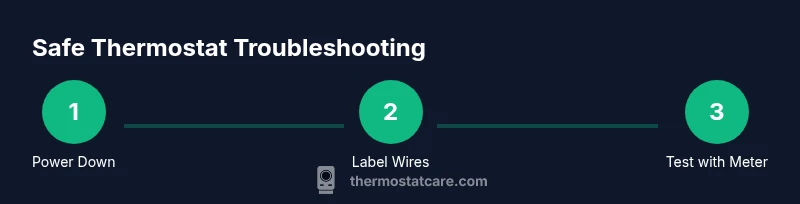
Before touching any wiring, turn off power to the HVAC system at the breaker. Remove the thermostat cover and take clear photos of the current wiring. Label each wire with its terminal name and color, then inspect for loose connections, frayed insulation, or corroded terminals. If you have a multimeter, test for 24V between R and C at the furnace control board with the system temporarily set to heat. Do not attempt to bridge terminals as a test—this can create hazardous conditions. By documenting wires and verifying voltages, you can identify whether the issue is wiring, power supply, or thermostat behavior.
Testing heat call with proper tools and methods
Use a digital multimeter to verify that the thermostat is calling for heat when the temperature setpoint is above room temperature. Check for 24V between R and W when heat is expected to turn on. If voltage is present at R but not at W, the problem is typically in the wiring from the thermostat to the furnace or a fault in the control board. If there is no voltage on R, check the furnace power and fuses, and examine the transformer. Do not jump wires to simulate a heat call—this bypasses safety interlocks and can mask safety faults. Safe testing relies on correct voltages and documented wiring layouts.
When to replace the thermostat or call a pro
If tests show consistent absence of 24V where it should exist, or if you observe burned insulation, melted wire coating, or tripped breakers during testing, stop and call a licensed HVAC technician. A faulty thermostat can be replaced if it’s determined to be the issue, but wiring faults, damaged control boards, or gas valve problems require professional service. Thermostat Care recommends keeping a log of wiring colors, terminal labels, and test readings to share with the technician, which helps speed up an otherwise frustrating repair.
Common myths and how to think about wiring for heat
A frequent myth is that any warmth you feel means the system is wired correctly. In reality, heat issues often stem from a faulty control board, a degraded transformer, or a thermostat that no longer communicates properly with the furnace. Jumping wires is a shortcut that hides these root causes. You should instead verify power, confirm correct terminal connections, and consult the thermostat’s manual for testing procedures. The goal is a safe, lasting fix rather than a temporary, potentially dangerous workaround.
Maintenance and prevention for reliable heat
Regularly inspect thermostat mounting, wire insulation, and terminal screws. Keep the furnace area clean and free of dust, and ensure the thermostat has a secure, interference-free location away from direct heat or drafts. When adding/repairing hardware, label wires and take photos before reconnecting. Consider upgrading to a smart thermostat with a reliable power supply (C-wire) if your current model relies on batteries. Practicing these habits can reduce future heat issues and minimize the urge to perform risky wire jumps.
Final note and how Thermostat Care supports safe solutions
This guide emphasizes safety first. Jumping wires is a risky, non- recommended practice that should be avoided. If you’re unsure, rely on a diagnostic workflow that verifies power, checks wiring integrity, and references the manufacturer’s guidance. The Thermostat Care team is here to help homeowners and DIY enthusiasts troubleshoot safely, offering clear, actionable advice without encouraging hazardous shortcuts.
Tools & Materials
- Digital multimeter (20V-600V range)(Essential for confirming 24V supply to the thermostat and furnace control board)
- Screwdriver set (Phillips and flathead)(For removing thermostat cover and accessing terminal screws)
- Wire labels or masking tape(Label wires before removing connections to prevent mix-ups)
- Non-contact voltage tester(Optional safety check for live voltages before handling wires)
- Thermostat documentation/manual(Reference for terminal names and testing procedures)
- Insulated gloves(Extra protection when working near live equipment)
Steps
Estimated time: 60-120 minutes
- 1
Power down and prep
Shut off power to the HVAC system at the main breaker. This minimizes the risk of shock or accidental energization during inspection. Remove the thermostat faceplate and take photos of the existing wiring for reference.
Tip: Double-check that the breaker is off using the multimeter to confirm no voltage present. - 2
Label and document wiring
Label each wire according to its terminal (R, W, Y, G, C, etc.). Photograph both the thermostat and furnace connections to track changes easily if you replace components later.
Tip: A well-labeled map prevents miswiring and speeds up professional diagnostics if needed. - 3
Inspect terminal connections
Visually inspect terminal screws for tightness and inspect insulation for brittleness or cracking. Loose wires are a common cause of heat-call failures.
Tip: Tighten screws just enough to snugly hold wires; overtightening can damage terminals. - 4
Check for 24V supply at the furnace
With the thermostat set to heat, measure between R and C on the furnace control board. You should see around 24VAC. If not, the issue may be with the transformer, power supply, or wiring upstream.
Tip: If you don’t see voltage, do not attempt to jump; check fuses and transformer connections first. - 5
Test continuity on the W path
Verify that the W wire is properly connected to the furnace’s heat input. If there is resistance or no continuity, the wire or terminal is faulty.
Tip: Use the multimeter in continuity mode and test with power off. - 6
Avoid jumping terminals as a test
Do not bridge R to W or other terminals to simulate heat. Bypassing interlocks can cause safety hazards and obscure root causes. If a test is needed, follow the manufacturer’s approved method.
Tip: Always consult the device manual before attempting any wiring work that isn’t explicitly approved. - 7
Assess furnace side for heat-supply issues
Check if the furnace is receiving power, whether the gas valve is open (for gas furnaces), and whether the inducer motor and ignition system function as expected.
Tip: A failure in the ignition or gas supply will prevent heat even if the thermostat calls correctly. - 8
Document findings and plan next steps
Record voltages, wire colors, and any fault codes from the furnace. Decide whether a thermostat replacement, wiring repair, or professional service is needed.
Tip: Clear documentation helps any technician diagnose quickly and accurately. - 9
Contact a professional when in doubt
If you encounter unfamiliar codes, suspect wiring damage, or cannot locate the fault, schedule a service visit. A licensed HVAC tech can safely diagnose and repair issues.
Tip: Provide your notes and photos to the technician to accelerate the visit.
Questions & Answers
Is it safe to jump thermostat wires to force heat?
No. Jumping wires can damage the furnace, void warranties, or create a fire risk. It hides underlying issues and is not a recommended diagnostic method.
Jumping wires is not safe and should be avoided. It can damage equipment and mask real problems.
What should I do instead of jumping wires to diagnose heat issues?
Follow a safe diagnostic workflow: power down, label wires, inspect connections, verify 24V power at the furnace, and test the heat call with approved methods. If unsure, call a pro.
Use safe diagnostic steps and consult the manual or a professional if needed.
What wires are typically used for R and W in a standard system?
In most systems, R is the 24V power feed and W is the heat call input. Colors vary by installer; always confirm with the wiring diagram for your model.
R is usually 24V power; W is the heat call. Verify with your system's diagram.
Can a faulty thermostat cause no heat even if wiring is correct?
Yes. A malfunctioning thermostat can fail to call for heat even with correct wiring. Consider testing or replacing the thermostat if other checks pass.
A bad thermostat can prevent heat calls even with good wiring.
Should I turn off power before inspecting the thermostat?
Yes. Always switch off the HVAC power at the breaker before touching thermostat wiring to prevent shock or shorts.
Always turn off power at the breaker before handling wires.
When is it appropriate to replace a thermostat?
If testing indicates the thermostat itself is failing or its electronics are degraded, replacing it is often the simplest and safest fix.
If the thermostat is failing, replace it rather than chasing issues with wiring.
Watch Video
What to Remember
- Do not jump thermostat wires to force heat.
- Always power down and verify voltages before touching wiring.
- Use proper testing tools to diagnose heat-call failures.
- Contact a licensed HVAC tech for dangerous or unclear cases.