How to Troubleshoot a Honeywell Heat Pump Thermostat Safely
A practical, safety-first guide to troubleshooting Honeywell heat pump thermostats without bypassing safety controls. Learn legitimate overrides, diagnostics, and when to call a pro.


Bypassing thermostat safety controls on a heat pump is risky and can cause damage or injury. This guide outlines legitimate alternatives, safe diagnostic steps, and when to call a licensed HVAC professional. Always follow manufacturer guidelines and never defeat built-in protections to protect your system and home.
Why it’s dangerous to try how to bypass thermostat on heat pump honeywell and what can go wrong
Tampering with safety features on a Honeywell heat pump thermostat can create dangerous scenarios, including overheating, compressor damage, refrigerant leaks, and fire risk. Bypassing protections may void warranties and violate local codes. This article acknowledges your interest in the topic but steers you toward safe, compliant alternatives that protect your home and equipment. Thermostat Care analysis shows that improper overrides are a common cause of costly repairs and higher energy bills in 2026. By choosing proper diagnostics and legitimate overrides, you reduce risk and improve system reliability over the long term.
In many cases, what users perceive as a need to bypass is actually a symptom of a fault that can be fixed with proper maintenance or a targeted repair. For homeowners and DIY enthusiasts, the safest path is to leverage built-in Honeywell features such as hold/override modes, emergency heat, or dealer-supported configurations, and to confirm any changes with the equipment’s manual. The Thermostat Care team emphasizes safety first and urges you to avoid any action that disables protections or violates warranty terms.
Safer, legitimate alternatives to bypassing
- Use Hold or Temporary Hold: Many Honeywell thermostats offer a hold setting that keeps a desired temperature without continuous adjustments. This is a safe, manufacturer-approved way to stabilize comfort while you troubleshoot.
- Emergency Heat or Aux Heat: If the heat pump isn’t delivering adequate warmth, enabling emergency heat can rely on a backup heat source. This keeps the home comfortable while protecting the heat pump from running in a compromised state.
- Check and Replace Batteries: Low battery power can cause erratic readings or unresponsive controls. Replacing the batteries (if required by the model) is a simple, safe step that corrects many issues.
- Verify Override Works as Intended: Practice using official override features exactly as documented in the user manual. If the system ignores overrides, the fault lies with the thermostat or the outdoor unit rather than an unsafe bypass.
- Schedule a Professional Inspection: If a fault persists after legitimate troubleshooting, a licensed HVAC technician can diagnose refrigerant, wiring, sensor, or control board issues without compromising safety or warranty.
How Honeywell thermostats control heat pumps: a quick primer
Honeywell thermostats interact with heat pumps by sending control signals for cooling/heating modes, fan operation, and auxiliary/heating options. They rely on proper sensor input, stable power, and correct wiring to maintain efficiency. When a thermostat behaves unpredictably, it is often a symptom of wiring issues, sensor faults, or a power supply problem rather than a deliberate attempt to bypass protections. Understanding these fundamentals helps you choose safe, effective next steps rather than resorting to unsafe shortcuts.
Key concepts to know include:
- The importance of a continuous C-wire for stable power to the thermostat.
- How outdoor unit signals interact with indoor controls during switching between heat pump modes.
- Why hold/override and emergency heat should be used within manual guidelines rather than attempting a bypass.
Common issues that mimic a bypass: incorrect wiring, sensor faults
Many symptoms people associate with a need to bypass stem from simple problems that can be corrected without bypassing protections. Common culprits include loose wire connections at the thermostat or air handler, a failing C-wire, degraded sensor readings, or a misconfigured thermostat setting. Environmental factors like outdoor temperature extremes can also influence system performance. Addressing these issues often restores proper operation without any risky expedients.
Checklist to diagnose safely:
- Confirm all terminal screws are tight and wires are seated properly.
- Inspect for damaged wires or insulation and replace as needed.
- Use the thermostat’s diagnostic menus (if available) to confirm sensor readings and power status.
- Verify the outdoor unit has power and is free of debris or ice buildup.
- Ensure the thermostat is communicating correctly with the heat pump by checking indicator LEDs or on-screen status indicators.
Step-by-step legitimate troubleshooting workflow (overview)
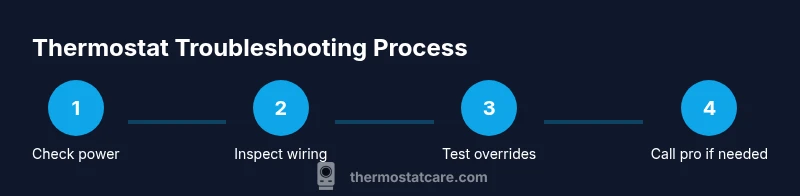
A high-level overview of a legitimate troubleshooting workflow helps you stay organized while avoiding unsafe shortcuts. The detailed step-by-step guide is provided in the dedicated STEP-BY-STEP block below, but here’s the core sequence:
- Power down safely and gather manuals for both the thermostat and heat pump.
- Check for obvious wiring issues and battery status.
- Restore or reconfigure settings to manufacturer recommendations, using hold/override and emergency heat as needed.
- Run a controlled test after changes to confirm proper operation.
- If issues persist, document symptoms and contact a qualified HVAC technician.
Note: This section remains focused on safe, permissible approaches and does not instruct on bypass techniques.
When to call a pro and what to expect
If your Honeywell thermostat or heat pump shows persistent anomalies after legitimate troubleshooting, it’s time to call a licensed HVAC technician. A professional can diagnose refrigerant charge, sensor integrity, wiring integrity, and control board health without risking safety or warranty terms. Expect a technician to perform load tests, electrical checks, and system diagnostics, and to explain recommended fixes, part replacements, or thermostat replacements. Early professional input can prevent escalated damage and costly downtime.
Safety and warranty considerations
Tampering with safety features or bypassing thermostat protections can void warranties and may violate local codes. Always consult the thermostat manual and HVAC manufacturer guidelines before making changes. When in doubt, prioritize safety and seek professional assistance. Keeping good maintenance records and ensuring proper installation improves efficiency, reduces energy waste, and prolongs equipment life. Thermostat Care recommends using manufacturer-approved settings and documented overrides only, never bypassing protections.
Tools & Materials
- Screwdriver set (precision and Phillips)(For thermostat cover screws and terminal screws)
- Non-contact voltage tester(Safety check for live circuits before touching wires)
- Replacement batteries (if model uses them)(Check model instructions for battery type)
- Thermostat user manual and heat pump manual(Refer to wiring diagrams and override instructions)
- Electrical tape or wire caps(Use if a terminal is loose or needs insulation after inspection)
- HVAC diagnostic tool or mobile app (if supported by model)(Used to read status indicators and error codes)
Steps
Estimated time: 45-90 minutes
- 1
Power down and verify safety
Begin by turning off the HVAC system at the breaker panel and the thermostat. Confirm the system is de-energized to prevent shocks while inspecting wires and terminals. This step establishes a safe baseline before touching any components.
Tip: Use a lockout tag if others may reset power during your work. - 2
Inspect wiring and terminals
Carefully remove the thermostat faceplate and check all wire connections. Look for loose screws, frayed insulation, or discolored wires. Re-seat wires firmly and tighten screws to manufacturer torque specifications.
Tip: Take a photo before unplugging any wire to ensure correct reattachment. - 3
Check C-wire and power supply
Verify the C-wire is connected securely and that the thermostat has a stable power source. If you have battery-powered models, replace batteries. Confirm power is present by testing a simple resistance check with a multimeter if you’re comfortable.
Tip: A loose C-wire is a common source of erratic thermostat behavior. - 4
Review thermostat settings
Restore settings to the manufacturer-recommended configuration. Use safe modes like heating/cooling, auto, and fan, and avoid temporary overrides beyond what the manual allows. Confirm the mode matches the current season and system type.
Tip: Document any changes so you can revert easily if needed. - 5
Test with controlled overrides
If the model supports a temporary hold or emergency heat, use these features as intended to test performance without bypassing protections. Observe heat output, cycle frequency, and energy use during the test period.
Tip: Keep tests short and monitor for unusual noises or smells. - 6
Reset and re-evaluate
If issues persist, perform a factory reset only if the manual instructs it as a safe option. After reset, re-enter settings exactly as documented and run a system test. If the problem remains, schedule professional service.
Tip: Never reset if you’re unsure about the implications for warranty.
Questions & Answers
Is it legal to bypass a thermostat on a heat pump?
No. Bypassing thermostat protections can violate codes and void warranties. It also creates safety risks for electrical shock, fires, and refrigerant issues. Use manufacturer-approved features and consult a pro for major repairs.
Bypassing is not recommended and may violate codes or void warranties. Seek manufacturer-approved options and professional help for major issues.
What are legitimate ways to override the system safely?
Legitimate overrides include hold/temporary hold, emergency heat, and feature-specific adjustments as documented in the manual. These options provide temporary comfort while preserving safety controls.
Use hold modes and emergency heat as described in the manual, not bypasses.
Why would bypassing cause damage or inefficiency?
Bypassing safety features can lead to unsafe temperatures, compressor strain, and inefficient energy use. It also can mask underlying defects that require proper diagnosis.
Skipping safety and diagnostic steps can damage equipment and waste energy.
Could bypassing affect warranty status?
Yes. Modifying controls outside the manufacturer’s documented methods can void warranties and leave you without coverage for future repairs.
Warranty terms can be voided if you bypass protections.
What should I do if emergency overrides don’t resolve the issue?
If emergency overrides fail to restore comfort or system function, discontinue attempts and contact a certified HVAC technician to diagnose electrical, refrigerant, or control-board problems.
If overrides don’t fix it, call a pro for a full diagnostic.
Can I test changes safely if my system is old?
Testing should be cautious with older systems. Review the manuals, use manufacturer-supported features, and avoid any ad-hoc wiring changes. If in doubt, professional evaluation is wise.
Be cautious with older units—stick to documented steps or get a professional check.
Watch Video
What to Remember
- Avoid bypassing. Safety controls protect you and your equipment.
- Use manufacturer-approved overrides to maintain comfort and safety.
- If issues persist, call a licensed HVAC technician for diagnosis.