Stuck Open Thermostat Symptoms: DIY Troubleshooting Guide
Learn the symptoms of a stuck open thermostat, why it matters, and a practical, safe step-by-step troubleshooting plan you can follow to restore comfort and save energy.


Most likely cause is a faulty thermostat reading or battery issue causing the unit to call for heat continuously. Quick fix: replace batteries (if battery-powered), reset or recalibrate the thermostat, and check wall wiring connections. If the problem persists, verify the furnace's 24 VAC supply and airflow, or contact a professional. Regular maintenance helps prevent recurrence.
What is a stuck open thermostat and why it matters
A stuck open thermostat is a heating-control issue where the thermostat continuously requests heat, even if your home has reached the desired temperature. This can happen with traditional wired models or modern smart thermostats. When the thermostat stays in the “heat on” state, your furnace or boiler may run longer than needed, driving up energy usage and wearing components faster. According to Thermostat Care, regular maintenance and correct calibration are essential to preventing this scenario. Understanding the symptoms helps homeowners diagnose problems early and reduce uncomfortable temperature swings. The goal is reliable comfort without waste, so recognizing a stuck-open pattern is the first step in an effective fix.
How thermostats regulate temperature in simple terms
Most systems rely on a sensor to read room temperature and a relay that turns the heat on or off. If the sensor misreads, or the relay sticks, the system may overheat the space or fail to reach the setpoint. This is why even a small calibration drift or a loose wire can produce noticeable comfort issues. With the Thermostat Care approach, start with the basics: verify power, readouts, and sensor placement before diving into more involved diagnostics.
Symptoms that commonly accompany a stuck open thermostat
- The furnace runs longer or continuously without reaching the setpoint.
- Some rooms stay warmer or cooler than others despite adjusting the thermostat.
- The thermostat display seems out of date or shows a different temperature than the room.
- Energy bills spike without obvious cause, and you notice more frequent cycling.
- The air from vents is not at the expected temperature, especially when heat is supposed to be on.
- The thermostat may respond slowly to changes or ignore a change in the setpoint.
- In cooling mode, the system may not reach the desired cool, or run the fan continuously.
These symptoms can stem from simple issues like batteries or calibration, but they may also indicate wiring or sensor faults that need attention.
How to spot the least invasive causes first
Start with the easiest checks: replace batteries (if applicable) and verify the thermostat is mounted in a location free from heat sources, drafts, or direct sunlight. A misreading caused by placement is a common culprit. If the readings remain inconsistent after battery replacement and relocation, move to sensor calibration and wiring checks. This orderly approach keeps you from chasing complex fixes when the problem is in simple, fixable areas.
Diagnostic flow you can follow without specialized tools
- Confirm the thermostat power and battery status.
- Compare the thermostat reading to an accurate room temperature with a separate thermometer.
- Check for obvious wiring damage or loose connections at the thermostat and furnace control board.
- Reset or recalibrate the thermostat to factory defaults if available.
- If readings still diverge, inspect the furnace 24 VAC supply and air-flow components like filters and dampers. This flow minimizes unnecessary guesswork and helps you isolate the root cause before calling a pro.
How to perform a safe, step-by-step inspection at the wall unit
Turn off power to the thermostat at the breaker or disconnect the transformer if you’re comfortable. Remove the faceplate and inspect for loose wires, darkened insulation, or corrosion. Re-seat any loose connections and ensure wire colors match the terminal labels. Reassemble the faceplate and restore power. If the display is dim or flickers, or you notice damaged wires, stop and call a professional to avoid electric shock or further damage.
When to escalate to professional help
If basic checks don’t resolve the issue or you’re unsure about working with electrical connections, contact a licensed HVAC technician. A pro can test the furnace control board, confirm 24 VAC supply, and verify sensor accuracy with proper diagnostic tools. Timely professional assessment can prevent overheating, protect safety, and restore efficiency.
Safety and maintenance takeaways
Always turn off power before inspecting wiring. Use a non-contact voltage tester if available. For battery-powered thermostats, keep batteries fresh and avoid mixing old and new cells. Schedule periodic maintenance to keep sensors calibrated and airflow optimized, reducing the chances of a stuck-open thermostat in the future.
Steps
Estimated time: 60-90 minutes
- 1
Power down and safety prep
Turn off the thermostat and shut off power to the thermostat at the breaker if you’ll be inspecting wiring. This reduces the risk of electric shock and protects sensitive electronics. Have a flashlight handy and remove the thermostat faceplate to access wiring.
Tip: Double-check that power is off using a non-contact tester if available. - 2
Check and replace batteries
If your thermostat runs on batteries, replace them with fresh ones. Some models require specific battery types; consult the manual. After replacement, observe whether the display stabilizes and the readings align with room temperature.
Tip: Use high-quality alkaline or lithium batteries; avoid mixing old with new batteries. - 3
Test calibration and reset
If your unit offers calibration options, run the calibration routine or perform a factory reset. This helps ensure the sensor reads actual room temperature. Reprogram your preferred settings after reset.
Tip: Note your settings before reset to re-enter them accurately. - 4
Inspect wiring connections
Carefully reseat wires at the wall unit. Look for loose terminals, exposed copper, or damaged insulation. If you spot corrosion or burn marks, stop and call a pro—these are signs of a potential short.
Tip: Take a photo before disconnecting anything to aid reassembly. - 5
Check mounting location
Ensure the thermostat is not influenced by direct sunlight, kitchen heat, or drafts from doors. Relocate to an interior wall away from heat sources if needed. A proper placement helps the sensor reflect true room conditions.
Tip: Avoid mounting near lamps or outlets that generate heat. - 6
Test system response
Turn power back on and test by adjusting the setpoint. Observe how quickly the furnace responds and whether the room temperature tracks the setting. If there’s still lag or mismatch, proceed to professional testing.
Tip: Let the system run for a full heating cycle to assess accuracy. - 7
Inspect furnace airflow and filters
A clogged filter can cause uneven heating and misreadings. Replace or clean filters, verify blower operation, and ensure vents aren’t blocked. Poor airflow can mimic thermostat issues.
Tip: Record filter replacement intervals to maintain air quality. - 8
When in doubt, call a pro
If the issue persists after these steps, or you’re uncomfortable with electrical work, hire a licensed HVAC technician. They can verify the furnace control board, relays, and 24 VAC supply with proper diagnostic tools.
Tip: Professional help can prevent unnecessary component wear and safety risks.
Diagnosis: Furnace runs longer than normal and fails to reach the thermostat setpoint, or the house never heats to the desired temperature.
Possible Causes
- highBattery-powered thermostat with dying or dead batteries
- highThermostat sensor or calibration drift causing wrong readings
- mediumLoose or damaged thermostat wiring at the wall unit
- mediumIncorrect thermostat placement near heat sources or drafty areas
Fixes
- easyReplace thermostat batteries (if battery-powered) and verify the display shows consistent temps
- easyRecalibrate or reset the thermostat to factory settings and re-check readings
- mediumInspect wall wiring with power off; reseat connections and look for damaged insulation
- hardRelocate thermostat away from heat sources, drafts, or direct sunlight; ensure proper mounting on an interior wall
- hardIf issues persist, contact a professional HVAC technician to test the furnace control board and 24VAC supply
Questions & Answers
What are the most common signs that my thermostat is stuck open?
Common signs include the furnace running longer than normal, rooms not reaching the set temperature, and a thermostat display that doesn’t match the room temperature. Energy bills may rise as a result. A calibration or wiring issue is often the culprit.
Common signs are extended furnace runs, temperature mismatch, and rising energy bills. Often it's a calibration or wiring issue.
Can a stuck open thermostat pose safety risks?
While not always dangerous, extended furnace operation can overheat spaces and place strain on the system. In rare cases, faulty wiring can lead to electrical hazards. If you detect burning smells or smoke, evacuate and call emergency services, then a pro.
Extended operation can stress the furnace and wiring. If you smell burning, seek help immediately.
Is a dead battery usually the cause?
Dead or dying batteries are a common cause for battery-powered thermostats. Replacing the batteries and ensuring proper contact often resolves misreadings. If the issue persists, look at calibration and wiring next.
Battery issues are common; replace them first, then check calibration and wiring.
What should I do if recalibrating doesn’t fix the issue?
If recalibration doesn’t fix the problem, check wiring for loosening or damage and verify the 24 VAC supply to the furnace. If readings still don’t align with room temperature, a professional inspection is advised.
If recalibration fails, inspect wiring and the furnace power supply, then call a pro if needed.
When should I replace a thermostat?
Consider replacement if the thermostat is old, lacks calibration options, or frequently misreads despite fixes. Modern thermostats offer better sensors and diagnostics that improve accuracy and efficiency.
Replace if old or frequently inaccurate; new models offer better sensors.
Can I fix this myself, or is a pro required?
Many basics are safe for DIY, such as battery replacement and calibration. For wiring, battery-powered models, or suspected control-board issues, consult a licensed HVAC technician.
DIY basics are possible, but call a pro for wiring or control-board concerns.
Watch Video
What to Remember
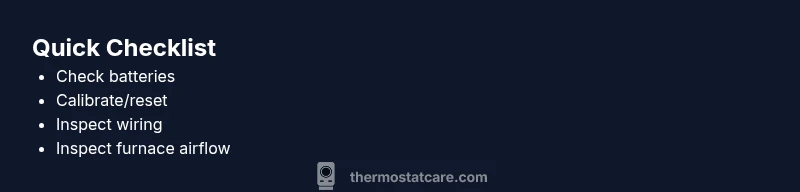
- Identify symptoms early to prevent energy waste
- Start with batteries, calibration, and wiring checks
- Relocate thermostat if placement skews readings
- Call a professional if issues persist after basics