Verdant Thermostat Hack: A Practical Guide to Green, Efficient Comfort
Learn the Verdant Thermostat Hack—a practical, safe method to optimize thermostat settings for comfort and energy savings. This Thermostat Care guide covers step-by-step actions, safety notes, and how to track improvements over time.


The Verdant Thermostat Hack teaches you to optimize your thermostat settings for steady comfort and lower energy use without expensive upgrades. It relies on gradual setpoint adjustments, smart scheduling, and careful monitoring of indoor comfort. Follow the steps to implement safely with your existing equipment. No special tools are required, and results build gradually. This helps protect warranty and maintains comfort.
What is the Verdant Thermostat Hack?
According to Thermostat Care, the Verdant Thermostat Hack is a practical approach that uses conservative setpoint adjustments, strategic scheduling, and mindful monitoring to lower energy use without compromising comfort. The essence is to treat your thermostat as a dynamic tool rather than a fixed device. By making small, reversible changes and tracking results, you avoid dramatic shifts that could lead to discomfort or wasted effort. This method works with most standard heat and cool systems and can be implemented with your existing hardware. The goal is to create a greener, more comfortable home by aligning operation with real-world conditions, outdoor temperatures, and occupancy patterns. The Verdant approach emphasizes gradual improvements, documented progress, and safety—never modify wiring or hardware without explicit manufacturer guidance.
Why It Works: Energy Efficiency Principles
The hack rests on core energy-saving principles: reasonable setback without sacrificing comfort, leveraging adaptive scheduling, and using the thermostat’s built-in energy-saving modes. By aligning setpoints with outdoor temperature trends and occupancy, you reduce unnecessary heating or cooling cycles. The Verdant method also emphasizes hysteresis (the gap between on/off thresholds) to prevent rapid cycling, which wastes energy and shortens equipment life. Thermostat Care advocates starting with conservative changes and validating them over a full day or two before expanding. Even without a smart thermostat, many models offer eco or away modes that can be tuned for gradual savings.
When to Try This Hack and What to Expect
If you’re seeking modest, sustainable reductions in your utility bill without sacrificing comfort, this hack is appropriate for most homes. Expect slow, steady gains rather than instant dramatic drops. The approach works best when you implement in increments, monitor daily comfort levels, and review energy data weekly. In climates with large seasonal swings, you’ll want to re-evaluate settings each season to maintain balance between warmth, coolness, and energy use. The payoff comes from consistent, repeatable adjustments that fit your daily routine. Thermostat Care emphasizes patience and careful observation as the core of successful implementation.
Safety, Compatibility, and Warranty Considerations
Safety and compatibility come first. Do not alter wiring or internal components, and follow manufacturer guidance for any advanced features. Check that your thermostat supports the eco, away, or schedule modes you plan to use. If you rely on nonstandard battery types or third-party accessories, revert to factory settings if you notice any erratic operation. For homes with heat pumps or multi-stage systems, some settings may behave differently; consult your system manual or a licensed technician for guidance. Thermostat Care notes that incremental changes, not drastic rewrites, preserve equipment longevity and warranty terms.
Baseline Measurements: How to Track Savings
Before you begin, capture a baseline: average indoor temperature during typical occupancy, thermostat setpoints, and daily energy usage (from the thermostat or energy provider app). Record this data for at least one week. Use a simple log to compare weekly averages after each adjustment. You should also note subjective comfort—how you feel at night, during afternoon heat, and during early morning cooling. The goal is to create a repeatable pattern that you can sustain through changing seasons while maintaining comfort.
Designing Your Green Schedule: High-Level Overview
Think of the Verdant Hack as a design problem: you want a schedule that minimizes energy waste while preserving comfort. Start with small, reversible changes to your heating and cooling setpoints, and plan a gradual sequence of schedule tweaks aligned with occupancy. If your thermostat offers adaptive or learning capabilities, enable them with caution and review performance after a defined period. Use energy-savings data to refine routines, keeping a close eye on how adjustments affect both energy consumption and daily comfort.
Common Pitfalls and How to Avoid Them
Common mistakes include setting functions too aggressively, ignoring comfort in pursuit of savings, and failing to log results. Another pitfall is turning off comfort modes entirely or disabling planned schedules during busy weeks. To avoid these, implement changes in 1–2 degree increments, document daily comfort levels, and reassess after a full 7–14 day cycle. If you notice persistent cold spots or overheating, pause the changes and revert to a safer baseline.
Integrating with Smart Thermostat Features
Smart thermostats offer additional control without sacrificing safety. Use features like geofencing, occupancy detection, and learning algorithms to support gradual savings. Keep notifications on to monitor unexpected temperature swings and adjust as needed. If your system supports remote monitoring, you can review energy data more frequently and tailor settings for weekends or holidays when routines differ from weekdays.
Maintenance, Review, and Long-Term Results
Set a quarterly review to reassess your Verdant strategy. Revisit baseline data, compare season-over-season usage, and adjust setpoints as outdoor temperatures shift. Maintain a running log of comfort notes and energy metrics so you can demonstrate gains over time. The long-term objective is a sustainable, comfortable home that uses energy in a more intentional, efficient manner. Thermostat Care suggests documenting adjustments and outcomes to build a repeatable improvement cycle.
Tools & Materials
- Thermostat with adjustable setpoints(Any standard thermostat that supports manual scheduling and eco modes.)
- Smartphone or computer for app access(Used to review energy data and adjust settings remotely if available.)
- Notebook or energy log sheet(Record daily temps, setpoints, and comfort notes.)
- Weather or outdoor temperature source(Helps correlate outdoor temps with indoor settings.)
- Stable Wi-Fi (optional for smart features)(Enables remote monitoring and data syncing.)
Steps
Estimated time: 3-6 weeks
- 1
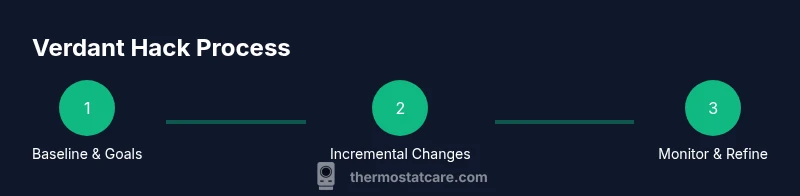
Identify baseline comfort and energy goals
Document current thermostat schedule, typical indoor temperatures, and daily energy use. Note times of day when comfort feels optimal or uncomfortable. Establish a modest target (e.g., maintain comfort while reducing energy use by a small margin).
Tip: Log a week of baseline data before changing any settings. - 2
Check thermostat compatibility and modes
Review your device’s manual to ensure it supports eco, away, and scheduling modes. Enable any available energy-saving features and disable settings that could conflict with new changes.
Tip: Avoid disabling safe modes that prevent overheating or freezing. - 3
Set conservative initial setbacks
Choose a gradual adjustment to heating and cooling setpoints—start with small, reversible changes. Monitor how these affect comfort during peak times.
Tip: Make only one change at a time to isolate effects. - 4
Enable eco/away scheduling where possible
Activate energy-saving schedules that align with occupancy. If your thermostat has a learning mode, use it selectively and review its impact after a full day.
Tip: If away mode isn’t accurate, adjust locations or timing for weekends. - 5
Implement a staged rollout of tweaks
Roll out changes in 1–2 step increments over 1–2 weeks. Keep logging temperatures and comfort notes so you can track trends.
Tip: Don’t rush; small per-week changes yield clearer results. - 6
Monitor energy data and comfort daily
Review energy usage and indoor temperatures each day. Note any uncomfortable periods and adjust as needed. Use utility app dashboards if available.
Tip: Use a consistent time window for comparisons (e.g., evenings). - 7
Review data after 2–3 weeks and adjust
Compare current data to baseline. If savings are not evident without discomfort, revert to a safer setting and reassess.
Tip: Be prepared to revert to baseline if comfort degrades. - 8
Refine to a sustainable schedule
Finalize a regular schedule that balances comfort and efficiency. Document the final settings and maintain ongoing reviews for seasonal changes.
Tip: Keep a simple changelog for easy reference.
Questions & Answers
What is the Verdant Thermostat Hack?
The Verdant Thermostat Hack is a safe, incremental approach to optimize thermostat performance by adjusting setpoints and schedules while monitoring comfort and energy use.
It's a safe, gradual method to optimize your thermostat without hardware changes.
Is this hack suitable for all HVAC systems?
Most standard heat/cool systems benefit from gradual adjustments, but always review your system manual and manufacturer guidelines before changing major settings.
Usually yes, but check your equipment guidelines first.
Will this void my thermostat warranty?
If you stay within the manufacturer’s recommended settings and avoid wiring changes, warranty terms should remain intact.
You typically won’t void the warranty if you follow official settings and safety guidelines.
How soon will I see energy savings?
Savings build gradually; you may notice trends within a couple of weeks as patterns become established.
Expect gradual improvements over a few weeks as you fine-tune the schedule.
Do I need a smart thermostat to use this hack?
No, but smart thermostats make tracking data and adjusting schedules easier and more precise.
Smart thermostats help, though they aren’t strictly required.
What are common mistakes to avoid?
Avoid aggressive setbacks, skip tracking, and ignore comfort notes. Document changes and revert if discomfort occurs.
Don’t go too fast or skip logging results.
Watch Video
What to Remember
- Begin with small, reversible changes.
- Track comfort and energy data weekly.
- Use occupancy-based scheduling for efficiency.
- Review results after 2–3 weeks and refine settings.