Verdant Thermostat Override: A DIY Guide to Safe Adjustments
Learn how to safely apply verdant thermostat override for targeted comfort and energy testing. Step-by-step instructions, tools, pro tips, and real-world scenarios from Thermostat Care.


Verdant thermostat override is a temporary adjustment that changes how your thermostat responds to room conditions without altering permanent schedules. It helps you test comfort and energy outcomes during a defined window. According to Thermostat Care, this approach supports careful testing and learning, but should be used sparingly, with documentation and a clear plan to revert to your normal settings after the trial to avoid unintended energy use or equipment strain.
What is Verdant Thermostat Override?
Verdant thermostat override refers to a temporary adjustment to the thermostat's logic that changes when and how it triggers heating or cooling, without permanently rewriting schedules. This lets you test alternate comfort windows or energy-saving regimes for a limited period, such as a workweek or a heatwave. According to Thermostat Care, this approach is most effective when you clearly define a start and end time, a target temperature range, and a plan to revert. It is not a substitute for proper system maintenance, and should be avoided in homes with medical equipment or extreme climate exposure. In practice, you set an override, monitor its effect on comfort and usage, and record the results for future decision-making.
Key takeaways:
- Define a specific window (start/end) for the override.
- Choose a safe, practical temperature range rather than extreme swings.
- Re-enter your normal schedule promptly after testing to avoid waste.
Why Homeowners Use Verdant Overrides
Homeowners use verdant overrides to answer specific questions: Does a warmer daytime window reduce cooling load without sacrificing comfort? Will a cooler early morning period improve overall energy use? Overrides are especially popular during seasonal transitions or when adjusting for guests or unusual schedules. They are most effective when paired with a brief monitoring period and a log of indoor temperatures, outdoor conditions, and energy usage. The Thermostat Care team notes that overrides work best as a diagnostic tool rather than a long-term replacement for routine scheduling. They can help you decide whether a minor permanent tweak is worth the investment of time and comfort.
Safety Considerations and Risks
Override actions carry safety considerations that homeowners should respect. Avoid extenders that bypass critical safety features, such as frost protection or anti-short-cycle safeguards. Never leave overrides active during extreme weather events without monitoring because temperatures outside the set range can stress HVAC components or lead to inefficient operation. Use non-contact testers or a multimeter only if you have the proper training and always consult your thermostat's manual before attempting any wiring. If you notice unusual noises, short cycling, or rapidly rising humidity, revert the override immediately and seek professional help. The goal is safer testing, not permanent risk.
How Verdant Override Helps With Energy Savings
Temporarily shifting the comfort window during peak rate periods can reduce energy consumption without sacrificing daily comfort. Verdant overrides allow you to shift heating to pre- or post-peak hours, or to extend cooling during milder days, while keeping your baseline schedule intact. This approach helps you quantify the impact of small changes and avoid large, permanent alterations that could backfire during extreme weather. When implemented thoughtfully, overrides can reveal opportunities for improved thermostat programming, smart scheduling, and better alignment with utility tariffs.
When to Use Overrides vs Permanent Settings
There are times when a verdant override makes sense and times when it does not. Use overrides for short-term testing, temporary absences, or when guests are in the home and you want to maintain comfort without changing core programming. Conversely, if you notice consistent energy waste or discomfort across multiple seasons, a permanent adjustment to your schedule, temperature bands, or zone settings may be more effective. Always compare override results with your baseline data after the defined window and decide whether a permanent tweak is warranted.
Tools and Precautions Before You Start
Before you activate any override, ensure your thermostat model supports temporary overrides and that you have the user manual handy. Gather essential tools and documentation, including your thermostat’s wiring diagram (if required), a notepad for logging, and a timer to mark the override window. Review the safety notes and ensure kids or pets are not in the testing area during changes. If you feel uncertain about any wiring or configuration, pause and consult a professional rather than proceeding with a risky modification.
Troubleshooting Common Issues During Overrides
If the override doesn’t behave as expected, verify that it’s active for the intended window and that the target temperature range remains within safe operating limits. Check for conflicts with other schedules, smart-home routines, or linked devices that might override your settings. If the system cycles too frequently, reset to the baseline schedule and reattempt with a shorter window. Document any observed anomalies so you can reference them later, and avoid repeating issues in future tests.
Best Practices for Safe Overrides
Always define a clear start and end time, a precise temperature range, and a specific testing objective. Keep overrides brief, ideally under 72 hours, and never exceed recommended temperatures. Maintain a written log of the override plan, the results, and the final decision on whether to keep or discard the change. Regularly review energy data from your thermostat app to verify that the override is delivering the anticipated benefits and that there are no hidden costs or comfort losses.
Real-Life Scenarios and Case Studies
Imagine a family experiencing hot afternoons during a heatwave. A verdant override could temporarily raise the cooling setpoint during peak afternoon hours, then revert. Over a week, you compare indoor comfort and energy usage with and without the override to determine if a minor permanent adjustment is worthwhile. In another scenario, a household with a variable schedule tests a warmer morning window to reduce morning cooling demand while keeping evenings comfortable. Documented outcomes help you make informed decisions about future programming and potential upgrades.
Tools & Materials
- Digital multimeter(Verify wiring and voltage within safe range before changes)
- Screwdriver set (Phillips and flat-head)(For wall plate and access panel removal if needed)
- Notepad and pen(Document original settings, changes, and results)
- Non-contact voltage tester(Optional safety check for exposed wiring)
- Thermostat manual for your model(Reference specific override features and safety cautions)
- Fine-tip permanent marker(Label wires or settings for future reference)
Steps
Estimated time: 60-90 minutes for setup and initial testing, plus 24-72 hours for monitoring
- 1
Prepare and identify override options
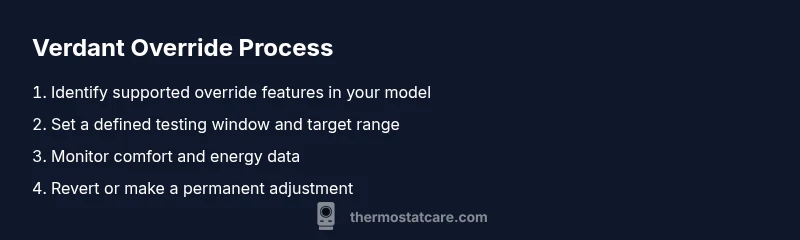
Consult your thermostat manual to confirm whether temporary overrides are supported and how they’re accessed. Note the current baseline settings so you can compare results after testing. Create a defined testing window with a start and end time and a target temperature range.
Tip: Document the baseline exactly as shown on the device display before making any changes. - 2
Set a defined override window
Enter the override mode and set the window duration (e.g., 48 hours). Align the window with the time you expect the most control over comfort or energy costs, and ensure it ends before regular busy periods resume.
Tip: Use a timer or calendar reminder to avoid forgetting the override window. - 3
Configure the target temperature range
Select a safe, comfortable range within your typical daily temperatures. Avoid extreme shifts that could stress your HVAC or cause discomfort for occupants.
Tip: Aim for modest adjustments (1–3 degrees) and document the exact numbers. - 4
Document original settings and changes
Record the exact starting values, override parameters, and any notes about weather or occupancy. This log is your reference for deciding whether a permanent change is warranted.
Tip: Keep the log in a dedicated file or thermostat app note for easy lookup. - 5
Monitor performance over the defined period
During the override, check indoor comfort, energy usage, and any unusual equipment behavior. If possible, snapshot the thermostat readings at the same times each day.
Tip: Expect 24–72 hours for meaningful data; longer tests yield clearer conclusions. - 6
Revert overrides or convert to a permanent setting
At the end of the testing window, restore the original schedules or decide on a permanent adjustment. Update your logs with conclusions and any planned changes.
Tip: If you decide on a permanent change, implement it during a low-stress period (not a hot or cold front).
Questions & Answers
What is verdant thermostat override and when should I use it?
Verdant thermostat override is a temporary change to thermostat behavior to test different comfort and energy outcomes without permanently altering schedules. Use it for short-term testing with a defined window and ensure you revert afterward. Always consult the manual and prefer testing during milder conditions.
Verdant thermostat override is a temporary change to test comfort and energy outcomes without permanent changes. Use it for short-term testing with a defined window and revert afterward.
Is a verdant override safe for energy savings?
Yes, when used prudently. A well-planned override can reveal how small adjustments affect energy use, helping you optimize permanent settings. Avoid long, frequent overrides and monitor for any adverse effects on comfort or equipment.
A well-planned override can show how small changes affect energy use, guiding permanent optimizations.
How long should an override last?
Aim for a testing window of 24 to 72 hours to gather meaningful data. Shorter windows may miss patterns related to daily temperature swings, while longer overrides increase the risk of discomfort or inefficiency.
A 24 to 72 hour testing window provides meaningful data while minimizing risks.
Will overrides affect my warranty or maintenance plan?
Temporary overrides typically do not void warranties, but altering electrical connections or bypassing safety features can. Always follow your model’s safety guidelines and consult a technician if you’re unsure.
Overriding alone usually won't void a warranty, but avoid bypassing safety features and consult a pro if unsure.
What if the override causes discomfort or high energy use?
If comfort worsens or energy use spikes, revert immediately. Use the log to adjust targets or pause testing until conditions stabilize.
If comfort worsens or energy spikes, revert and reassess your targets.
Which thermostat models support verdant override features?
Most modern programmable thermostats offer some form of temporary override. Check your specific model’s manual for access steps and safety notes before attempting.
Most modern thermostats support temporary overrides; check your model’s manual.
Watch Video
What to Remember
- Define a clear override window with safe targets.
- Document baseline settings and all changes for comparison.
- Monitor results for 24–72 hours before deciding on permanence.
- Revert to normal schedules promptly after testing to avoid waste.