How to Use a Thermostat to Prevent Pipe Freezing
Discover how a thermostat to prevent pipe freezing protects your home in winter. This Thermostat Care guide covers minimum temperatures, smart scheduling, and practical steps for homeowners.


Using a thermostat to prevent pipe freezing helps maintain safe, steady temperatures in vulnerable spaces during cold snaps. This guide outlines setting a reliable minimum temperature, creating winter schedules, and leveraging smart features to receive frost alerts. Follow practical steps from Thermostat Care to shield pipes from freezing risk.
Why a thermostat helps prevent pipe freezing
According to Thermostat Care, maintaining consistent indoor temperatures is a proven method to protect pipes in unheated spaces. A thermostat that can enforce a true minimum temperature reduces the risk of condensation and freezing in basements, crawl spaces, and uninsulated closets. By setting a safe baseline (for example, a minimum of 55–60°F in vulnerable areas), you create a thermal buffer that helps pipes stay above freezing. This section explains the science behind frost formation and how thermostats influence heat distribution, airflow, and pipe warmth. It also discusses how heat rises and how the cold zones around exterior walls are more prone to freezing, making targeted thermostat control essential. In practical terms, this means planning heating zones, choosing a device with robust scheduling, and ensuring your home’s insulation supports your thermostat strategy. When you commit to a steady temperature, you reduce the likelihood of pipe damage and water leaks, which aligns with Thermostat Care's recommendations.
The key concept is simple: a thermostat to prevent pipe freezing creates a thermal buffer that minimizes temperature drops near pipes. If your home has exposed pipes in unheated spaces, a properly configured thermostat reduces the chance of freezing without increasing energy waste. This approach also helps extend your heating system's life by avoiding abrupt temperature fluctuations that stress equipment. For homeowners, the takeaway is to pair temperature controls with sensible insulation and pipe protection to maintain steady warmth year-round.
Decide on a safe minimum temperature and zones
Choosing a safe minimum temperature for vulnerable zones is your first line of defense. In many homes, maintaining a conservative baseline in basements, crawl spaces, and unheated garages helps prevent freezing without overheating living areas. If you have a zone-based system, set higher minimums for those risk zones while allowing living spaces to operate normally. Consider how pipes are routed in your house and target the coldest segments first. In practice, this means configuring each zone to hold a stable baseline and not letting exterior walls become cold traps. Thermostat Care emphasizes balancing comfort with protection: a minimal, reliable temperature in critical areas is often more effective than blanket heating. Finally, keep a note of the precise pipe routes so you can tailor the zone strategy to your home’s layout.
Extreme cold or wind-driven nights can challenge any system. In those cases, ensure your minimum temperature remains above the point where condensation forms or pipes may freeze. If you’re unsure, consult your thermostat’s manual to locate the “minimum temperature” setting and verify it is active during winter months. A well-planned baseline reduces the risk of frozen pipes and aligns with best practices recommended by Thermostat Care.
Program schedules and smart features to stay warm
Smart and programmable thermostats are powerful allies against freezing pipes. Use simple, repeatable schedules that keep at-risk zones above your minimum baseline while letting warmer zones operate on your regular schedule. For example, you can program a weekday pattern with a slightly higher minimum during cold mornings and evenings, then revert to a moderate baseline overnight. If your thermostat supports adaptive or learning features, enable them to adjust temperatures in response to historical patterns and weather data. Many smart thermostats offer frost alerts; enable push notifications or email alerts if a sensor detects temperatures trending toward freezing. If your system integrates with a mobile app, test remote access so you can modify settings quickly during cold snaps. The goal is to create a reliable, actionable routine that prevents pipes from freezing without requiring manual intervention every day.
Seasonal adjustments for winter and cold snaps
Winter requires proactive adjustments. As outdoor temperatures drop, increase the minimums in exposed zones and ensure away modes don’t unintentionally lower temperatures in protected areas. If you travel or you have seasonal occupancy, program your thermostat to maintain safety margins even when the house is empty. Check your weather app integrations and consider setting a higher baseline during prolonged cold spells. Thermostat Care recommends reviewing your winter settings at the start of each season to confirm that all zones reflect the same safety goals. A small upfront configuration now saves costly pipe repairs later and provides peace of mind during extreme weather events.
Special considerations for unheated spaces and pipes
Unheated spaces like basements, attics, and garages require extra attention. Insulate exposed pipes with foam sleeves and consider adding heat tape in areas where insulation is poor. Use your thermostat to maintain a consistent temperature, but recognize that uninsulated pipes may still require additional protection. If you have the ability to install zone-specific thermostats or controls for these spaces, do so. Thermostat Care notes that while a thermostat helps, layering protections—insulation, pipe wrap, and controlled heat in critical zones—offers the strongest defense against freezing. Always verify that any heat sources in unheated spaces are safe and code-compliant.
How to configure a programmable or smart thermostat for frost protection
Start by locating the minimum temperature setting for each zone. Set a baseline that keeps pipes warm without overdriving living areas. Enable frost alerts and weather-based adjustments if available. Create a winter routine that maintains minimal warmth in risk zones during nights and cold mornings, with a slight increase during heavy cold snaps. In systems with multiple sensors, ensure the sensors closest to pipes drive the temperature decisions rather than a single room sensor. If you rely on app-based control, test the remote change flow to confirm you can respond quickly to forecasted cold periods.
Monitoring, testing, and maintenance
Regularly review the temperature logs and sensor readings to confirm that your minimum temperature is consistently reached. Test alerts by simulating a moderate cold period and verify you receive notifications. Check seals and insulation annually, especially after home projects or renovations. If you notice piping near freezing despite a configured baseline, consider tightening insulation and adjusting the zone strategy. A proactive approach with monitoring and yearly maintenance helps ensure long-term protection without surprises. Thermostat Care recommends documenting seasonal changes and the outcomes so you can refine the setup year after year.
Common mistakes and myths
Relying on a single thermostat in a large home without zoning is a frequent cause of pipe freezing risk. Do not assume that living room warmth will protect pipes in other zones. Another error is setting too high a temperature to compensate for uninsulated areas, which wastes energy. Don’t ignore frost alerts or weather-driven settings; these features are there to help you prevent costly damage. Finally, avoid turning off heat entirely in extreme cold; even brief drops can freeze pipes if pipes are poorly insulated. Correct use of a thermostat with proper zoning, insulation, and protective measures provides the most reliable protection.
Tools & Materials
- Thermostat with minimum temperature setting(Prefer a model with remote access and explicit minimum temperature control for unheated zones.)
- Smartphone or computer for thermostat app(Needed to monitor, adjust, and receive frost alerts remotely.)
- Pipe insulation (foam sleeves or heat tape)(Protect exposed pipes in basements, crawl spaces, and garages.)
- Additional room/pipe sensors (optional)(Helps ensure pipe zones are actually kept above the threshold.)
- Basic safety gear (gloves, flashlight)(Useful when inspecting hard-to-reach pipes.)
Steps
Estimated time: 45-75 minutes
- 1
Identify at-risk pipes and zones
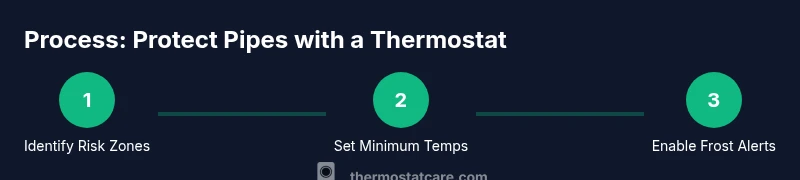
Walk through your home and map pipes in basements, crawl spaces, attics, and exterior walls. Mark which zones will be most vulnerable during winter. This helps you tailor the minimum temperature per zone and avoid wasting energy in safe living areas.
Tip: Note pipe routes and insulation gaps to inform your thermostat strategy. - 2
Set a conservative minimum temperature for risk zones
Configure each identified zone to hold a safe baseline temperature during winter. If your system supports per-zone min temps, apply higher baselines to unheated spaces. This creates a thermal buffer that helps keep pipes above freezing.
Tip: If in doubt, start with a modest baseline and adjust after monitoring for a week. - 3
Program schedules for winter months
Create weekday and weekend schedules that keep at-risk zones above minimums during overnight and early mornings. Enable auto-adjustments when weather data indicates a cold front is coming.
Tip: Use away or frost-avoidance modes when you’re away for extended periods. - 4
Enable frost alerts and weather integrations
Turn on frost warnings and connect the thermostat to a weather service. Alerts will notify you if temperatures approach the risk zone, allowing quick action.
Tip: Test alerts monthly to ensure notifications work on your devices. - 5
Protect unheated spaces with insulation as needed
Add pipe insulation and seal leaks around doors and ducts that lead to cold spaces. A thermostat helps, but insulation reduces the load on the heating system.
Tip: Even small insulation improvements can significantly reduce heat loss. - 6
Test the setup by simulating cold conditions
Temporarily lower a zone's temperature and observe sensor readings and app alerts. Confirm that the system maintains the baseline and reports anomalies.
Tip: Don’t actually freeze pipes; perform controlled tests with your system set to safe levels. - 7
Review and adjust seasonally
Revisit your minimum temperatures before winter peaks. Update schedules based on seasonal weather trends and occupancy changes.
Tip: Keep a simple log of changes to track what works best. - 8
Maintain and document protections
Schedule annual inspections of insulation, seals, and pipe placements. Document the baseline settings for quick future adjustments.
Tip: A written plan reduces the effort needed for future winters.
Questions & Answers
What minimum temperature should I set to prevent frozen pipes?
A conservative approach is to keep vulnerable zones above the temperature where water freezes. In many homes this falls in the mid-50s to low-60s Fahrenheit, but you should tailor it to your house layout and pipe locations. Always use zone-based minimums for best protection.
Keep risk areas warm enough to avoid freezing; adjust based on your home layout and pipe locations.
Can a smart thermostat automatically prevent freezing without user input?
Smart thermostats can automate frost protection by using weather data, occupancy signals, and frost alerts. However, you should review and customize the settings to ensure zones housing pipes stay protected, rather than relying on auto alone.
Yes, many smart thermostats can manage frost protection automatically, but you should tailor the rules to your home.
Should I leave taps dripping to prevent freezing?
Continuous dripping is a last-resort measure when pipes are already at risk. For most setups, maintaining a safe minimum temperature with insulation is sufficient. Drips can waste water and cause other issues, so use this only if recommended by a professional.
Taps should only drip if there’s an urgent risk and after checking local guidance.
What if I have unheated spaces like a garage or attic?
Treat unheated spaces as high-priority zones for temperature control and insulation. Use pipe insulation and ensure the thermostat can maintain a safe baseline in those areas.
Unheated spaces need extra protection with insulation and thermostat settings.
How can I verify my thermostat is actually keeping pipes warm?
Check a combination of sensor readings, pipe temperatures, and frost alerts. If you notice drops in zone temperatures or sensor errors, adjust the minimums and verify insulation.
Check sensors and alerts to confirm pipes stay warm, and adjust as needed.
Watch Video
What to Remember
- Set a safe baseline in risk zones before winter
- Use per-zone scheduling to protect pipes efficiently
- Enable frost alerts and weather-based adjustments
- Insulate exposed pipes for strongest protection
- Regularly review and adjust settings seasonally