Thermostat Test: Step-by-Step Home Troubleshooting
Learn how to test your thermostat for accurate readings and reliable control. This Thermostat Care guide covers sensor checks, wiring verification, calibration, and preventative maintenance to keep your system responsive and energy-efficient.


Discover how to perform a thorough thermostat test at home. This practical guide walks you through sensor checks, wiring verification, calibration, and safety steps to ensure your heating and cooling respond accurately. Follow the step-by-step process to confirm your thermostat is reading correctly and delivering the expected comfort. We reference Thermostat Care's best practices to help homeowners avoid common mistakes.
What a thermostat test measures and why it matters
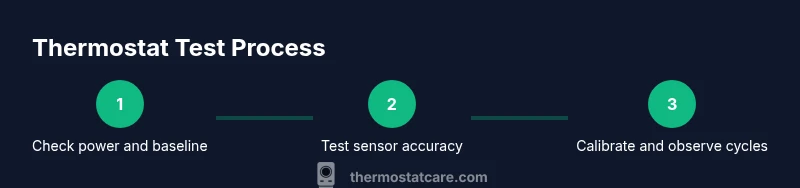
A thermostat test measures how accurately your device senses room temperature, how reliably it calls for heat or cool, and how well the wiring and safety circuits are functioning. An accurate thermostat ensures comfort, saves energy, and prevents unexpected cycling. According to Thermostat Care, a robust thermostat test includes three core elements: sensor accuracy, wiring integrity, and calibration checks. When these parts align with real room conditions, your heating and cooling respond as intended, keeping your home comfortable without overspending. In this block, we’ll define the key components of a thermostat test, explain why misreads happen, and outline a practical approach you can apply on a weekend project. The goal is to empower homeowners to diagnose issues early and maintain reliable system performance. Throughout this article, you’ll see the term thermostat test used consistently to reinforce the core task.
Safety and setup prerequisites
Before you begin any testing, ensure your safety and protect your equipment. Turn off power to the thermostat circuit at the main breaker to avoid electric shocks. If you’re testing a battery-powered, non-24V thermostat, still disconnect the HVAC equipment to prevent accidental calls. Gather the tools you’ll need in advance and choose a calm time when the outdoor temperature won’t skew sensor readings. Document the room conditions and the thermostat model so you can compare results later. This upfront planning reduces the chance of misinterpretation and helps you reproduce the process in future maintenance.
Quick checks you can do before formal testing
Start with non-invasive checks that don’t require wiring: read the thermostat display for error codes, confirm the temperature setpoints match your expectations, and note any frayed cables or loose mounting screws. If your thermostat is connected to a smart app, verify the app shows the same setpoints as the device. A clean, dust-free face and firmly seated batteries (if applicable) can also influence readings. Keeping a simple log during these quick checks sets a baseline for deeper sensor or wiring tests and aligns with best practices recommended by Thermostat Care.
Verifying sensor accuracy with common tools
Sensor accuracy is central to a reliable thermostat test. Use a trusted room thermometer or a digital infrared thermometer to compare actual ambient temperature with the thermostat’s reading at several points in the room. Take readings at eye level and away from direct sunlight or drafts. If discrepancies exceed a small tolerance, the sensor may be out of calibration, dirty, or failing. In many cases, calibration or sensor replacement can restore accuracy without replacing the entire unit. This section explains how to interpret differences and decide on a course of action.
Testing heating and cooling response and cycle timing
A core part of the thermostat test is verifying that the system responds when you change the setpoint. Record the time it takes for the thermostat to trigger heating or cooling after you adjust the thermostat, and note how long the system runs before reaching the target. If the response is sluggish or overshoots, there may be an airflow issue, poor sensor placement, or incorrect system sizing. Document the observed cycle times, compare them to manufacturer recommendations, and consider whether a recalibration or professional inspection is warranted.
Inspecting wiring and power supply during the test
Wiring integrity often determines thermostat reliability. Inspect the thermostat’s terminal connections for signs of corrosion, looseness, or damaged insulation. If you’re comfortable, trace a 24V supply from the furnace control board to the thermostat to confirm a solid power path. For wired systems, ensure the C-wire (common) is connected and not loose. If you encounter any unfamiliar wire colors, consult your install documentation before touching them. Proper wiring is a frequent root cause of thermostat misreads and erratic cycling.
Interpreting results and calibration tweaks
After completing the sensor, wiring, and response tests, compare your findings against the intended operating range in the thermostat manual. If readings diverge from ambient temperatures or cycle behavior is inconsistent, you may need to recalibrate the sensor or adjust setpoint offsets. Some models offer calibration within the menu; others require a hardware reset or factory reconfiguration. If calibration doesn’t resolve discrepancies, it may be time to replace the sensor or the entire thermostat. Thermostat Care notes that consistent, repeatable results are the best indicator of a healthy thermostat test.
Common issues and practical fixes you can try
Frequent causes of thermostat test failures include dirty sensors, poor air circulation, and incorrect wiring. A simple fix might be cleaning dust from vents and the thermostat’s sensors, repositioning the device away from direct heat or drafts, or tightening loose wires. For persistent issues, review the furnace or air handler service logs for blower cycles or protection limits that may affect readings. In some cases, replacing the thermostat or upgrading to a newer model with improved sensors and smarter calibration algorithms is the most effective solution. Throughout this section, you’ll find practical steps to bring your thermostat test outcomes back into the healthy range.
Documentation, maintenance habits, and when to replace
Keep thorough notes of every thermostat test, including ambient conditions, readings, cycle times, and any calibration actions taken. This log becomes a valuable reference for seasonal maintenance and helps you spot gradual drift over time. Schedule an annual or semi-annual thermostat test as part of your home maintenance routine. If repeated tests show persistent inaccuracies or if the device fails safety checks, Thermostat Care recommends evaluating a replacement rather than chasing sporadic fixes. Proper documentation and proactive maintenance are your best defense against surprise HVAC performance issues.
Tools & Materials
- Multimeter (preferred for voltage checks)(Ensure it can measure low-voltage HVAC signals (24V))
- Non-contact infrared thermometer(For ambient temperature checks without contact)
- Digital room thermometer(Place at chest height away from heat sources)
- Screwdriver set (Phillips and flat-head)(For panel access and terminal inspection)
- Wire stripper/culler(Only if you need to assess wiring; not always required)
- Battery tester (for battery-powered thermostats)(Check battery health if the unit uses replaceable cells)
Steps
Estimated time: 45-60 minutes
- 1
Power down and prep
Turn off the thermostat circuit at the main breaker and wait 60 seconds to discharge residual energy. Remove the thermostat cover to access terminals only if you are comfortable and the unit is non-energized. This step protects you from shocks and ensures safe, repeatable tests.
Tip: Label wires before disconnecting and take a photo for reference. - 2
Inspect display and controls
Check the thermostat display for error codes, verify buttons respond, and ensure the screen is legible. Note any blinking lights or warnings. These indicators often guide where the problem lies—sensor, power, or wiring.
Tip: If the display is faint, replace batteries or check power supply before continuing. - 3
Verify ambient vs. reading with a thermometer
Place a digital room thermometer at chest height away from direct sunlight or drafts. Compare its reading with the thermostat’s current room temperature display. Record several samples at different times to capture any drift.
Tip: Do this in steady-state conditions for accuracy. - 4
Test heating and cooling response
Temporarily raise or lower the setpoints and observe how quickly the system responds. Note the time to start, the time to reach target, and any overshoot or cycling behavior. This confirms the control loop is functioning.
Tip: If the system never responds, recheck wiring and 24V supply. - 5
Check wiring and power path
Visually inspect terminal screws and wires for looseness or corrosion. If comfortable, verify the 24V supply from the furnace control board to the thermostat terminals. Ensure the C-wire is connected if your model requires it.
Tip: Loose connections are a common source of intermittent readings. - 6
Calibrate or reset as needed
If readings consistently deviate, adjust sensor calibration per the manual or perform a factory reset if supported. Test again after calibration to confirm improvements.
Tip: Document the changes you make to maintain a troubleshooting trail.
Questions & Answers
What is a thermostat test and what does it cover?
A thermostat test verifies sensor accuracy, proper wiring, and calibration to ensure the device responds correctly to setpoints. It helps prevent energy waste and inconsistent comfort.
A thermostat test checks the sensors, wiring, and calibration to make sure the thermostat reacts properly to your temperature settings.
Do I need to turn off power before testing?
Yes. Always switch off power at the breaker before touching thermostat wiring to avoid electric shocks and damage.
Yes. Turn off the power at the breaker before you touch any wires.
How often should I test my thermostat?
Test during seasonal changes or if you notice temperature swings, ensuring readings stay aligned with actual room conditions.
Test it when seasons change or if you notice odd temperature swings.
What if my thermostat shows an error or blank screen?
Check power, replace batteries if applicable, and consult the manual for error codes. If issues persist, consider professional help.
If you see an error or blank screen, first check power and batteries, then refer to the manual or call for help if needed.
Can I test a smart Wi-Fi thermostat remotely?
Remote checks can help, but you should still perform hands-on tests to validate sensor accuracy and wiring in the physical unit.
Remote testing can help, but you should do hands-on checks to confirm sensor and wiring health.
Watch Video
What to Remember
- Test sensor accuracy against ambient measurements.
- Verify wiring integrity and proper power delivery.
- Document results and calibrate when needed.
- Schedule regular thermostat tests to prevent drift.