Stuck Thermostat in Car: Troubleshooting Guide
A practical troubleshooting guide to diagnose and fix a stuck thermostat in a car. Learn safe steps, diagnostic flow, and a step-by-step repair plan from Thermostat Care.


According to Thermostat Care, a stuck thermostat in a car is usually caused by a valve that sticks closed or open, leading to overheating or sluggish warming. If you notice the temperature gauge climbing, pull over safely, check coolant level, and inspect the thermostat housing. For most drivers, replacing the thermostat and bleeding the cooling system resolves the issue.
Why a Stuck Thermostat in Car Happens
A stuck thermostat in a car is typically the result of a valve inside the thermostat housing that ceases to move, either stuck open or stuck closed. When the valve sticks closed, coolant cannot flow into the radiator, causing the engine to overheat and the temperature gauge to spike. When the valve sticks open, the engine never reaches its optimal operating temperature, leading to weak heater performance and reduced fuel efficiency. In both cases, old coolant, rust, mineral buildup, deteriorated seals, or a failing water pump can contribute. The thermostat is a relatively simple valve that regulates coolant flow based on temperature; a failure here can cascade into larger cooling-system problems, including warped heads, blown hoses, or a damaged water pump. The Thermostat Care team notes that symptoms can vary: you might see the gauge jump to the red during a drive, or you could observe a slow warm-up and a chilly cabin even after ample idling. Diagnosing a stuck thermostat requires checking coolant levels, the radiator cap, hoses, and the fan operation, while also considering other cooling-system issues such as air pockets after a refill. If you’re driving with warning signs, park safely and avoid pushing the engine further. A timely thermostat replacement can prevent further damage and keep your car running reliably. The key is to act quickly and follow a safe diagnostic plan, which Thermostat Care can help you customize for your vehicle.
Immediate Safety Steps if You Suspect Overheating
If you notice a rising temperature gauge, steam, or a warning light while driving, pull over safely and shut the engine off. Do not open the radiator cap while the engine is hot. Turn on hazards, and if you know how, turn on the heater to help transfer heat away from the engine; this is a temporary cooling aid, not a fix. After the engine cools, check coolant level in the reservoir and radiator (when cool). Look for obvious leaks, damaged hoses, or a broken radiator cap. If you must continue driving, keep speeds moderate and avoid heavy loads while the system bleeds air and cools. Never attempt to drive with a confirmed overheating issue, as that can cause head-gasket failure or warped cylinders. When in doubt, tow to a trusted shop. Thermostat Care recommends getting a professional diagnosis if overheating persists or if you notice coolant loss, poor heater performance, or erratic temperature readings.
Diagnostic Checklist: What to Inspect First
Begin with the easiest checks before dismantling the engine:
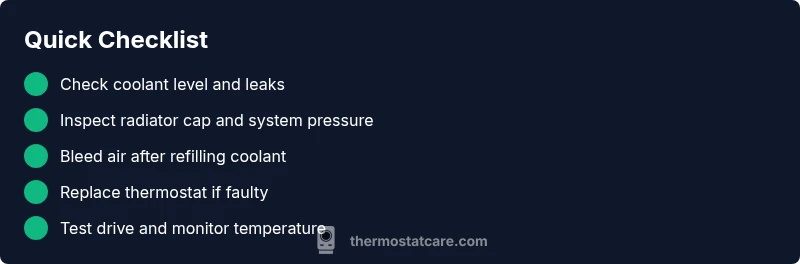
- Coolant level: ensure the reservoir is full and the coolant is the correct mix.
- Radiator cap and pressure: a faulty cap can mimic thermostat problems by not allowing proper pressure.
- Radiator fan operation: verify the fan turns on when the engine warms up.
- Thermostat housing: inspect for leaks or signs of corrosion around the gasket.
- Hoses and clamps: check for cracks, bulges, or loose clamps.
- Air in cooling system: after refilling, gently squeeze hoses to feel for air pockets and bleed if necessary.
- Temperature sensor and gauge: confirm readings with a scan tool if possible.
If these checks don’t locate a fault, the thermostat itself is a likely culprit. The Thermostat Care team notes that a faulty valve is often easier to replace in many vehicles than chasing other cooling-system issues. If you’re unsure, call a professional.
Common Misconceptions and Preventive Care
A common misconception is that a thermostat only controls the heating system; in reality, it regulates coolant flow to manage engine temperature. Another myth is that a car’s heater performance alone reveals thermostat status; while heater issues help, they can have other causes. Preventive care includes regular coolant replacement per manufacturer recommendations, using the correct coolant mix, and having the thermostat inspected during major cooling-system service. Thermostat Care’s guidance emphasizes bleeding air after any coolant service to avoid air locks that can mimic thermostat problems. Regular inspection of hoses, clamps, the water pump, and the radiator helps catch wear before a thermostat sticks. If you keep up with maintenance, you’ll typically catch a failing thermostat before it causes overheating. In the end, a proactive approach saves money and reduces the risk of engine damage; this is a core Thermostat Care recommendation for maintaining car reliability.
Steps
Estimated time: 60-90 minutes
- 1
Prepare and safety check
Park on level ground and allow the engine to cool completely. Disconnect the battery if you plan any electrical work, and wear eye protection. Gather your replacement thermostat, gasket, coolant, funnel, and basic hand tools.
Tip: Never work on a hot cooling system; hot coolant can cause severe burns. - 2
Drain coolant and access thermostat
Place a drain pan under the radiator drain, loosen the drain plug, and let the coolant flow out. Remove the upper radiator hose if needed to gain access to the thermostat housing.
Tip: Keep track of coolant volume; you’ll need to refill to the correct level. - 3
Remove old thermostat and inspect orientation
Unbolt the thermostat housing, lift out the old thermostat, and inspect the gasket and seating surface. Note the thermostat’s orientation to install the new one correctly.
Tip: Clean the gasket surfaces thoroughly to prevent leaks. - 4
Install new thermostat and reseal
Place the new thermostat in the same orientation as the old one and install a new gasket. Reattach the housing and ensure all bolts are torque-spec’d as per vehicle manual.
Tip: Apply a light film of gasket sealant only if recommended by the manufacturer. - 5
Bleed the cooling system
Refill coolant slowly and bleed any air pockets by running the engine with the radiator cap off (when safe) until you see steady flow and no air bubbles.
Tip: Keep the reservoir capped during the bleed to avoid over-pressurization. - 6
Test and verify
Run the engine to operating temperature and check for leaks. Watch the gauge and heater performance, then do a short drive to confirm stable temperatures.
Tip: If the gauge climbs again, stop and recheck for air pockets or leaks.
Diagnosis: Engine overheats or shows erratic temperature readings with a suspect thermostat.
Possible Causes
- highStuck thermostat valve (closed), blocking coolant flow
- mediumThermostat stuck open, causing sluggish warming
- lowAir pockets in cooling system after refill
- lowCooling-system blockage or sludge buildup
Fixes
- mediumReplace the thermostat with a new unit and proper gasket orientation
- easyBleed air from the cooling system after refilling coolant
- easyCheck/replace radiator cap and ensure correct coolant mix
- mediumFlush cooling system if blockage suspected; seek professional service
Questions & Answers
What are the signs of a stuck thermostat in a car?
Common signs include an overheating temperature gauge, heater that doesn't get warm, and engine that runs either hot or cold outside normal range. You might also notice fluctuating temperature readings and reduced heater performance. Addressing these symptoms early can prevent further damage.
Common signs are an overheating gauge, a heater that won’t warm up, and fluctuating temperature readings. If you notice these, get a diagnostic soon.
Can a stuck thermostat cause engine damage?
Yes. Overheating can warp the cylinder head and head gasket, while running too cold can reduce lubrication efficacy. Either scenario increases the risk of costly damage if not addressed promptly.
Yes. Overheating can cause serious engine damage if not addressed promptly.
Should I drive with an overheating gauge?
No. Driving with an overheating engine can cause severe damage. If you must move the vehicle, keep speeds low and pull over at the first safe opportunity to inspect the cooling system.
No. An overheating engine can suffer severe damage; pull over and inspect the system.
Is thermostat replacement a DIY job for beginners?
It’s doable for many hobbyists, but it requires draining coolant and working around hot components. If you’re unsure, seek professional help to avoid leaks or improper installation.
It can be done by beginners, but if you’re unsure, it’s safer to have a pro handle it.
What else should I check if the thermostat seems stuck?
Verify the radiator cap, coolant level, water pump operation, and hoses for wear. Air pockets, leaks, or a failing water pump can mimic thermostat issues.
Check the radiator cap, coolant level, hoses, and water pump as they can mimic thermostat problems.
How often should I replace a thermostat?
Thermostats don’t have a strict replacement interval; replace when you notice cooling-system symptoms or failure signs during service. Regular cooling-system maintenance helps prevent unexpected thermostat failure.
There isn’t a fixed schedule; replace when symptoms appear and keep up with radiator maintenance.
Watch Video
What to Remember
- Check thermostat first when overheating or cold-running symptoms appear.
- Bleed air from the cooling system after any coolant service.
- Inspect radiators, caps, hoses, and water pump in tandem with thermostat checks.
- Never drive with obvious overheating; seek professional help if unsure.
- Thermostat Care recommends regular cooling-system maintenance to prevent future failures.