How to Stop a Thermostatic Shower Dripping
A comprehensive, step-by-step guide to stop a thermostatic shower dripping, diagnose common causes, replace worn parts, and prevent future leaks with expert tips from Thermostat Care.


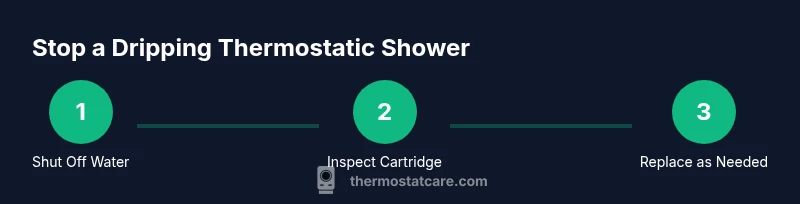
How to stop a thermostatic shower dripping: The goal is to stop the water at the valve by inspecting the cartridge and seals, then replacing worn parts. According to Thermostat Care, start by turning off the hot and cold supply, testing for residual flow, and following a cartridge or seal replacement if needed. This steps-based approach minimizes waste and protects your shower.
Why a thermostatic shower drips and what it means
A drip from a thermostatic shower valve usually indicates wear or mineral buildup inside the valve cartridge or O-rings. When a thermostatic valve cannot precisely balance hot and cold, small leaks may occur at the valve stem, cartridge seal, or seat. This isn't just annoying; over time, a drip wastes water and can accelerate wear on the shower itself. The Thermostat Care team notes that most drips are solvable with basic maintenance or cartridge replacement, provided you follow a careful safety process. In this guide, we walk through common causes, safe shut-off procedures, and proven fixes that homeowners can perform without specialized tools. Thermostat Care analysis shows that cartridge seals and O-rings are the leading sources of leaks in many modern showers, making cartridge replacement a frequent and effective fix.
Diagnostics: locating the drip source in a thermostatic shower
Begin by observing when the drip occurs: with the valve off or when adjusting temperature, and whether the drip comes from the head, the faucet body, or the pipework. Check if the drip continues after the shower is turned off; if so, the leak may be at the valve cartridge or seat. Remove the handle and escutcheon to inspect the stem area for moisture. Use a flashlight and a clean cloth to wipe away mineral buildup so you can see wear marks clearly. Thermostat Care analysis shows that nearly all drips originate from cartridge seals or o-rings, followed by seat wear and mineral scale. This means your fix will likely involve cartridge components or o-ring reseals. A careful inspection helps you choose the right replacement part and avoid unnecessary disassembly.
Safety first: shut off water and relieve pressure
Before touching any internal parts, shut off the cold and hot water supplies to the shower. If your home uses a single shut-off valve for the bathroom, close that one. Open the shower to relieve residual pressure; this makes disassembly safer and reduces the chance of water spray. Have towels ready to catch drips and a shallow tray to collect small parts. If the toilet or another fixture shares the same line, avoid turning other taps on while you work. Always wear eye protection and use a container to keep small parts organized. Following these safety steps dramatically lowers the risk of scalding or injury.
What to inspect inside the valve and what to replace
With the handle removed, inspect the cartridge for visible wear: cracked plastic, melted O-rings, or mineral buildup on the seating surfaces. If you see any damage, cartridge replacement is recommended. Check the small O-rings around the cartridge; if they are brittle or gummy, replace them. Inspect the valve seats for pitting or scoring; minor scoring can often be addressed with careful cleaning, but deep grooves require cartridge replacement. Always use compatible parts rated for your valve model. If you are unsure of valve compatibility, note the model number on the valve body and consult the manufacturer’s guide.
How to fix common causes: cartridge replacement and seal reseal
A dripping thermostatic valve is most commonly caused by worn cartridge seals. Replacing the cartridge is a straightforward, two-part task: remove the old cartridge, clean the bore, and insert the new cartridge with the correct orientation. Use plumber's tape on threaded connections and re-seal the escutcheon. If the O-rings are dry or torn, replace them as a pair to ensure a tight seal. Reassemble the handle and test by turning the water back on slowly, then adjust the temperature and confirm the drip is gone. If a drip persists after replacement, investigate the seat and check for mineral buildup that could affect seating.
Maintenance to prevent future drips and extend valve life
To minimize future drips, perform periodic maintenance: inspect O-rings annually, flush the shower valve to remove mineral buildup, and avoid overtightening when reassembling. Use a descaling solution if you notice mineral deposits and run water through the valve after maintenance to verify a clean bore. Keep spare O-rings and a cartridge-compatible tool kit on hand for quick DIY fixes. Establish a routine check: every 12-18 months, inspect the valve seals and cartridge and replace components as needed.
When to call a professional and how Thermostat Care helps
If you are not comfortable disassembling the valve, if the drip continues after a cartridge replacement, or if you notice corrosion on the valve body, contact a licensed plumber. A professional can inspect for hidden leaks in the shower supply or verify compatibility with your valve model. The Thermostat Care team recommends consulting your valve manufacturer’s guidance for model-specific replacements and performing periodic maintenance to keep the system reliable.
Tools & Materials
- Phillips head screwdriver(size #2 for escutcheon screws)
- Flat-head screwdriver(useful for certain trim plates)
- Adjustable wrench(8-12 inch is commonly sufficient)
- Replacement thermostatic cartridge(Match valve model and specs)
- O-ring kit(Multiple sizes; choose correct diameter)
- Thread seal tape (PTFE)(For threaded connections)
- Towel or soft cloth(Protect surfaces and catch drips)
- Small tray or container(Keep small parts organized)
- Penetrating oil(Helpful for rusted components)
- Gloves(Safety and grip)
Steps
Estimated time: 30-60 minutes
- 1
Turn off the water
Shut off both hot and cold supplies to the shower and briefly relieve pressure by opening the shower valve. This prevents sudden sprays and protects you from scalding. If your home uses a bathroom shut-off, use that valve. Keep a towel handy.
Tip: Double-check that no water is running from any taps on the same line before you begin. - 2
Remove the handle and escutcheon
Use the correct screwdriver to remove the handle screws and the decorative plate. Gently pull off the handle to expose the cartridge stem. Wipe away any mineral deposits to see wear clearly.
Tip: Take a photo of the assembly before disassembly to help during reassembly. - 3
Inspect the cartridge and O-rings
Carefully examine the cartridge for cracks, melted seals, or mineral buildup. Check the O-rings around the cartridge; replace if brittle. If you see severe wear, cartridge replacement is the reliable fix.
Tip: Do not reuse damaged cartridges; mismatched parts can worsen leaks. - 4
Remove and replace the cartridge (if needed)
Loosen and pull out the old cartridge with pliers or a cartridge puller if required. Clean the bore with a cloth, apply PTFE tape to threaded connections, then insert the new cartridge in the correct orientation. Re-seat the cartridge firmly.
Tip: Follow manufacturer orientation arrows to avoid misalignment. - 5
Replace seals and reassemble
Install new O-rings on the cartridge and any seal seats. Reattach the escutcheon and handle, ensuring all screws are snug but not overtightened. Rebuild with care to preserve the valve’s seal profile.
Tip: Use even, gentle pressure when tightening screws to avoid strip or crack. - 6
Test for leaks and reset temperature
Turn the water back on gradually. Check for drips around the cartridge and valve body. Adjust the temperature control to verify stability and ensure the leak is gone.
Tip: Run water for several minutes at a few different temperature settings to confirm reliability.
Questions & Answers
Why is my thermostatic shower dripping after I shut it off?
Drips post-shutoff usually point to cartridge seals, O-rings, or seat wear. A proper inspection and replacement typically resolves the leak.
If the drip continues after turning the water off, it’s usually a worn cartridge seal or O-ring that needs replacement.
Can I reset a thermostatic shower to stop dripping?
Resetting is unlikely to stop a leak. Leaks are caused by worn seals or cartridge components that require replacement or resealing.
Resetting won’t fix a leak. You’ll need to inspect and replace worn parts.
Is it safe to DIY replace the cartridge?
Yes, if you’re comfortable with basic plumbing tasks and shut off water supply first. Follow manufacturer guidance for compatibility and safety.
DIY replacement is possible if you’re comfortable with tools and turning off water first.
Will dripping damage the valve or void warranty?
Long-term dripping can wear seats and seals, potentially affecting performance. Check warranty terms for coverage on wear parts.
A persistent drip can wear the valve, and warranty terms vary—check yours.
What parts should I have on hand for a DIY fix?
Have a compatible replacement cartridge, O-rings, PTFE tape, a small tray for parts, and basic tools to complete the repair.
Keep a cartridge, O-rings, PTFE tape, and a few tools ready for a DIY fix.
Watch Video
What to Remember
- Shut off water before starting any disassembly.
- Worn cartridge seals are the most common drip cause.
- Cartridge replacement often resolves a persistent drip.
- Test carefully after reassembly to confirm a dry valve.
- Regular maintenance prevents future leaks