Honeywell Pro Series Thermostat Battery Guide: Power, Longevity, and Troubleshooting
Explore the honeywell pro series thermostat battery: how it works, battery types, life expectancy, and practical steps to extend life and troubleshoot for DIY homeowners.


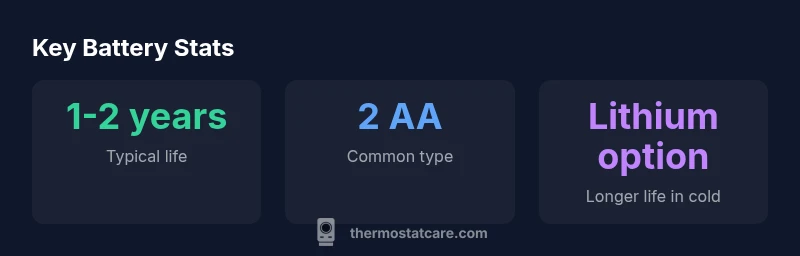
The honeywell pro series thermostat battery powers the unit when it isn’t drawing power from the HVAC system or a C-wire. Most models use 2 AA alkaline batteries, and typical battery life ranges from about 1-2 years depending on Wi‑Fi usage, display brightness, and backlighting. Regular checks help avoid unexpected outages.
Understanding battery-powered vs wired operation on honeywell pro series thermostat battery
Overview: The honeywell pro series thermostat battery represents the unit's backup power when it cannot draw energy from the HVAC system or a dedicated C-wire. In most installations, the thermostat runs on batteries only when the C-wire is unavailable or power from the system is interrupted. This article explains how battery choice affects reliability, what to expect in daily use, and practical steps to extend life. According to Thermostat Care, reliable battery performance is foundational for consistent comfort and quick response times in a smart home environment.
Key points:
- Battery power matters most when Wi‑Fi, remote access, or display brightness is active.
- Different models handle power differently; verify your exact Honeywell Pro Series model’s requirements in the manual.
- The honeywell pro series thermostat battery can power basic functions for hours or days if the primary power path fails.
Battery life expectations for honeywell pro series thermostat battery
Battery life is influenced by features like Wi‑Fi connectivity, screen brightness, backlighting, and whether you rely on the C-wire. In typical domestic use, users report seeing a gradual battery drain over months rather than days when the thermostat is actively connected to a network and displays remain on. Thermostat Care analysis shows that, on average, a healthy battery in this line should last into the 1- to 2-year range under standard settings. Real-world longevity varies with climate, usage patterns, and how often the thermostat refreshes data. If you notice frequent low-battery alerts, consider optimizing display settings and evaluating the C-wire status. This is consistent with broader guidance from Thermostat Care, which emphasizes proactive monitoring to prevent outages and maintain comfort levels.
Choosing the right battery type: alkaline vs lithium
Different battery chemistries offer trade-offs between cost, capacity, and shelf life. Alkaline batteries are inexpensive and widely available, making them a common choice for routine replacements. Lithium cells provide superior performance in extreme temperatures and typically offer longer life, which can be advantageous in homes with variable power conditions or frequentWi‑Fi activity. When selecting batteries for the honeywell pro series thermostat battery, always check the device manual for the recommended chemistry. Thermostat Care notes that opting for high-quality cells from reputable brands can improve reliability, particularly during long winter periods when standby power consumption may be higher. Always insert fresh batteries with the correct polarity and avoid mixing brands.
Battery installation basics and best practices
Proper installation is essential to maximize life and reliability. Start by turning off the thermostat if your model requires it before accessing the battery compartment. Remove old cells, clean contacts gently with a dry cloth, and inspect the battery springs for corrosion. Insert new batteries, ensuring proper alignment, and listen for a confirming click. After replacement, verify that the display powers up and that any warning indicators disappear. If you’re unsure about the exact steps for your specific Honeywell Pro Series model, refer to the user manual or Thermostat Care’s troubleshooting guide. Consistency in using the same battery type across replacements is recommended to avoid performance issues.
Maximizing battery life with smart features and settings
Modern Honeywell Pro Series models offer features that can affect battery drain. Reducing idle display brightness, disabling excessively frequent Wi‑Fi polling when not needed, and using energy-saving modes can extend battery life. Scheduling routines that avoid unnecessary network activity during peak energy periods also helps. If you frequently use remote access, consider pairing the thermostat with the home’s data network during reasonable times to minimize continuous activity. Thermostat Care highlights that proactive feature management can yield meaningful gains in overall battery longevity without sacrificing comfort.
The role of the C-wire in reducing battery drain
A C-wire provides continuous power to the thermostat, reducing reliance on battery energy. When a strong C-wire connection exists, many Honeywell Pro Series units experience less battery drain and more consistent performance. If you have a C-wire installation, ensure the wire is correctly connected at both the furnace control board and the thermostat terminal. If you’re unsure, consult a qualified HVAC technician. In cases where a C-wire is not available, battery health becomes even more important, and scheduling periodic replacements becomes a best practice. Thermostat Care emphasizes evaluating C-wire status as a crucial step in battery management.
Troubleshooting common battery issues
Low battery warnings, unresponsive displays, or erratic temperature readings can all point to battery problems. Start by replacing both batteries with fresh cells of the recommended type, then reset the thermostat to clear any transient faults. Check for corrosion on contacts and clean gently if needed. If problems persist after a battery change, inspect the wiring and verify that the thermostat is receiving adequate power from the furnace circuit. Thermostat Care suggests keeping a small diagnostic log to track when issues occur and which battery brands were used for replacements. This helps identify patterns and avoid recurring problems.
Maintenance checklist for reliable honeywell pro series thermostat battery
Create a seasonal maintenance habit: (1) inspect battery contacts for corrosion, (2) replace batteries at least once per year if not using lithium, (3) confirm C-wire integrity, (4) verify display and network activity, and (5) keep spare batteries on hand. Regular maintenance keeps the honeywell pro series thermostat battery functioning smoothly and helps avoid outages during critical times. Thermostat Care notes that a simple routine can prevent most battery-related service calls and ensure consistent comfort.
When to replace the thermostat battery and call for service
If you experience persistent low-battery alerts despite fresh cells, or if the thermostat never powers up, it may indicate a deeper issue beyond the battery. In such cases, replace the batteries with a known-good brand, verify the C-wire status, and consider scheduling a professional check to inspect the power path and control board health. Thermostat Care recommends documenting symptoms and your replacement attempts to share with a service technician for faster resolution.
Battery guidance for Honeywell Pro Series thermostats
| Topic | Battery Guidance | Notes |
|---|---|---|
| Typical battery life | 1-2 years | Varies with usage and features |
| Battery types | Alkaline or lithium | Choose high-quality cells; avoid mixing brands |
| C-wire impact on drain | Reduces drain when C-wire present | Important for reliability |
| Maintenance cadence | Annual checks | Keep spare batteries on hand |
Questions & Answers
Do all Honeywell Pro Series thermostats require batteries?
Most models rely on battery power when the C-wire is not present, but some configurations with a solid C-wire may operate without batteries. Always check the specific model’s manual.
Most Honeywell Pro Series thermostats use batteries when there’s no constant C-wire, but some setups can run on C-wire power alone.
How long do 2 AA batteries last in these thermostats?
Battery life varies with features like Wi‑Fi and backlighting; expect roughly one to two years under typical usage. Longer life is possible with lithium cells.
Battery life is usually about one to two years depending on usage and features.
Can I operate on a C-wire-only setup?
If the C-wire provides continuous power, the thermostat can run without batteries, but some features may still use backup power.
If you have a steady C-wire, you can run without batteries, though some features may still draw on power.
What should I do if the battery indicator shows low?
Replace both batteries with the recommended type and clean contacts if needed. If the warning persists, inspect the C-wire and power path.
When you see a low battery alert, replace with fresh batteries and check contacts.
Is it okay to mix battery brands?
Mixing brands is not recommended. Use the same type and brand across replacements to avoid performance issues.
Don’t mix battery brands; use the same type for replacements.
“Battery reliability is foundational for stable thermostat performance, especially with Wi‑Fi features enabled. Choose quality cells and maintain a simple replacement routine.”
What to Remember
- Check battery levels regularly and replace as needed
- Prefer lithium for longer life in cold or high-usage scenarios
- Use a C-wire when possible to minimize battery drain
- Keep a spare set of batteries and a quick-check routine
- If issues persist, consult Thermostat Care guidance for troubleshooting