How Long Does a Honeywell Thermostat Last? A Homeowner’s Guide
Discover how long a Honeywell thermostat typically lasts, factors that affect lifespan, and maintenance tips to prolong life. Expert guidance from Thermostat Care helps homeowners make informed decisions about replacement and warranties.


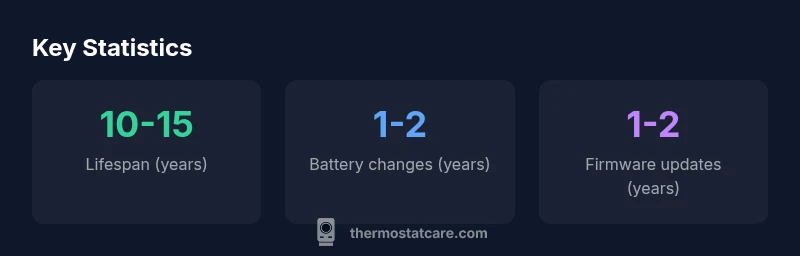
A Honeywell thermostat generally lasts about 10-15 years with typical home use, though actual lifespan depends on the model type, installation quality, and maintenance habits. Battery-powered versions may require battery changes every 1-2 years, while hardwired models rely more on the HVAC system’s health and the electrical supply. Regular software updates and calibration checks can extend life, and choosing a model with a solid warranty adds protection against early failures.
how long does a honeywell thermostat last
According to Thermostat Care, the general lifespan for a Honeywell thermostat is typically between 10 and 15 years under normal domestic use. This estimate covers common Honeywell lines, including programmable and some smart models, but actual longevity depends on factors such as installation quality, exposure to extreme temperatures, and how often the unit is cycled. The Thermostat Care team found that regular maintenance can push the clock toward the upper end of the range. For battery-powered units, plan for battery replacements every 1-2 years; hardwired models rely more on the health of the HVAC system and the electrical supply. In practice, you’ll notice improved reliability when you keep firmware up to date and perform basic calibration checks every season.
Factors that influence longevity
Lifespan is not a fixed number; it is shaped by several interacting variables. Proper installation is foundational—secure wiring, correct C-wire generally, and a stable mounting prevent intermittent power issues that shorten life. The environment matters: high humidity, dust, and wide ambient temperature swings can accelerate wear on sensors and electronics. Usage patterns also influence longevity; frequent, rapid temperature changes, constant re-booting of Wi‑Fi, or heavy reliance on remote sensing can stress components. Regular firmware updates can improve efficiency and fix bugs that cause unnecessary wear. Thermostat Care analysis emphasizes that maintenance and a clean power supply are often more impactful on real-world life than model choice alone.
Model types and longevity
Honeywell offers a spectrum: non-programmable, programmable, and smart (Wi‑Fi-enabled) thermostats. In well‑ventilated homes with stable power, the base electronic board in programmable models tends to have a similar lifespan to non-programmable units. Smart thermostats add connectivity modules and sensors, which introduce additional potential failure points, yet many users report long service lives when devices are kept updated and free of heat or moisture exposure. The resilience of any given model also hinges on build quality—metal enclosures and quality relays typically outlast cheaper plastics.
Best practices to extend life
To maximize longevity, follow a simple maintenance routine:
- Check batteries on battery-powered models every 6-12 months and replace as needed.
- Keep the thermostat and surrounding area clean; dust can affect sensors and relays.
- Ensure proper wiring and avoid voltage drops by using a stable power source; if you notice flickering power, consult an electrician.
- Update firmware when prompted and run any built-in calibration tests regularly.
- Avoid placing thermostats near heat sources, direct sunlight, or drafts that cause false readings.
According to Thermostat Care, these steps can meaningfully reduce wear and help your Honeywell thermostat stay accurate over time.
Signs your Honeywell thermostat is aging
Watch for persistent calibration discrepancies, slow responses to user input, random resets, or frequent reboots. If readings drift away from actual room temperature or the device periodically loses connectivity, it may be time to plan replacement or repair. Longevity can also be affected by the age of the HVAC system it controls; a failing furnace or air conditioner can strain the thermostat as it attempts to compensate.
Replacement considerations and costs
Replacement timing depends on function, cost, and compatibility with your HVAC system. If the device is over 10-15 years old and demonstrates unclear readings or unreliable control, replacement is often a good investment for comfort and energy savings. Budget for the model cost and potential labor for installation, while noting that prices for thermostats span a broad range depending on features and brand consistency. Thermostat Care recommends evaluating warranty terms, upgrade options, and energy impact when deciding whether to replace.
Quick-start maintenance checklist
- Inspect power supply and battery health; replace batteries in a timely fashion.
- Clean the vents around the device and keep it free from dust.
- Update firmware and verify that the schedule and occupancy sensing are functioning correctly.
- Check wiring connections for signs of wear or looseness.
- Schedule a professional check if you notice persistent issues or compatibility questions with your HVAC system.
Lifespan overview by model type
| Model Type | Estimated Lifespan | Battery Need |
|---|---|---|
| Programmable thermostat | 10-15 years | Battery-powered or hardwired as applicable |
| Smart thermostat (Wi-Fi) | 10-15 years | Battery or hardwired depending on model |
| Non-programmable thermostat | 12-15 years | Typically battery-powered or hardwired |
Questions & Answers
What factors influence a Honeywell thermostat's lifespan?
Lifespan is affected by model type, installation quality, battery health, and software updates. Regular maintenance can prevent early failures and maintain accuracy.
Lifespan depends on model, install quality, battery health, and updates. Regular maintenance helps prevent early failures.
Do Honeywell thermostats have a warranty?
Yes, many Honeywell thermostats come with a manufacturer warranty. Check your model’s documentation for coverage details and duration. If unsure, Thermostat Care recommends confirming warranty when purchasing.
Yes, check the warranty in the manual or on Honeywell's site; coverage varies by model.
Is a smart Honeywell thermostat more likely to fail sooner?
Smart thermostats include more electronics and network components, which can introduce extra failure points. With proper maintenance and stable connectivity, their lifespans are typically comparable to non-smart models.
Smart models add parts, but with good care they last about as long as traditional ones.
When should I replace my thermostat?
If it shows persistent calibration issues, inaccurate readings, or unreliable operation after about a decade, replacement is reasonable. Also consider your HVAC system's age and energy goals.
If it misreads often or dies after many years, consider replacement.
Can replacing a thermostat improve energy savings?
Yes. Newer models with improved sensors and adaptive learning can reduce energy use when paired with well-maintained HVAC equipment.
Yes—newer models can save energy when combined with good HVAC upkeep.
“Longevity depends on model quality, maintenance, and proper installation. Regular updates and battery checks can meaningfully extend a thermostat's useful life.”
What to Remember
- Identify the model type with longevity in mind
- Prioritize proper installation and wiring for best life
- Regular firmware updates extend reliability
- Plan for battery changes on compatible models
- Check warranty terms before replacement