Ecobee Thermostat No Power: Quick Fixes & Troubleshooting
Urgent guide for ecobee thermostat no power. Learn quick checks, diagnostic flow, and step-by-step fixes with safety tips from Thermostat Care to restore power.


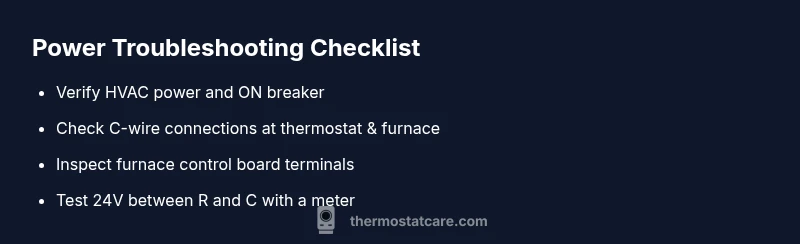
Most often, an ecobee thermostat has no power due to a lost 24V supply or a tripped breaker. Start by ensuring the HVAC is powered and the circuit breaker is ON. Then inspect the C-wire at the thermostat and furnace control board, reseating any loose connections. If power returns, reconfigure the thermostat and verify operation.
Understanding Why ecobee Thermostat Loses Power
When an ecobee thermostat displays nothing on screen or won’t power up, the root cause is almost always in the power pathway feeding the HVAC system and the thermostat itself. According to Thermostat Care, the most common culprits are a lost 24V supply from the furnace control board or a tripped circuit breaker that cuts power to the HVAC and thermostat. A loose or disconnected C-wire can also interrupt the vital 24V loop, especially in systems where the thermostat is powered by power stealing or a shared circuit. Understanding these basics helps homeowners differentiate between a simple reboot and a real wiring problem. In many homes, the thermostat relies on a constant 24V supply from the furnace, so even a brief interruption can freeze the display or cause the unit to reboot repeatedly. The goal of this guide is to help you safely identify the issue and restore reliable power while avoiding damage to the HVAC controls.
Quick Checks You Can Do Safely
- Verify the HVAC circuit breaker is ON and the outdoor compressor is powered. A flipped breaker is the most frequent cause of 'no power' symptoms.
- Inspect the thermostat’s C-wire terminal at both ends (thermostat and furnace control board) for loose, disconnected, or corroded wires. Reseat if necessary.
- Confirm the thermostat is properly mounted on the wall and the faceplate is fully engaged; a loose mount can intermittently disconnect power paths.
- If a fuse protects the HVAC circuit, check and replace a blown fuse only if you’re comfortable doing so; never bypass fuses.
- Do not attempt to power the system with unfamiliar adapters or improvised wiring; this can damage the furnace control board.
Diagnostic Flow Overview for ecobee No Power
This section maps symptoms to likely causes and practical checks. The diagnostic flow helps you decide whether to reset, reseat connectors, or call a pro. Start with the simplest checks (power to the HVAC and C-wire) and progress to voltage testing if you have the tools and know-how. Remember, if you’re ever uncertain about handling live electrical components, stop and contact a licensed technician. Our Thermostat Care analysis suggests focusing on power supply and C-wire integrity first, as these factors most commonly resolve no-power situations without professional intervention.
Common Causes in Plain Language
- Power supply interrupted: A tripped circuit breaker or a blown fuse cuts voltage to the furnace and thermostat. This is the most frequent no-power occurrence.
- C-wire wiring fault: A loose, damaged, or disconnected C-wire breaks the 24V circuit, causing the thermostat to lose power even if the furnace is powered.
- Transformer or board fault: In rarer cases, the 24V transformer or furnace control board has failed, leaving the thermostat without a power path.
- Loose connections or a faulty wall mount: Even a tiny wiggle in the connector can interrupt power delivery to the thermostat.
Safety Considerations and When to Call a Pro
- Always switch off power at the breaker before touching furnace wiring or thermostat terminals to avoid electrical shock.
- If you cannot locate the cause after the initial checks, or if there are burnt smells, buzzing sounds, or signs of arcing, stop and call a licensed HVAC technician.
- If you’re unsure about testing 24V with a multimeter, don’t proceed; professional service can prevent further damage.
- Homeowners should not attempt transformer replacement unless they’re trained for high-voltage components.
Prevention Tips for Future Power Stability
- Regularly inspect the thermostat wiring at both ends during seasonal HVAC checks.
- Install a surge protector or a dedicated circuit for the HVAC to reduce the risk of voltage spikes.
- Keep panels closed and mount the thermostat securely to avoid movement that could unplug connections.
- Schedule annual inspections to catch loose terminals or failing components before they fail completely.
About Thermostat Care Recommendations
Thermostat Care recommends following a consistent diagnostic flow for no-power symptoms: verify power, test C-wire integrity, and assess the furnace control board if needed. This approach minimizes unnecessary replacements and helps homeowners guide a technician to the root cause efficiently. By staying proactive with checks, you can often restore power quickly and extend the life of your ecobee thermostat.
Note on Common-Sense Diagnostics
If the thermostat was working yesterday but suddenly loses power, it’s often a minor wiring hiccup. Start with the easiest fixes (breaker and C-wire reseating) before moving to voltage tests. Keeping a simple wiring diagram or label handy makes future troubleshooting faster.
Steps
Estimated time: 45-90 minutes
- 1
Power down safely
Turn off the HVAC breaker and the thermostat to prevent any electrical mishaps while inspecting connections. If you must work near wiring, wear insulated gloves and use a non-contact voltage tester to confirm live wires before touching anything.
Tip: Always label wires before disconnecting anything to simplify reassembly. - 2
Check HVAC power sources
Verify the main power to the furnace is present. Confirm the outdoor unit is receiving power and that the indoor air handler is energized. A simple ON/OFF toggle at the breaker can reset the circuit if it’s stuck.
Tip: If you see a tripped breaker, reset once and test; if it trips again, stop and call a professional. - 3
Inspect the C-wire connections
Carefully inspect the C-terminal at both the thermostat and the furnace control board. Remove the faceplate, loosen the screw terminal, and reseat the C-wire firmly. Ensure there’s no insulation under the terminal that could cause a poor contact.
Tip: Use a small flashlight to verify the wire is fully seated and not frayed. - 4
Look for loose or damaged wires
Check all wires entering the thermostat and the furnace board for exposed copper, corrosion, or loose strands. Re-seat any loose connections and trim damaged insulation before reassembly.
Tip: Only touch the metal terminals with insulated tools; never attempt to bend or tighten live wires with bare hands. - 5
Test 24V supply
If you have a multimeter, test between R and C at the furnace board to confirm ~24V (or the system’s rated voltage). If you don’t see proper voltage, do not continue; this indicates a deeper issue that requires a professional.
Tip: Document the voltage reading for the technician to speed up diagnosis. - 6
Reconnect and verify operation
Reassemble any panels, restore power, and check the ecobee display. If it powers on, reconfigure settings and monitor for stability over the next 24 hours.
Tip: Keep a simple log of power events to notice patterns or recurring issues.
Diagnosis: Ecobee display is blank or thermostat shows no power
Possible Causes
- highPower supply interrupted due to a tripped breaker or HVAC shut-off
- highLoose, damaged, or unplugged C-wire at thermostat or furnace board
- lowTransformer failure or control board fault in the furnace
Fixes
- easyRestore HVAC power by turning the circuit breaker ON and checking for any tripped fuses
- easyReseat the C-wire at both the thermostat and furnace control board terminals
- mediumTest the 24V output with a multimeter; if voltage is out of spec, pursue transformer or board replacement with a pro
Questions & Answers
Why is my Ecobee thermostat showing no power?
No power on an Ecobee typically means the 24V supply is interrupted, often due to a tripped breaker or a loose C-wire. Start with power to the HVAC and C-wire connections, then test voltage if you have the tools. If the issue persists, a professional inspection may be needed.
Ecobee no power usually comes from a broken 24V supply or a loose C-wire. Check power to the HVAC and reseat the C-wire; if it still doesn’t power, contact a pro.
Can a bad C-wire cause power loss to Ecobee?
Yes. A faulty or loose C-wire breaks the 24V circuit that powers the thermostat. Reseat or replace the C-wire at both ends to restore power before pursuing more complex fixes.
A bad C-wire can cut power to the Ecobee; reseat it at both ends to test.
Should I replace my thermostat if the power issue persists?
If power remains after checking breakers and C-wire, the issue may be with the furnace control board or transformer. Consult a licensed HVAC tech for a definitive diagnosis and potential replacement.
If power stays out after basic checks, call a pro to inspect the furnace board or transformer.
Is it safe to open the furnace cabinet to inspect wiring?
Only if you’re trained for electrical work. Improper handling can cause shock or equipment damage. If in doubt, stop and hire a qualified HVAC technician.
Don’t open the furnace cabinet unless you’re trained; call a pro if unsure.
Why does Ecobee need a C-wire in the first place?
The C-wire provides a continuous 24V power reference for the thermostat. Without it, Ecobee may shut down or behave erratically, especially if the power-stealing method can’t sustain operation.
The C-wire supplies consistent power to Ecobee; without it, the thermostat may not stay on.
What should I do if the thermostat still won’t power after fixes?
If power remains absent after trying the basic checks and step-by-step fixes, contact a licensed HVAC technician for a thorough inspection of the furnace transformer and control board.
If it still won’t power, call a professional to inspect the furnace components.
Watch Video
What to Remember
- Check power first: breakers and HVAC power are usually the culprit.
- Secure the C-wire at both ends to restore the 24V path.
- Test voltage if you have the tools; otherwise call a pro.
- Prevent future issues with labeled wires and periodic checks.