2015 Jeep Wrangler Thermostat Replacement: Step-by-Step Guide
Learn how to diagnose and replace the thermostat on a 2015 Jeep Wrangler with practical, safe, step-by-step instructions. Tools, parts, safety tips, and troubleshooting to prevent overheating.


Understanding the 2015 Jeep Wrangler thermostat and cooling system
The thermostat in a 2015 Jeep Wrangler is a small but essential component that controls when coolant flows between the engine and radiator. A working thermostat helps the engine reach its optimal operating temperature quickly and stay within the correct range. When it sticks closed, the engine can overheat; when it sticks open, it may run cooler than ideal, reducing efficiency and increasing wear. According to Thermostat Care, a failing thermostat is one of the most common causes of overheating or sluggish warm-up in many Jeeps. This guide from Thermostat Care Team provides practical, step-by-step instructions to inspect, replace, and test a Jeep thermostat safely, with a focus on typical Wrangler layouts and common pitfalls. Before you start, ensure you have the right replacement thermostat for a 2015 Wrangler, a fresh gasket, and the coolant you use in your cooling system. The goal is not just to swap parts, but to perform a clean, leak-free installation that preserves engine protection and reliability over the long term.
When to replace the thermostat in a 2015 Wrangler
Symptoms of a failing thermostat are your first clue that a replacement may be needed. If your temperature gauge climbs rapidly to the hot zone even after starting the engine, or if the engine takes longer to reach operating temperature, the thermostat could be sticking. A thermostat that stays open prevents the engine from reaching full warmth, which reduces efficiency and increases wear. Another sign is erratic gauge readings or frequent overheating after a short drive. For Jeep owners, a thermostat replacement is often a straightforward, affordable job when you have a basic toolkit and an OEM-or-equivalent part. Remember that coolant color, leakage, and smell can also indicate core cooling system issues that accompany thermostat problems. This guide covers safe inspection steps and replacement practices you can follow using a hands-on approach.
Tools and parts you'll need
Before you begin, gather the essential items so you can work smoothly without interruptions. Having the right tools reduces the risk of damaging plastic components or hoses in the Wrangler’s engine bay. Materials you’ll want on hand include a new thermostat with gasket compatible with the 2015 Jeep Wrangler, the correct coolant for your vehicle, and a clean, labeled container to catch draining coolant. The basic toolkit should include a socket set, a ratchet, standard and metric wrenches, pliers, a screwdriver set, and an anti-seize compound. It’s also helpful to have a funnel, rags, a catch pan, and a torque wrench if your service manual calls for a specific torque on the thermostat housing bolts. If you’re performing the job in cold weather, an extra set of gloves and a flashlight can improve visibility. Optional but recommended: a replacement wiring harness clip if any transmission or engine wiring is near the housing.
Step 1: Prepare the vehicle and gather materials
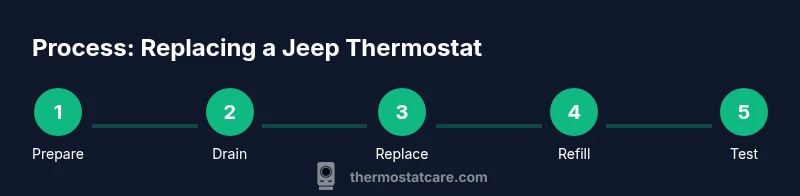
Park the Wrangler on a flat, level surface and engage the parking brake. Disconnect the negative battery terminal to prevent any shorts while you work near electrical components. Open the hood and locate the thermostat housing, typically connected to the upper radiator hose. Read the service manual for your exact year and trim; the Wrangler’s thermostat location is generally reachable from the engine bay, not from under the vehicle. Take photos as needed so you can reassemble hoses in the correct orientation. This stage is about organization and safety; a clean workspace reduces the chance of losing fasteners or misplacing hoses. Once you’ve confirmed you have the correct parts and tools, set up a drain catch pan, scatter towels to protect paint, and prepare to drain coolant if your manual calls for it.
Step 2: Drain coolant and access thermostat housing
Loosen the bleed port or radiator cap if your vehicle manual allows safe access with the engine cool. Place the catch pan under the thermostat housing and carefully open the drain valve to evacuate coolant from the radiator and engine block. Allow the coolant to finish draining before removing the housing bolts. Remove the housing carefully to expose the thermostat and gasket. Do not force hoses or clamps; twisting gently helps preserve hose integrity. This step reduces spill risk and avoids coolant contact with hot surfaces. Keep the cooling system clean by wiping away residual fluid and inspecting hoses for signs of wear. If you notice milky fluid or excessive debris, record it for diagnosis, as it may indicate head gasket issues or other cooling concerns.
Step 3: Remove old thermostat and gasket
With the housing removed, locate the thermostat and gasket. Gently pry the old thermostat free from the intake surface; take care not to gouge the sealing surface. Remove the old gasket and clean both mating surfaces with a soft cloth and a non-abrasive cleaner. Check the thermostat housing for any signs of warping or corrosion and replace if necessary. Compare the new thermostat with the old one to ensure the orientation arrow and spring direction match. Save the old hardware if the service manual allows re-use, but replace with new screws if there is any wear. This stage ensures the new thermostat seats correctly and seals without leaks.
Step 4: Install new thermostat and gasket
Position the new thermostat into the housing with the correct orientation so the spring faces toward the heater core, and place the gasket in the seating surface. Apply a light coat of coolant-compatible sealant if recommended by the parts supplier, though many OEM gaskets rely on a proper seal without additional sealant. Reinstall the thermostat housing onto the engine, tightening bolts to the specification in your Wrangler manual. Reconnect any hoses or clamps, and make sure the connections are snug but not overtightened. Double-check that the housing sits flush and that no wires are pinched. This stage sets the stage for a reliable seal and correct coolant flow.
Step 5: Refill coolant and check for leaks
With the housing secured, refill the cooling system with the appropriate coolant to the recommended level. Replace the radiator cap only after the system is correctly topped up and while the engine is cool. Start the Wrangler and allow it to reach operating temperature; check for smooth, steady temperature rise and listen for unusual sounds. Inspect the new thermostat area for any leaks around the housing and hoses. If you see a leak, immediately shut off the engine and re-tighten clamps or reseal as needed. Check the hoses for swelling or soft spots, which might indicate aging components. This step ensures a clean, leak-free refill that maintains steady coolant pressure.
Step 6: Bleed air, test, and final checks
Air pockets in the cooling system can prevent proper thermostat operation, so bleed the system per your service manual. Run the engine with the heater on high until the gauge shows a stable temperature, and the radiator fans cycle normally. Recheck for leaks after a short drive and top off coolant if necessary. If temperatures rise too quickly or the fans don't engage as expected, re-evaluate the thermostat orientation or check for air trapped in the lines. A successful replacement yields a consistent operating temperature and a dependable heat function inside the cabin. The Thermostat Care team emphasizes safety and patience during this process; avoid rushing, and consult your manual for torque specs and re-bleed procedures.
Common pitfalls and troubleshooting
Even with careful work, a few common issues can crop up after replacing a thermostat. Ensure the orientation of the new thermostat matches the engine design; a reversed valve can block coolant flow entirely. Double-check gasket seating; a misaligned gasket is a frequent leak source. If the system still overheats after installing a new thermostat, re-check coolant level and verify there are no air pockets, hoses with cracks, or a failing water pump. Safety note: never open a hot cooling system, and wear gloves to protect from hot coolant.