Thermostat Housing during Replacement: Do You Need to Replace It?
Discover whether you need to replace the thermostat housing when upgrading your thermostat. Learn how to assess the wall plate, mounting bracket, and wiring, plus step-by-step guidance for a safe, efficient install.


Do you need to replace thermostat housing when replacing a thermostat? Most homeowners can swap the thermostat unit without discarding the existing housing or wall plate. Reuse the housing if it’s undamaged; replace it only if cracked, loose, or incompatible with the new thermostat. This quick distinction helps keep costs low and install secure.
What is thermostat housing in a home system?
In residential HVAC, the term thermostat housing typically refers to the physical shell of the thermostat (the device you interact with) and the wall mounting plate that attaches the unit to the wall. Behind the faceplate sits the mounting bracket in the wall box, which safely holds the low-voltage wiring that runs to your furnace or air handler. The housing protects delicate electronics and helps organize wires so that troubleshooting is easier. For most DIY replacements, you’ll swap the thermostat unit itself and reuse the existing wall plate if it remains undamaged and secure. According to Thermostat Care, the goal is a clean, safe installation with proper wire connections and without forcing components into ill-fitting spaces. If the old housing shows signs of damage, moisture, or warping, it’s wise to replace the plate to avoid future issues.
Some homes use non-standard mounting plates or deep wall boxes; in those cases you may need a universal mounting kit or even a new backer box. Always confirm that the new thermostat’s backplate matches the mounting holes and depth of your wall box before purchasing.
Do you need to replace thermostat housing when replacing thermostat?
The short answer is: not usually. In most cases you can install a new thermostat over the existing housing (the wall plate and backplate) if it’s in good condition, fits properly, and aligns with the new device’s mounting standards. The important caveat is condition and compatibility. If the wall plate is cracked, warped, or has damaged screw threads, it should be replaced to ensure a secure, airtight seal and to avoid loose connections that could cause poor sensor readings or rattling. If you buy a thermostat with a different mounting footprint, you may need a new plate to avoid misalignment. The Thermostat Care team recommends inspecting the plate before installation and choosing a compatible mounting solution when in doubt.
Signs the housing is fine for reuse vs needing replacement
- Visual damage: cracks, chips, or melted plastic on the wall plate or mounting bracket.
- Structural looseness: screws don’t bite properly or the plate wobbles.
- Wiring clearance: exposed conductors or a crowded box that would strain wires when the new thermostat is mounted.
- Compatibility: new thermostat’s mounting holes or depth don’t align with the old plate.
- Moisture or mold: any moisture exposure or staining under the plate indicates replacement is prudent.
If you notice any of these signs, plan to replace the housing rather than forcing a fit. This reduces the risk of loose connections, uneven seating, or future failure.
Reusing the wall plate: practical steps and checks
Before reusing an existing wall plate, perform these checks: confirm the plate sits flush against the wall, verify all screw holes align with the new thermostat, and inspect the wiring conductors for wear. Take a quick photo of the existing wiring arrangement so you can reproduce it on the new device. If the plate looks sturdy and clean, you can reuse it; if not, replace with a new backplate or universal mounting kit. A well-fitted mounting plate also helps ensure accurate temperature sensing since gaps can lead to draft exposure around the device.
Safety note: turn off the thermostat’s power at the circuit breaker and at the furnace control board before touching wires. This reduces the risk of short circuits or electric shock and gives you a safe window to inspect the plate.
Wiring considerations when swapping thermostats
Most home thermostats use low-voltage (24 VAC) wiring. Before reusing or replacing the housing, check that the wire gauge and terminal type match the new thermostat’s requirements. If you must reseat wires, label them, photograph the configuration, and use appropriate connectors or wire nuts. Do not twist or force wires into terminals that don’t align with the new unit’s labeling. If you encounter unfamiliar terminals (e.g., specialized S-terminal, aux or O/B for heat pumps), consult the installation guide or contact a pro. Replacing the housing is sometimes necessary to accommodate a screw pattern that matches the new thermostat, but it isn’t always required for a standard 24 VAC install.
Special considerations for smart thermostats and modern homes
Smart thermostats often require different mounting plates or backplates than older models. Some smart devices feature a larger or smaller footprint, or require a deeper backbox to avoid wire crowding. If your current housing is old or brittle, upgrading the mounting plate can make future replacements easier and prevent fit issues. When wiring challenges arise (like uncommon wire colors or extra control wires), a new housing and backplate that support the new device can save time and frustration. Thermostat Care recommends planning ahead for future upgrades by choosing a mounting solution that works with a range of models.
Quick checks after installation and troubleshooting tips
After you install the new thermostat, power the system back on and test basic functions (temperature readout, heating call, cooling call, and fan operation). If readings seem off or the device freezes, double-check the wiring, ensure the plate is securely fastened, and confirm that the power supply is stable. Keep a copy of the wiring diagram and device manual handy. If anything feels uncertain, it’s safer to pause and consult a professional rather than forcing a fit. A secure housing setup helps with long-term reliability and reduces debugging time later.
How this guidance applies to your home project
Whether you’re upgrading a basic thermostat or moving to a feature-rich smart model, the housing decision hinges on condition and compatibility. The most cost-effective approach is to reuse a solid plate while replacing any damaged components, especially if you anticipate future upgrades. For tough cases—non-standard boxes, moisture issues, or nonstandard mounting patterns—consider professional assistance. The aim is a safe installation that preserves accurate sensing and reliable operation for years to come.
Tools & Materials
- Replacement thermostat (new unit)(Ensure model matches your HVAC system (24VAC for most homes))
- Screwdriver set (Phillips and flat-head)(For removing/re-attaching wall plate and device)
- Non-contact voltage tester(Verify power is off before touching wires)
- Low-voltage wire nuts or wire caps(For safely capping any exposed wires if needed)
- Replacement wall plate or mounting bracket(Optional if the existing plate is damaged or incompatible with the new thermostat)
- Electrical tape(Optional for securing wire splices)
Steps
Estimated time: 30-60 minutes
- 1
Power down and verify
Turn off power at the thermostat and at the furnace control board. Use the non-contact tester to confirm there is no live voltage in the thermostat wires. This prevents shocks and protects electronics during removal.
Tip: Double-check the main breaker if you’re unsure which circuit controls the thermostat. - 2
Remove the old thermostat
Carefully loosen the mounting screws and lift the thermostat from the wall. Take a photo of the wire colors and terminal positions for reference when connecting the new unit.
Tip: Keep the screws and mounting plate in a labeled container in case you reuse them. - 3
Inspect the housing and wall plate
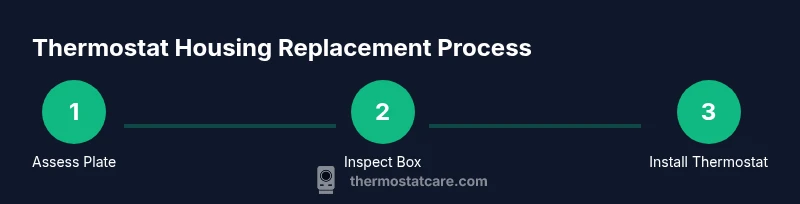
Examine the plate and box for cracks, warping, moisture, or loose connections. If the plate is solid and aligns with the new thermostat, you can reuse it; otherwise replace the plate to ensure a secure fit.
Tip: Moisture or evidence of mold is a clear sign to replace the housing. - 4
Decide whether to reuse or replace the plate
If the existing mounting plate fits the new device and remains stable, you can reuse it. If misalignment or damage is present, install the replacement backplate or a universal mounting kit.
Tip: When in doubt, install the new plate—it's often quicker and cleaner. - 5
Mount the new thermostat
Connect wires to the new thermostat according to the device’s diagram or labeling. Attach the thermostat to the wall plate and secure the screws until snug, avoiding overtightening.
Tip: Label wires if they weren’t clearly marked to prevent cross-connection. - 6
Restore power and test
Turn the breaker back on and function-test heating, cooling, and fan modes. Check for accurate readings and ensure the unit powers on smoothly.
Tip: If the screen stays blank, recheck wiring and power supply before contacting support. - 7
Finalize and document
Record the final wiring configuration and mounting details. Keep manuals and photos for future replacements or troubleshooting.
Tip: Store any spare hardware in a labeled bag for future use.
Questions & Answers
Do I need to replace the wall plate if it's damaged?
Yes. Damaged plates can lead to loose connections or poor sealing. Replace before installing the new thermostat to ensure a secure fit.
If the wall plate is damaged, replace it to ensure a secure and clean installation.
Can I reuse the old mounting plate with a new thermostat?
Only if it aligns with the new thermostat’s mounting holes and remains firmly attached. If not, use the new mounting plate or a universal kit.
Reuse only if it fits and is secure; otherwise, install a new plate.
What should I do with exposed wires after removal?
Cap wires with a wire nut, push them back into the box, and label them. Ensure no bare copper is exposed.
Cap and tuck wires safely, and label them.
What if there’s moisture damage to the housing?
Do not reuse a housing with moisture damage; this can cause corrosion or short circuits. Replace the housing and dry the box if needed.
Don’t reuse a moist housing; replace it for safety.
Is DIY replacement safe for most homes?
For most 24VAC thermostats, power off and follow the manufacturer’s directions. If you’re unsure, consult a professional.
It’s doable with power off, but don’t hesitate to hire a pro if unsure.
Watch Video
What to Remember
- Assess housing condition before swapping thermostats.
- Reuse housing when undamaged; replace only if damaged or incompatible.
- Ensure wiring and mounting compatibility for a secure install.
- Always power down before touching electrical components.
- The Thermostat Care team recommends replacing the housing only when necessary to ensure reliability.