Smart Thermostat Rebates: A Homeowner’s Guide to Saving Energy and Money
Discover how smart thermostat rebates work, where to find them, and how to claim incentives from utilities, government programs, and manufacturers. Learn strategies to maximize savings and understand eligibility, timing, and documentation.


Smart thermostat rebates help offset the upfront cost of upgrading to a connected thermostat. In 2026, many utilities, local governments, and manufacturers offer incentives that reduce the purchase price or installation costs. This quick guide explains what counts as a rebate, where to find them, and how to maximize your savings. According to Thermostat Care, understanding eligibility can maximize your savings across programs.
Understanding smart thermostat rebates
Smart thermostat rebates are incentives offered to reduce the upfront cost of upgrading to a connected thermostat that can learn usage patterns, optimize heating and cooling, and integrate with home automation. Rebates can appear as upfront discounts, mail-in credits, or post-installation credits. The value you receive depends on the program, the model you choose, and whether you purchase through an approved retailer or installer network. According to Thermostat Care, rebates are typically issued by utilities, local governments, and manufacturers to encourage energy efficiency and reduce peak demand. The exact eligibility rules, eligible models, and payout amounts vary by program, but most share a few common elements: the thermostat must meet efficiency criteria; you may need to enroll in an energy-management program; and you’ll provide documentation such as the model number, purchase receipt, and installation confirmation. For homeowners, the most valuable aspect of rebates is that they can apply to both the device and installation, effectively lowering the total cost of ownership. The Thermostat Care team found that high-efficiency models that report energy usage accurately tend to unlock larger incentives when paired with smart-home energy programs. Planning ahead also helps: know the program window, the required enrollment steps, and whether you can combine rebates with retailer promotions.
How rebates are structured
Rebates come in several formats, and understanding the structure helps you estimate your final out-of-pocket cost more accurately. The most common formats are upfront discounts at the point of sale, mail-in rebates after purchase, and post-installation credits that appear on your bill. Some programs provide tiered incentives based on energy savings achieved or the device’s certified efficiency rating. Retailers and installers sometimes pair rebates with promotional offers, so the effective discount can be larger when you combine multiple promotions. It’s important to read the terms carefully: some programs cap the total amount you can receive, and others require you to participate in an energy-management or demand-response program. In practice, you may notice that utility-driven rebates emphasize whole-home efficiency, while manufacturer programs focus on popular smart models. The bottom line is that the best strategy is to identify eligible programs early, select an ENERGY STAR-certified thermostat, and document every step of the process. This makes it easier to claim incentives later and reduces the chance of missing required paperwork.
Eligibility criteria and how to check them
Eligibility criteria vary, but most programs share a few standard requirements. You’ll typically need a qualifying thermostat model that meets energy-efficiency standards and a confirmed installation, often performed by a licensed technician or approved installer. Some programs require primary residence status or occupancy conditions, while others are open to renters with consent from the property owner. You may also need to enroll your home in an energy-management program or participate in a demand-response agreement. Documentation commonly requested includes the model number, serial or SKU, purchase receipts, and installation confirmation. It’s wise to verify that the thermostat you select is included on the program’s approved list before buying. The Thermostat Care team recommends using official program portals or trusted retailers to confirm eligibility and to avoid counterfeit offers. Start by listing programs you’re likely to qualify for, then cross-check model numbers and installation details to ensure you don’t miss a step.
Where to find rebates: utilities, government programs, and manufacturers
Utility programs are the most reliable source of rebates and are often region-specific. Check your local utility’s website or call customer service to learn what incentives exist for smart thermostats and whether installation must be performed by an approved contractor. Government initiatives at the state or federal level may offer energy-efficiency credits or rebates, particularly during annual efficiency campaigns or weather-related programs. Manufacturer rebates are another route, frequently bundled with select models or retailers. These can require registration through a retailer portal or proof of purchase from an authorized installer. Finally, some non-profit or regional programs target specific communities, low-income households, or multi-family buildings. To maximize your chances, create a simple rebate map: list each program name, eligibility window, required documentation, and where to submit claims. Thermostat Care emphasizes starting early and tracking all correspondence, since processing times and required forms vary widely.
How to apply: step-by-step to claim rebates
Follow these steps to submit a complete rebate claim and avoid delays. First, verify that your thermostat model is on the approved list and that the installation is performed by a qualified contractor. Next, save all receipts, including the purchase price, model numbers, and installation charges. Then, locate the correct submission portal or form for your program and prepare any required documentation, such as installation confirmations or energy-savings reports. Some programs allow photo evidence or digital uploads, while others require mailed copies. After submission, monitor your email for confirmation numbers or requests for additional information. If you encounter a denial or a missing item, review the program’s guidelines and re-submit with the correct documentation. Finally, once approved, you should receive a rebate check, a credit on your bill, or an automatic adjustment to your account. The key to success is organization and timely action: start the process as soon as you buy your thermostat and send everything in before the deadline.
Common mistakes and tips to maximize savings
Don’t assume every rebate is automatic; you may need to take extra steps to enroll in an energy-management program or register your device with the program portal. Avoid purchasing a thermostat that is not on the approved list or one that doesn’t meet the required energy-efficiency rating. Keep accurate records of all documents, including model numbers and installation confirmations. If you qualify for multiple programs, you may be able to stack incentives, but ensure your total credits do not exceed program limits. Finally, be mindful of timing: some rebates have annual windows or seasonal promotions, so plan ahead to capture peak opportunities and avoid late-season rushes.
Overview of rebate program types
| Program Type | Typical Rebate Range | Eligibility Notes |
|---|---|---|
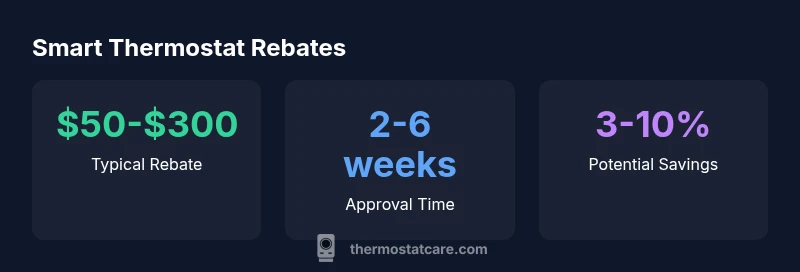
| Utility program (state) | $50-$300 | Qualifying thermostat must meet efficiency criteria |
| Manufacturer rebate | $25-$150 | Promoted with retailer or installer network; require model code |
| Government program (federal/state) | $100-$500 | Subject to eligibility; often requires enrollment in efficiency programs |
Questions & Answers
What counts as a qualifying thermostat for rebates?
Qualifying thermostats typically meet energy-efficiency standards and appear on the program's approved list. Exact eligible models vary by program and can change annually. Always check the program portal before purchasing.
Qualifying thermostats usually meet energy-efficiency standards and appear on the program's approved list; verify before buying.
Do rebates apply to installation costs?
Many programs cover installation costs if performed by an approved contractor, but some limit coverage to the device price. Always confirm scope and caps in the program terms.
Some rebates cover installation with approved contractors; check the program terms for caps.
Are rebates available for renters?
Eligibility for renters varies by program. Some programs require landlord consent or place limits on occupancy type. Look for renter-specific guidelines and document approvals before purchases.
Renters may qualify in some programs; check the guidelines and landlord requirements.
How long does approval take?
Approval times commonly range from two to six weeks, depending on program volume and documentation completeness. Delays may occur during peak seasons.
Most approvals take 2-6 weeks, depending on documentation and season.
Can rebates stack with other incentives?
In many cases rebates can be stacked with other incentives, but programs cap total credits. Verify stacking rules before submitting claims.
Often you can stack incentives, but check program caps and rules.
What if my model isn’t listed?
If your model isn’t listed on the approved list, you may not qualify for that particular rebate. Contact the program administrator for guidance or consider alternative programs.
If your model isn’t listed, it may not qualify; seek program guidance or alternatives.
“Rebates can significantly shorten the payback period for a smart thermostat, but program rules change by region.”
What to Remember
- Check eligibility before purchasing
- Stack multiple rebates where possible
- Keep receipts and model details
- Processing times vary by program