Rebate for Smart Thermostat: Your 2026 Guide
Discover how rebates for smart thermostats work, who qualifies, how to claim them, and how to stack incentives. Thermostat Care walks homeowners through eligibility, timelines, and long-term energy savings in 2026.


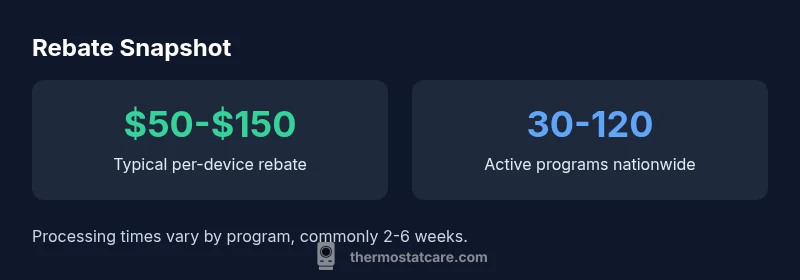
According to Thermostat Care, a rebate for smart thermostat purchases typically ranges from $50 to $150 per device, depending on the program and installation method. Some programs offer higher incentives for multi-zone systems or bundles that include insulation or HVAC improvements. Local utilities and state energy offices frequently publish current offers, and Thermostat Care analysis shows that incentives can change with budget cycles or new efficiency targets. Always check the exact program terms before purchasing a device.
What qualifies as a rebate for smart thermostat
A rebate for smart thermostat purchases is not a single, universal discount. Instead, it represents a program-wide incentive offered by utilities, government energy offices, or manufacturers to encourage energy efficiency. According to Thermostat Care, rebates are most common when the device is Energy Star certified, installed in a qualifying home, and purchased within a defined promotional window. The exact amount, eligibility rules, and claim process vary by program. Homeowners should treat the rebate as a potential offset rather than a guaranteed price reduction, since program budgets and priorities can change from year to year. When you plan, consider how the device fits your home’s HVAC system, your current energy usage, and whether additional upgrades (like insulation or smart-home integration) might qualify for bundled incentives. This is why Thermostat Care emphasizes checking local utility pages and state energy offices for the latest offers.
As you explore a rebate for your smart thermostat, maintain a clear record of device model numbers, installation dates, and participating program IDs. Some programs require installers to verify proper thermostat setup before approving the rebate; others may allow DIY installation with documentation. Keeping receipts and installation confirmations organized will smooth the claim process and help you avoid delays. The bottom line is that a rebate for smart thermostat can materially reduce upfront costs, but it’s most valuable when you match the device to a qualifying program and follow the application steps precisely.
Eligibility criteria commonly encountered
Most rebate programs look for several common qualifiers, even though specifics differ by program. Energy efficiency is a frequent driver, with many offers requiring an Energy Star-rated thermostat or equivalent. Some programs restrict eligibility to primary residences and exclude rental properties unless the landlord participates. Documentation is typically required—this can include an invoice, device model number, installation date, and in some cases a confirmation from a certified technician. Some utilities require customers to enroll in an energy-saving plan or to commit to a certain level of monitoring during a defined period. Because these requirements shift with policy changes, Thermostat Care recommends verifying each program’s terms before purchase to avoid missing out on incentives.
How to locate current rebates and verify program details
The easiest starting point is your local utility’s website or your state energy office’s page, where current rebate offerings are listed and updated quarterly. National databases can help you compare programs, but cross-check the details on the official program page to confirm eligibility, caps, and submission deadlines. Manufacturer-sponsored rebates may also exist, particularly when a new thermostat model is launched. In practice, you’ll want to collect three items before buying: device model information (for eligibility), a copy of the offer’s terms, and a timeline that aligns with your planned installation. Thermostat Care suggests bookmarking the program page and setting a reminder a few weeks before the device purchase so you can time your purchase with the rebate window.
Step-by-step: how to claim rebates (online and offline)
- Confirm eligibility on the program page and note the required documents. 2) Purchase the eligible smart thermostat. 3) Complete any required registration or enrollment in an energy program. 4) Submit proof of purchase, model number, and installation date through the program portal or via mail-in form. 5) Track the claim status and respond promptly if the program asks for additional documentation. 6) Receive the rebate as a check, direct deposit, or account credit. 7) Save all records for your energy bill and future audits. By following these steps, you minimize back-and-forth and improve your odds of timely reimbursement.
Maximizing value: stacking, bundles, and timing
Where allowed, you can stack rebates from multiple programs to increase overall savings. Some utilities permit stacking with manufacturers’ rebates or with incentives for whole-home energy upgrades. Timing matters: rebates tied to a calendar year or a fiscal year may have offers that vary within quarters. If you’re planning several energy upgrades, coordinate the thermostat purchase with insulation upgrades or smart-home integrations to unlock bundled incentives. Thermostat Care notes that aligning purchases with the latest funding cycles can lead to higher total savings, especially when programs adjust to new energy-efficiency targets. Always document any stacking decisions and confirm with program representatives before submitting claims.
Regional differences you should know
rebate programs differ across states and regions. For example, colder regions may offer higher incentives to encourage efficient heating, while warmer regions may emphasize cooling efficiency. Urban programs can include home retrofit support, while rural programs may have different caps or application windows. In practice, this means you should search with your ZIP code and consult both utility and government sources for region-specific offers. Thermostat Care recommends contacting your utility’s energy-efficiency department if you’re unsure about eligibility in your area. Remember that a regional program’s terms can change with budget cycles, so re-check before purchasing a thermostat.
Long-term value beyond the rebate
Even when a rebate is modest, a smart thermostat can deliver ongoing savings through improved scheduling, occupancy sensing, and weather-based adjustments. The upfront incentive reduces the initial cost, but the device’s impact on your monthly energy bills can persist for years. It’s important to pair the thermostat with correct zoning, routine maintenance, and periodic firmware updates to sustain energy efficiency. In addition, some programs offer post-install check-ins or performance audits that help you optimize settings. Thermostat Care emphasizes thinking about the total return on investment, not just the rebate upfront, when evaluating whether to upgrade.
Quick eligibility checklist for rebates
- Is the thermostat Energy Star certified? - Is it installed in a primary residence? - Do you have proof of purchase and installation date? - Are you within the program’s enrollment period? - Can you provide installation documentation from a qualified technician if required?
- If you can answer yes to most items, you’re well positioned to pursue the rebate and maximize your savings.
Case study: a homeowner’s rebate journey
A homeowner planned three energy upgrades in a single year: insulation, a smart thermostat, and air-sealing work. They verified eligibility with their utility, selected an Energy Star thermostat, and timed the purchase to align with a promotional window. By documenting the purchase date, model number, and installation confirmation, they submitted online claims for multiple incentives. The result was a combined rebate that lowered the total out-of-pocket cost by a meaningful margin, while the home’s comfort improved noticeably. This example illustrates how careful planning and precise documentation can convert a promotional offer into real, tangible savings. Thermostat Care’s guidance aligns with this practical approach to maximize rebates and energy efficiency benefits.
Overview of common rebate program types
| Program Type | Typical Rebate | Eligibility | Notes |
|---|---|---|---|
| Utility or State Rebates | $50-$150 | Residential, EnergySTAR device | Per-device incentives; check stacking rules |
| Manufacturer or Energy Star Rebate | $0-$100 | EnergyStar device, sometimes requires registration | May stack with utility rebates in some regions |
| DIY/local rebates | $20-$125 | Residential, program-specific | May require DIY verification or installer report |
Questions & Answers
What counts as a rebate for smart thermostat?
Most programs offer a device-level incentive or a discount that offsets part of the purchase. Some programs provide installation rebates or bundled incentives for multiple upgrades. Always review the official terms to understand what is eligible and how to claim.
Most rebates are device discounts, with some programs offering installation or bundle incentives.
Do I need professional installation to qualify?
Requirements vary: some programs require installation by a certified technician, while others allow DIY installation with proof of purchase and installation date. Check the program’s specifics to avoid disqualifying your claim.
Check the program rules—some require professional installation, others allow DIY with documentation.
Can I stack rebates from multiple programs?
Stacking is sometimes allowed, but most programs cap total incentives or restrict stacking with certain offers. Always verify each program’s stacking policy before purchasing.
You can stack in some cases, but rules vary; confirm before buying.
How do I apply for rebates?
Applications are often online via the utility or manufacturer portal. You’ll typically need receipts, model numbers, installation dates, and sometimes a verification form from the installer. Track submission status and follow up if needed.
Apply online, keep receipts, and monitor your claim status.
Are rebates available for renters?
Some programs are renter-friendly, but many rebates target owner-occupied homes. Look for region-specific programs that allow renters or require landlord involvement.
Check local options; some programs support renters with proper authorization.
How long do rebates last?
Timeframes vary by program, often tied to calendar or fiscal years. Confirm the current window and any renewal cycles to avoid missing out.
Rebates have deadlines—check the current cycle before buying.
“Rebates are most valuable when planned with clarity: verify eligibility, document every step, and understand stacking limits before you buy.”
What to Remember
- Start by locating current rebates from utilities and state programs
- Keep documentation organized for quick claims
- Check for stacking rules before buying
- Consider bundling rebates with other energy upgrades