Why Is My Car Overheating With a New Thermostat: Troubleshooting Guide
Urgent, practical guide to diagnose why your car overheats after a thermostat replacement. Step-by-step checks, common culprits, and safety tips to get you back on the road.


Most car overheating after installing a new thermostat is caused by installation issues or cooling-system air pockets. Start by confirming the thermostat is oriented correctly, re-bleed the cooling system to remove air, and check coolant level. If the engine still overheats, inspect the radiator cap and water pump, then consider a professional pressure test.
Why overheating can happen after a thermostat replacement
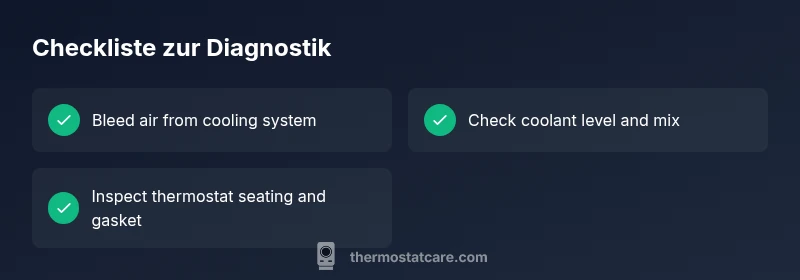
According to Thermostat Care, you’re not alone if you’re asking why is my car overheating with new thermostat. A replacement can trigger overheating if the new part is installed incorrectly, if air remains in the cooling system, or if other cooling components are failing. Start by verifying the thermostat’s orientation, ensuring the gasket seats properly, and bleeding air from the system. Check for coolant leaks and confirm the coolant type matches your engine requirements. After the bleed, run the engine at idle to gauge temperature with the radiator cap off temporarily (careful: hot steam). If the temperature continues to rise, the problem is likely beyond the thermostat.
How a thermostat replacement can go wrong
A new thermostat may cause overheating if it’s installed upside down, if the seal or gasket is damaged, or if the engine’s cooling system wasn’t properly purged of air. An incorrect thermostat (wrong temperature rating) can also stay closed too long or open too early, starving the engine of cooling or letting it overheat quickly. In addition to the thermostat, other common culprits include a faulty radiator cap, a seized water pump, a clogged radiator, or low coolant. When diagnosing, don’t assume the thermostat is to blame—verify each component and test cooling-system pressure to detect leaks.
Quick checks you can perform safely
- Make sure the engine is cool before opening the hood; never remove the radiator cap when hot.
- Check coolant level in the reservoir and radiator (when cool) and top off with the correct mix.
- Inspect hoses for cracks or bulges and ensure clamps are tight.
- Verify the radiator fan operates when the engine reaches operating temperature.
- Confirm the thermostat housing is not cracked and the thermostat is seated correctly with the gasket facing the engine block.
If you’re wondering why is my car overheating with a new thermostat, these checks help narrow the issue quickly. If you detect leaks or the fan doesn’t run, stop and seek a professional.
Deep dive: symptoms and what each sign means
- Sudden temperature spike with no change in load often points to air pockets or an airlock in the cooling system.
- The gauge climbs steadily while idling but stabilizes once moving may indicate a radiator or water-pump issue rather than the thermostat.
- Quick fluctuations between hot and normal readings suggest a faulty temperature sensor or wiring problem.
- Steam from under the hood typically signals a coolant leak; this safety hazard should be addressed immediately.
Safety and prevention when working on cooling systems
- Always work with the engine cool and wear eye protection.
- Use the correct coolant type and mix; mixing wrong chemistry can damage seals.
- Bleed air slowly in stages and follow your vehicle’s service manual.
- If you are unsure about the installation orientation, consult the manual or a professional.
Prevention tips include regular coolant flushes, checking for leaks, and keeping radiator fins clean to maximize airflow.
When to call a professional
If overheating continues after re-checking the thermostat orientation, bleeding the system, and verifying coolant, you should schedule service. A mechanic can pressure-test the cooling system, inspect the water pump, radiator, radiator cap, and hoses, and verify the thermostat’s temperature rating matches your engine’s needs. Prolonged overheating can warp the head gasket or damage the cylinder head.
Steps
Estimated time: 60-90 minutes
- 1
Power down and cool the engine
Park safely, turn off the engine, and wait for the system to cool. This prevents burns and gives you a clear view of coolant leaks. Gather your tools and have protective gloves ready.
Tip: Never open a hot radiator cap; opening cold can cause severe scalding. - 2
Verify thermostat orientation
Remove the thermostat housing and inspect the thermostat’s orientation. Ensure the spring side faces the engine and the flow direction matches the intake path. Refit with a fresh gasket if needed.
Tip: Take a photo during disassembly to ensure proper reassembly later. - 3
Bleed air from the system
With the radiator cap off, start the engine and let it reach operating temperature with the heater on. Gently rev to aid air release and watch for steam/air bubbles exit. Add coolant as needed to maintain level.
Tip: Bleed in small increments and monitor the gauge closely. - 4
Check coolant level and mixture
Coolant should be at the recommended level. Use the correct mixture (often 50/50 with distilled water) unless your vehicle specifies otherwise. Top off as needed after bleeding.
Tip: Use distilled water to prevent mineral buildup. - 5
Inspect other cooling components
Check radiator cap for wear, inspect hoses for cracks, and verify the radiator fan engages at high temperature. If you notice leaks or a seized pump, address these parts first.
Tip: Cap and hoses are cheap, but missing them can cause repeated overheating. - 6
Test drive and monitor
Take a short drive while monitoring the temperature gauge and fan operation. If the needle returns to normal and stays steady, you’ve likely cleared the issue. If it climbs again, further diagnosis is required.
Tip: Record temperatures and any abnormal sounds for the mechanic.
Diagnosis: Engine overheats after installing a new thermostat
Possible Causes
- highAir pockets in cooling system; improper bleeding
- highThermostat installed upside down or wrong orientation
- highLow or contaminated coolant; wrong mixture
- mediumFaulty radiator cap or pressure issue
- mediumWater pump failure or clogged radiator
Fixes
- easyRe-bleed cooling system following service manual; remove air via coolant reservoir and radiator cap
- easyRemove and re-install thermostat with correct orientation and gasket; verify part rating matches engine
- easyReplace coolant with correct type; flush if contaminated
- mediumTest cooling-system pressure for leaks; inspect radiator cap and hoses
- hardInspect water pump and radiator for blockages or failure; replace if needed
Questions & Answers
Can a misfit thermostat cause overheating even after replacement?
Yes. If the thermostat rating is incorrect or it’s installed in the wrong orientation, it can cause overheating. Always verify the part matches your engine requirements.
Yes. A wrong or misinstalled thermostat can cause overheating.
What are signs overheating is not the thermostat?
If the fan runs inconsistently, there are coolant leaks, or the radiator cap is suspect, the issue might lie outside the thermostat. Check windings, hoses, and the water pump as well.
Other cooling-system parts may be the problem, not the thermostat.
Do I need a coolant flush after overheating?
If the coolant is dirty or contaminated, a flush is advisable. Otherwise topping off with the correct mixture may suffice after bleeding.
A coolant flush is often wise if coolant looks dirty.
How long should I wait after a test drive to retest overheating?
Let the engine cool completely before rechecking. If it overheats again, don’t push it; get a professional inspection.
Let it cool and recheck, don’t push it if it overheats again.
When is professional help definitely needed?
If overheating persists after basic checks or you notice leaks, warped components, or head-gasket concerns, see a mechanic promptly. Persistent overheating can cause serious engine damage.
If it keeps overheating, see a pro fast.
Watch Video
What to Remember
- Bleed air after thermostat replacement
- Verify correct thermostat orientation
- Check cooling-system components beyond the thermostat
- Seek professional help if overheating persists