Why Is My Car Overheating Without Thermostat? Troubleshooting Guide
Urgent guide to diagnose and fix engine overheating when the thermostat is missing. Step-by-step checks, common causes, and prevention tips for DIYers.


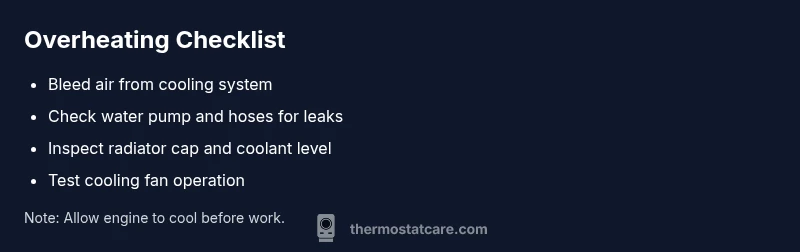
Removing the thermostat alters coolant flow, potentially causing hot spots. A concise answer: bleed the cooling system to remove air, check for leaks, then inspect the water pump and cooling fan. If this doesn't resolve overheating, pursue professional diagnostics.
Why the thermostat matters (and what happens without it)
If you’re wondering why is my car overheating without thermostat, the answer lies in how the cooling system regulates engine temperature. The thermostat acts as a valve that controls flow between the engine and radiator. Without it, coolant can circulate too quickly or take the wrong path, leading to hot spots and inconsistent temperatures. The result is heat buildup in parts of the engine and an overheating warning. This is why many overheating incidents involve airflow and circulation issues rather than simply a stalled fan. Understanding the thermostat’s role helps you diagnose the issue and decide when to seek professional help.
Common causes when no thermostat is present
When the thermostat is removed or malfunctioning, several issues can trigger overheating. Air trapped in the cooling system can block proper coolant flow and form pockets of high heat. A worn water pump reduces overall circulation, while a clogged radiator or degraded coolant impairs heat transfer. A failed cooling fan or weak relay means the radiator won’t shed heat efficiently, especially at idle or slow speeds. Leaks and cracked hoses can drop pressure and coolant level, compounding the problem. Remember that the absence of a regulator changes flow paths, which may bypass critical cooling stages.
Safety first: what not to do
Safety is non-negotiable when dealing with hot cooling systems. Never open the radiator cap while the engine is hot; hot coolant under pressure can cause severe burns. Don’t run the engine with low coolant or continue driving if you see the overheating warning; extended operation can warp cylinders or head gaskets. If you must inspect, allow the engine to cool completely first, and use gloves and eye protection. If you’re unsure about any step, pause and contact a professional.
Diagnostic flow: symptom to diagnosis
A logical, symptom-driven flow helps identify root causes without unnecessary parts swaps. Start with the simplest checks (coolant level, visible leaks) and progress to airflow and pump/fan tests. If the symptom persists after basic checks, advance to more involved diagnostics like pressure testing and electrical checks for the cooling fan. The goal is to confirm whether the issue is cooling-loop related, airflow-related, or a combination.
Quick fixes you can try now
Initiate safe, low-risk actions first. Refill coolant if levels are low, then bleed the cooling system to remove air pockets. Inspect the radiator cap for proper pressure sealing and look for obvious leaks in hoses and clamps. Finally, verify the cooling fan comes on when the engine reaches operating temperature. If overheating continues, avoid long drives and seek professional testing to avoid engine damage.
Prevention and maintenance to avoid overheating
Regular maintenance is the best defense. Use the manufacturer’s recommended coolant type and mix, replace old coolant every few years, and flush the system to remove deposits. Check fan operation, inspect belts, and ensure the thermostat housing is intact. Periodic pressure tests and radiator cleaning help maintain optimal heat exchange. Address leaks promptly and keep an eye on the temperature gauge during hot weather or heavy loads.
Steps
Estimated time: 60-120 minutes
- 1
Check coolant level and for leaks
Park safely, wait for the engine to cool, and inspect the reservoir and hoses. Refill coolant if at the correct level and look for visible leaks around clamps, hoses, and the radiator. A simple level check can prevent a false overheating reading.
Tip: Keep a clean container ready to catch any coolant and never open hot hoses. - 2
Bleed air from the cooling system
Air pockets are a common cause of overheating when the thermostat is absent. Use the manufacturer’s bleeding procedure or standard bleed technique for your vehicle to release trapped air. Recheck level after bleeding and top off coolant as needed.
Tip: Use the correct bleed point order to avoid reintroducing air. - 3
Check radiator cap and coolant mixture
A faulty radiator cap can vent incorrectly and reduce system pressure. Inspect the seal and replace if needed. Verify coolant-to-water ratio matches factory specs, and use the recommended coolant type.
Tip: Do not over-tighten the cap; secure snugly to avoid leaks. - 4
Test cooling fan operation
With the engine at operating temperature, verify the cooling fan engages. If it doesn’t, check the fan fuse, relay, and wiring. A non-working fan can cause overheating at idle or slow speeds.
Tip: Ear-ping on the fan relay click can indicate a solid electrical path. - 5
Inspect water pump and hoses
Look for coolant seepage around the water pump pulley, belts, and hoses. A failing pump reduces flow, making overheating more likely. Replace if you observe leakage or wobbling pulleys.
Tip: Watch for unusual belt wear; a slipping belt reduces pump performance. - 6
Consider professional diagnosis if symptoms persist
If overheating continues after basic checks, a professional diagnosis is essential. Persistent overheating can indicate head gasket issues or internal leaks not visible on the surface.
Tip: Do not drive long distances when overheating is suspected.
Diagnosis: Engine overheating after removing thermostat or with thermostat malfunction
Possible Causes
- highAir trapped in cooling system
- mediumWater pump worn or failing
- mediumRadiator blockage or coolant degradation
- highCooling fan not turning on or weak
- lowCoolant leaks reducing pressure
Fixes
- easyBleed cooling system to remove air pockets
- hardInspect/replace water pump if flow is poor
- easyFlush radiator and replace coolant
- mediumTest and repair cooling fan or relay
- mediumRepair leaks and replace hoses
Questions & Answers
Can a car overheat if the thermostat is removed?
Yes. Without the thermostat, coolant flow is less regulated, which can create hot spots and overheating under certain conditions. Always re-check system function and consult a professional if overheating occurs.
Yes. Removing the thermostat can lead to uneven cooling and overheating in some cases; get a professional check if it happens.
What are signs air is in the cooling system?
Common signs include bubbling in the reservoir, fluctuating temperature readings, and a hissy or gurgling sound from the cooling system. These indicate trapped air that needs bleeding.
Look for bubbling or unusual sounds in the coolant reservoir; it means air is trapped.
Should I drive a car that’s overheating?
No. Continuing to drive can cause severe engine damage. Safe action is to pull over, turn off the engine after it cools a bit, and call for service or tow if needed.
No—pull over and stop driving if the engine overheats, then seek service.
How long does it take to bleed the cooling system?
Bleeding usually takes 15-30 minutes, depending on the vehicle and the bleeding method. Follow the specific procedure for your car.
Bleeding typically takes about a quarter of an hour to half an hour, depending on the system.
When should I see a mechanic for overheating?
If overheating persists after basic checks, or you notice persistent leaks, head gasket signs, or steam, seek professional diagnostics promptly.
If the problem doesn’t clear after basic checks, it’s time to see a mechanic.
Watch Video
What to Remember
- Bleed air promptly to restore proper coolant flow
- Check for leaks and ensure the water pump and fan operate
- Do not drive if the temperature gauge climbs; seek help
- Regular maintenance reduces overheating risk and protects engine health