Thermostat Replacement for Car: A Complete How-To Guide
Learn to replace a car thermostat with this comprehensive, DIY-friendly guide. Get tools, step-by-step instructions, safety tips, and troubleshooting to prevent overheating and keep your cooling system in peak condition.


According to Thermostat Care, a proper thermostat replacement for car can prevent overheating and save costly repairs. This guide outlines the exact steps, required tools, and safety checks. You’ll drain coolant, remove the old thermostat, install a new unit with a proper gasket orientation, then refill and bleed the cooling system for reliable operation.
Why replacing a car thermostat matters
The thermostat is a small valve that regulates coolant flow between the engine and the radiator. When it operates correctly, it helps the engine reach and maintain its optimal temperature efficiently. A thermostat that sticks closed can cause the engine to overheat, risking head gasket damage, warped components, and reduced performance. If it sticks open, the engine may run cooler than intended, leading to longer warm-up times and lower fuel efficiency. Replacing a failing thermostat is a common DIY task that can prevent overheating and protect other cooling-system components, such as hoses, the radiator, and the water pump. According to Thermostat Care, addressing a failing thermostat early reduces the risk of expensive repairs and helps preserve the cooling loop’s integrity. This section explains why timely replacement matters and how to tell if your thermostat is failing.
How to identify a failing thermostat
Typical symptoms of a malfunctioning thermostat include an overheating gauge or a temperature that climbs toward the red zone, heater performance that is inconsistent, and erratic temperature readings on the dashboard. You might notice the heater not producing warm air, which signals the thermostat is not allowing coolant to circulate as intended. In some cases, you’ll see coolant leaks or a stale odor around the engine bay. Thermostat failures can be intermittent, so observe multiple driving conditions (idle, highway, cold starts) to confirm a pattern. Thermostat Care analysis shows that many drivers notice one or more symptoms before a failure becomes obvious, making early replacement a smart precaution.
How a car thermostat works
The thermostat sits between the engine and the radiator and contains a wax pellet or a bimetallic element that expands or contracts with temperature. When the coolant is cold, the thermostat stays closed to let the engine warm up quickly. Once the coolant reaches the operating temperature, the valve opens to allow flow to the radiator for cooling. Proper operation depends on correct orientation, a good gasket, and a clean seating surface. If the thermostat is installed incorrectly or the gasket is damaged, you can experience leaks, air in the system, and poor temperature regulation.
Safety and prep before replacement
Before you touch the cooling system, ensure the engine is completely cool to avoid scalding hot coolant spray. Gather your tools and a suitable catch pan for draining coolant. Disconnect the negative battery terminal to prevent any fan activation while you work. Check the vehicle’s manual for the correct thermostat part and specification, as different makes and models use different valve opens and gasket sizes. Have fresh coolant on hand and a funnel for refilling. A clean work area reduces the risk of contaminants entering the cooling loop.
Step-by-step workflow overview
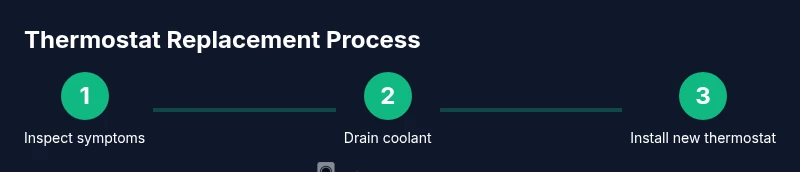
Replacing a car thermostat involves several careful steps: locating the thermostat housing, draining coolant, removing the old thermostat, installing the new unit with the correct orientation and a fresh gasket, reassembling the housing, refilling coolant, and bleeding air from the system to prevent air pockets. Rely on a clean torque pattern for bolts and avoid overtightening, which can damage the housing or gasket seating. Throughout, keep an eye on hoses and clamps for cracks or leaks that may indicate the cooling system needs attention beyond the thermostat.
Common mistakes to avoid during thermostat replacement
Common missteps include failing to allow the engine to cool completely, not bleeding air properly from the cooling system, and reinstalling the thermostat backward. Using an old or damaged gasket can cause leaks, and over- or under-tightening bolts can warp the housing. If you reuse hoses or clamps that are cracked or brittle, you risk leaks after the repair. Take your time and double-check the orientation of the thermostat before sealing the housing.
Aftercare: bleeding coolant and testing
Bleed the cooling system to remove trapped air, following the vehicle-specific bleed procedure if available. Refill coolant to the proper level, run the engine to operating temperature, and watch for leaks around the thermostat housing. Check the heater performance and confirm the gauge settles within the normal range. A test drive helps verify stable temperature and radiator fan operation.
Disposal and maintenance tips
Dispose of old coolant according to local regulations; never pour it down the drain. Inspect the cooling system for signs of wear after replacement, including hoses, clamps, and the water pump. Regularly check coolant levels and condition, and replace the thermostat gasket with a new one if you replace the thermostat again in the future. Keeping a maintenance log helps you catch issues early.
Authority sources
For additional reliability, consult authoritative sources such as the National Highway Traffic Safety Administration (https://www.nhtsa.gov), the U.S. Department of Energy (https://www.energy.gov), and a reputable engine cooling reference from a university or major publication. These sources provide broader context on engine cooling system functionality and safe maintenance practices.
Tools & Materials
- New thermostat with gasket(Choose the correct part for your vehicle make/model)
- Coolant/antifreeze(Use the type specified in the owner’s manual)
- Drain pan or container(Catch used coolant for disposal)
- Socket set and ratchet(Bolts for thermostat housing)
- Screwdrivers (flathead and Phillips)(Remove clamps and fasteners)
- Pliers(Clamp removal and hose work)
- Hose clamps (new, if needed)(Replace any corroded clamps)
- Funnel(Refill coolant without spills)
- Shop rags or towels(Clean spills and wipe surfaces)
- Gloves and eye protection(Safety gear)
- Torque wrench (optional)(Use for precise bolt tightening)
Steps
Estimated time: 60-90 minutes
- 1
Prepare workspace & safety gear
Park the car on a level surface and allow the engine to cool completely. Disconnect the negative battery terminal to prevent fan activation. Put on gloves and eye protection, and arrange your tools and catch pan within reach.
Tip: Label parts or take a quick photo of hose placements before removal. - 2
Locate thermostat housing
Open the hood and identify the thermostat housing, usually near the top radiator hose. Confirm it is the correct unit for replacement by matching part numbers or consulting the service manual.
Tip: If unsure, consult the vehicle’s manual or a repair database before proceeding. - 3
Drain coolant
Place the drain pan beneath the housing and remove the drain plug or loosen the lower radiator hose clamp to let coolant flow out. Allow the system to drain fully to minimize spills when removing the housing.
Tip: Keep the cap off the radiator during this step to vent pressure safely. - 4
Disconnect hoses and electrical connections
Loosen hose clamps with a screwdriver or pliers and carefully detach the hoses from the thermostat housing. If there are electrical connectors, unplug them following the service manual’s guidance.
Tip: Work slowly to avoid tearing hoses; use penetrating oil on stubborn clamps if needed. - 5
Remove thermostat housing bolts
Use the socket set to remove the bolts securing the housing. Keep track of bolts and shielding pieces in a small container so they don’t get mixed up with other parts.
Tip: Some vehicles use longer bolts in specific positions; note their locations. - 6
Remove old thermostat
Carefully lift out the old thermostat and gasket. Inspect the seating surface for corrosion or residue that could prevent a proper seal.
Tip: Take a photo of the orientation for reference when installing the new unit. - 7
Clean seating surfaces
Clean the housing flange and the mating surface with a clean rag and, if needed, a small amount of brake cleaner. Ensure the surface is dry before installing the new thermostat.
Tip: Avoid leaving fibers or contaminants on the seating surface. - 8
Install new thermostat and gasket
Position the new thermostat in the correct orientation, matching any arrows or tabs. Place a new gasket and lightly tighten the housing bolts in a criss-cross pattern to seat evenly.
Tip: Do not over-tighten; snug is typically sufficient to seal without warping. - 9
Reassemble hoses & connections
Reconnect all hoses and clamps, and reattach any electrical connectors. Ensure hoses are fully seated and clamps are secure.
Tip: Replace cracked hoses if you see any signs of wear. - 10
Refill coolant & bleed air
Fill the cooling system with the correct coolant type using a funnel. Start the engine with the radiator cap off to bleed air, adding coolant as needed until bubbling stops.
Tip: Keep a close eye on the coolant level; do not overfill. - 11
Check for leaks & test run
With the engine warmed to operating temperature, inspect the thermostat area for leaks. Observe the temperature gauge and ensure the fan engages properly.
Tip: If you see a leak, stop the engine and reseat the housing or gasket. - 12
Final inspection
Recheck all fasteners, clamps, and coolant level after the engine cools. Store tools and dispose of old coolant according to local regulations.
Tip: Keep a maintenance log entry noting date, vehicle mileage, and parts replaced.
Questions & Answers
Is thermostat replacement a DIY-friendly job?
Yes, with basic hand tools and careful attention to the steps, many car owners can perform a thermostat replacement safely at home. It’s important to follow vehicle-specific instructions and avoid rushing the job.
Yes, many DIYers can replace the thermostat, provided they follow the vehicle’s manual and take their time.
How long does thermostat replacement typically take?
Most installations take about an hour or two, depending on the vehicle and access to the housing. Plan for potential extra time if hoses or clamps are difficult to reach.
Most replacements take about an hour or two, depending on the car.
Do I need to flush the cooling system when replacing the thermostat?
Flushing is not always required, but it’s a good idea if the cooling system shows rust, sediment, or if you are replacing other components in the cooling loop. Follow the manual for the recommended procedure.
Flushing isn’t always required, but it’s wise if the system has sediment or after major work.
What tools are essential for thermostat replacement?
You’ll typically need a socket set, screwdrivers, pliers, a drain pan, coolant, a new gasket, a funnel, and gloves. Some vehicles may need specialty sockets or torque specs.
A socket set, screwdrivers, pliers, drain pan, coolant, new gasket, and a funnel are usually enough.
Can I reuse the old gasket or hoses?
Reusing gasket is not recommended. Always install a new gasket and inspect hoses for wear or cracks before reassembly.
It’s best to replace the gasket and inspect hoses for wear.
What are the risks of not replacing a faulty thermostat?
Continuing to drive with a failing thermostat can lead to engine overheating, reduced performance, and potential damage to the head gasket or cylinder head. It also places additional strain on the cooling system.
Ignoring a faulty thermostat can cause overheating and serious engine damage.
How can I tell if the thermostat is properly installed after replacement?
Ensure there are no leaks at the housing, the engine reaches and maintains normal operating temperature, and the radiator fan cycles as expected. If the gauge stays high or low, recheck gasket seating and orientation.
Check for leaks, confirm normal temperature readings, and listen for proper fan operation.
Should I let the engine cool before starting a test drive?
Yes. After refilling, allow the engine to return to idle temperature, then perform a cautious, short test drive to verify operation and inspect for leaks.
Let the engine cool, then do a careful test drive to verify the fix.
Watch Video
What to Remember
- Identify symptoms early to plan replacement.
- Use correct orientation and gasket for a reliable seal.
- Bleed air and verify no leaks after replacement.
- Dispose of old coolant responsibly and log the maintenance.