Ford Focus Thermostat Replacement: Step-by-Step Guide
Learn how to replace the thermostat in a Ford Focus with a safe, car-specific approach. This guide covers tools, steps, caution, and post-install checks to prevent overheating and engine damage.


You’ll learn how to replace a faulty thermostat in a Ford Focus, including the right tools, step-by-step actions, and post-install checks. This guide emphasizes safety, cooling-system care, and proper coolant handling to prevent overheating.
Why replacing the thermostat in a Ford Focus matters
According to Thermostat Care, the thermostat is a critical gatekeeper for engine temperature. When it sticks shut or fails to open, the engine can overheat, potentially warping the head gasket or reducing performance. In a Ford Focus, the thermostat sits in the cooling system where it controls coolant flow between the engine and radiator. Replacing a failing unit promptly helps maintain optimal operating temperature, protects the cooling loop, and preserves fuel efficiency. This section explains why a thermostat replacement is often more cost-effective than chasing recurring overheating problems, and why drivers should address symptoms early rather than postponing a fix. By understanding the role of the thermostat, you’ll know what you’re trying to restore and why a precise replacement matters for long-term reliability.
Symptoms that point to a faulty thermostat in a Ford Focus
A malfunctioning thermostat often reveals itself through a mix of temperature behavior and performance changes. Common signs include the temperature gauge fluctuating abnormally, the engine running hot even after a short drive, or the heater failing to produce warm air. You may also notice a coolant smell, visible coolant leaks near the thermostat housing, or the cooling fan running constantly. In some cases the engine never reaches operating temperature, which can trigger poor fuel economy and rough idle. If you observe any combination of these symptoms, a thermostat check is warranted before the problem escalates.
How to choose the right thermostat replacement for a Ford Focus
Thermostats are not universal; Ford Focus models vary by year and engine type. Start by consulting your vehicle’s manual or a trusted parts catalog to confirm the exact part number and temperature rating appropriate for your engine. Choose a high-quality thermostat with a durable seal and a gasket compatible with your cooling system’s design. When possible, select a kit that includes a new gasket, O-ring, and a fresh seal to minimize the risk of leaks. If you’re unsure about compatibility, ask a parts associate to verify fitment for your year and engine code. A correct fitty ensures proper sealing and reliable performance for years to come.
Safety, prep, and environmental considerations
Working around the cooling system involves hot coolant and pressure. Always let the engine cool completely before starting, and disconnect the negative battery terminal to avoid shorts. Work in a well-ventilated area and have absorbent rags ready for spills. Dispose of old coolant according to local regulations; never pour it down the drain or onto the ground. Protect the vehicle with ramps or a jack stand, and keep a clean workspace to avoid losing small fasteners. The goal is to replace the thermostat without causing a coolant spill or accidental damage to nearby components.
A practical overview of cooling system basics you should know before replacement
The thermostat regulates when coolant flows through the radiator. When it opens too early, the engine may run cooler than ideal, wasting energy and reducing efficiency. When it sticks closed, the engine overheats quickly. The Ford Focus cooling system depends on proper coolant flow, a sealed housing, and intact hoses. Inspect the radiator cap, pressure this system maintains, and ensure there are no obstructions in the radiator or hoses. A clean path for coolant helps the thermostat perform as designed.
Common mistakes and how to avoid them
Mistakes range from opening the radiator cap while the engine is hot to reusing old gaskets without a fresh seal. Forgetting to bleed air from the cooling system after refilling coolant can lead to air pockets that hinder proper circulation. Failing to torque bolts to the manufacturer’s specification can result in leaks. To avoid these issues, use the correct tools, follow the torque specs, and double-check all hose clamps. A careful approach reduces the risk of leaks or rework.
How to verify the repair and finalize the coolant system
After installing the new thermostat, refill the cooling system to the correct level and bleed air as recommended in the service manual. Start the engine and monitor the temperature gauge, cooling fan operation, and any leaks around the thermostat housing. Take the vehicle for a short test drive, then recheck the level and top off as needed. If the gauge behaves normally and there are no leaks, you’ve completed a successful thermostat replacement in your Ford Focus.
Post-repair maintenance tips for the Ford Focus cooling system
Regular coolant checks and a coolant replacement interval aligned with the owner’s manual help maintain reliability. Periodically inspect the hoses for swelling, cracks, or leaks and verify the radiator cap seals well. A healthy cooling system not only prevents overheating but also supports consistent engine performance. Schedule a cooling system check at your next service if you notice any changes in temperature behavior or heater output.
Tools & Materials
- New thermostat kit compatible with Ford Focus(OEM or high-quality aftermarket kit; include gasket/O-ring)
- Coolant(Use the correct type for your model and climate; mix 50/50 if concentrated)
- Drain pan(To capture coolant and minimize spills)
- Funnel for refill(Pour coolant without spilling on engine components)
- Socket set with metric sockets(Sizes vary by model; common 8mm-12mm for housing bolts)
- Torque wrench(To specification to avoid leaks (check manual))
- Flat-head and Phillips screwdrivers(For hose clamps and brackets)
- Pliers/needle-nose pliers(Remove clamps and reposition hoses)
- Rags or shop towels(Clean spills and wipe down surfaces)
- Shop towels or degreaser(Optional for cleaning gasket surfaces)
- Ramp or jack stands(Raise the car safely if the access is under the engine)
- Gloves and eye protection(Safety first during disassembly)
- Service manual or OEM guide(Verify torque specs and cooling-system bleed procedure)
Steps
Estimated time: 1.5-3 hours
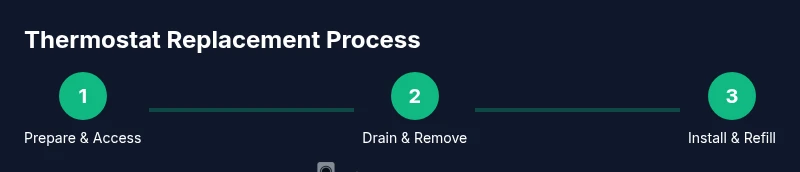
- 1
Prepare and secure the vehicle
Park on level ground and engage the parking brake. Chill the engine until cool, then disconnect the negative battery terminal. Raise the car with ramps or jack stands and set up wheel chocks.
Tip: Take photos of the setup before disassembly for reference. - 2
Drain coolant and access the thermostat
Place a drain pan under the radiator and open the drain valve or drain plug. Allow coolant to flow out until the system is low. Loosen hoses that may block access to the thermostat housing.
Tip: Do not remove the radiator cap until the system is cool to avoid scalding. - 3
Remove thermostat housing cover
Unbolt the thermostat housing, keeping track of bolts and brackets. Gently lift the cover to expose the thermostat without tearing any hoses.
Tip: Inspect the gasket and housing mating surface for damage. - 4
Extract the old thermostat
Carefully lift out the old thermostat from its seat. Note orientation; most thermostats have a spring side that faces inward.
Tip: Take a photo of the orientation prior to removal for accuracy. - 5
Clean mating surfaces
Clean the thermostat seat and housing with a rag or degreaser. Ensure no old gasket material remains to prevent leaks.
Tip: Avoid scratching the sealing surface with metal tools. - 6
Install the new thermostat and gasket
Place the new thermostat in the same orientation as the old one. Install the gasket or O-ring and reseal the housing.
Tip: Apply a light coat of anti-seize if recommended by the manual on any bolts. - 7
Reassemble and refill coolant
Reinstall the housing, torque bolts to spec, and reconnect any hoses. Refill the cooling system with the proper coolant mix.
Tip: Bleed air from the system according to the manual to prevent air pockets. - 8
Check operation and leaks
Reconnect the battery, start the engine, and monitor the temperature gauge. Look for leaks around the thermostat housing and ensure the fans engage as the engine warms.
Tip: If the gauge stays high or shows abnormal behavior, turn off and recheck the bleed and connections. - 9
Test drive and final top-off
Take a short test drive and then re-check coolant levels. Top off if needed and inspect for drips after cooling down.
Tip: Keep a log of coolant type and any symptoms seen for future reference.
Questions & Answers
What are the most common signs of a failing thermostat in a Ford Focus?
Common signs include an overheating engine, fluctuating temperature gauges, and poor heater performance. You may also notice coolant leaks near the thermostat housing. If several symptoms appear together, plan a thermostat replacement.
Typical signs are overheating, a fluctuating temperature gauge, and weak cabin heat. If you see these together, plan a thermostat replacement.
Can I drive the car if the thermostat is failing?
Driving with a faulty thermostat is risky. It can cause overheating and potential head gasket damage. If you suspect a failure, limit driving and perform a proper replacement or seek professional help.
No, you shouldn’t drive long distances with a suspected thermostat issue. It can overheat and cause engine damage.
Do I need to flush the cooling system when replacing the thermostat?
Flushing is not always required, but recommended if the coolant is old or contaminated. A flush helps remove debris that could clog passages and ensures the new thermostat operates smoothly.
A flush isn’t always required, but it’s a good idea if the coolant looks old or dirty. It helps the new thermostat last longer.
How long does a thermostat replacement typically take?
Most replacements take about 1.5 to 3 hours, depending on your access to components and familiarity with the Ford Focus layout. More time may be needed for auto repairs on a tight engine bay.
Typically about one and a half to three hours, depending on access and experience.
Should I replace the thermostat housing gasket if it shows signs of wear?
Yes. Replace the gasket or O-ring whenever you remove the thermostat housing to ensure a reliable seal and prevent future leaks.
Yes—replace the gasket when you remove the housing to prevent leaks.
Is special bleeding technique required for Ford Focus cooling systems?
Some Ford Focus models require a specific bleeding sequence to remove air pockets. Check your manual for directions and perform any required steps to ensure full coolant circulation.
Check the manual for the exact bleeding steps; some models need a specific sequence.
Watch Video
What to Remember
- Identify thermostat symptoms early to prevent overheating.
- Use correct replacement parts and follow torque specs exactly.
- Bleed the cooling system thoroughly to avoid air pockets.
- Check for leaks after a test drive and top off coolant as needed.
- Follow safety procedures to protect yourself and your vehicle.