How to Tell If Your Truck Thermostat Is Bad: Troubleshooting Guide
Learn how to tell if a truck thermostat is bad with practical symptoms, safe checks, a diagnostics flow, and a step-by-step replacement plan. Bolster cooling and heater performance today.


Signs a truck thermostat is bad include an overheating gauge, heater performance changes, and fluctuating engine temperatures. The quickest check is to verify coolant flow and feel the upper radiator hose for heat change with engine temp, then perform a controlled coolant flush if needed. If unsure, replace the thermostat as a reliable fix.
Why Thermostats Fail in Trucks
Thermostats in trucks are subjected to high heat cycles, thermal stress, and mineral buildup from hard water and old coolant. Over time, the wax pellet inside can stick, causing the valve to remain closed or open longer than intended. When a thermostat sticks closed, the engine overheats because coolant can’t circulate properly. If it sticks open, the engine may take longer to reach operating temperature, reducing fuel efficiency and triggering rough idle or poor heater performance. Debris in the cooling system, a worn gasket, or an incorrect thermostat rating for your vehicle can also contribute to unpredictable temperatures. According to Thermostat Care, the most common failures involve sticking or fatigue from age and mineral buildup, especially in mileage-heavy trucks. Regular coolant maintenance helps extend thermostat life and keeps your cooling circuit clear for accurate temperature readings.
Symptoms to Watch For in a Truck Thermostat
Engine temperature should rise smoothly to the normal operating range and stay there. In a bad thermostat, you may notice the gauge fluctuating between hot and cool, the heater blowing cool air, or the engine overheating after a short drive. You might also observe coolant leaks near the thermostat housing, white exhaust steam on cold mornings, or an illuminated check engine light if the cooling system detects abnormal temperatures. Thermostat-related problems often mimic other cooling issues, so look for consistent patterns across two or more symptoms before replacing.
Safe, Immediate Checks You Can Do (No Disassembly Required)
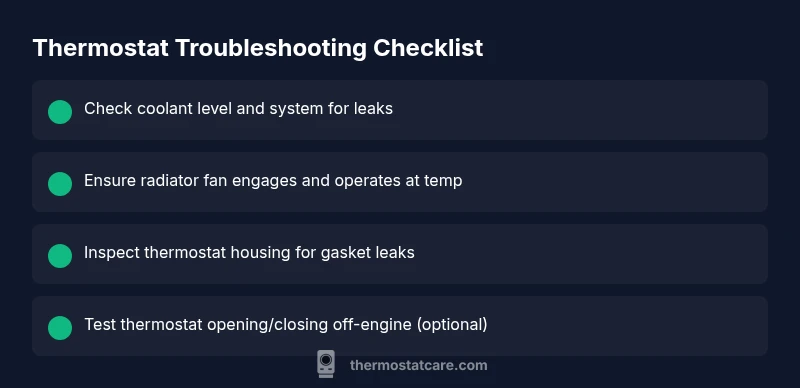
Begin with basic coolant and airflow checks. Inspect the coolant level and top off if necessary with the engine cold. Check for visible leaks around hoses and the radiator cap. Ensure the cooling fan engages when the engine reaches temperature and that the radiator is free of debris. If you can safely access the thermostat housing, you can gently feel the radiator hose to gauge whether it gets hot in step with engine temp. Do not remove the radiator cap while hot. These quick checks can reveal whether the problem lies with coolant management or more complex thermostat failure. As you work, remember safety first: gloves, eye protection, and a clean work area.
Thermostat Care analysis shows that 80% of thermostat-related overheating cases begin with coolant-related issues or a stuck open valve caused by mineral buildup. Addressing those basics early can save time and money.
Diagnostic Flow: From Symptom to Diagnosis
A structured approach helps you avoid unnecessary part swaps. Start with overheating signs or cold-running symptoms, then rule out coolant levels and flow, air in the system, and fan operation. If the issue persists, test whether the thermostat is opening and closing as the engine warms. When in doubt, a thermostat replacement is a straightforward, reliable fix that resolves most failures. Thermostat Care recommends conservative troubleshooting first, then moving to a mechanical test if symptoms persist.
Replacing the Thermostat: What to Expect
If you determine the thermostat is the culprit, replacement is usually straightforward for most trucks. You’ll drain coolant, remove the thermostat housing, swap in a thermostat with the correct rated temperature, and reassemble with attention to a proper gasket seal. Afterward, bleed the cooling system to remove air pockets and refill to the correct level. Take care to torque bolts to spec and verify that the coolant is circulating normally after refilling. A correct replacement restores optimal engine temperature control and heater performance, reducing the chance of repeat issues.
Steps
Estimated time: 60-90 minutes
- 1
Gather tools and safety gear
Collect a drain pan, appropriate coolant, new thermostat with gasket, standard hand tools, and safety gear. Ensure the vehicle is on a level surface and the engine is cool before starting. Disconnect the negative battery terminal to minimize electrical shorts near the cooling system.
Tip: Have a helper ready and prepare for potential spill—coolant is toxic and should be disposed of properly. - 2
Drain coolant and locate thermostat
Place the drain pan under the radiator drain or thermostat housing and carefully drain the coolant. Locate the thermostat housing—usually on the cylinder head or intake manifold—facing the radiator. Remove any shields or brackets that block access.
Tip: Keep track of bolts; some trucks use different sizes—organize them so you don’t mix up locations. - 3
Remove old thermostat and inspect
Open the housing to access the thermostat. Remove the old thermostat and gasket. Inspect the thermostat for chrome or metal staining, signs of sticking, or warped fins. Compare the old unit to the new thermostat to ensure the same orientation and gasket type.
Tip: Take a photo of the setup before removal to verify orientation during reassembly. - 4
Test the thermostat outside the engine (optional but helpful)
If you suspect sticking, you can test the thermostat in a pot of boiling water: the valve should open as temperature rises. If it sticks or fails to open, replace it.
Tip: Only perform outside-the-engine tests if you’re confident and the thermostat is removed from the vehicle. - 5
Install the new thermostat and reseal
Install the new thermostat with the correct orientation and a fresh gasket. Reattach the housing and ensure a clean seal. Reassemble any shields or brackets and hand-tighten bolts before final torquing to spec.
Tip: Use a gasket sealant only if recommended by the manufacturer. - 6
Refill coolant and bleed air
Refill the cooling system with the correct coolant, then bleed air from the system per the vehicle’s service manual. Check for air pockets and repeat bleeding if necessary.
Tip: Do not overfill; coolant expands when hot and can spill during running tests. - 7
Check for leaks and test drive
Start the engine and monitor for leaks. Once warm, monitor the temperature gauge and heater performance during a test drive. Confirm the temperature stays within the normal range and the heater produces warm air.
Tip: Take a short, cautious drive in moderate traffic to verify consistency before normal use. - 8
Verify cooling system stability
Let the engine reach operating temperature again and ensure the gauge remains steady. Recheck coolant level after cooling down and adjust if necessary. Document any recurring issues and consider replacement parts if symptoms reappear.
Tip: Keep spare coolant on hand in a labeled container for quick top-offs if needed.
Diagnosis: Engine overheating or inconsistent temperature readings with weak heater performance
Possible Causes
- highThermostat stuck closed
- mediumThermostat stuck open
- lowAir in cooling system or low coolant
Fixes
- easyReplace thermostat with correct rating for the vehicle
- easyBleed cooling system and top off coolant
- mediumCheck for air pockets and verify radiator fan operation
Questions & Answers
What are the early signs a truck thermostat is failing?
Common signs include an overheating gauge rise, inconsistent temperature readings, poor heater performance, and occasional coolant leaks near the thermostat housing.
Look for a rising heat gauge, fluctuating temps, and a heater that won't warm up as early warnings.
Can a faulty thermostat cause the engine to run too cold?
Yes. A thermostat stuck open prevents the engine from reaching normal operating temperature, reducing heater efficiency and fuel economy.
If the thermostat sticks open, the engine may stay cooler than normal and the heater may underperform.
Is it safe to drive with a suspected bad thermostat?
Temporary driving with a suspected thermostat is possible but risky. If you notice overheating, pull over and shut down the engine to avoid damage.
If you suspect a bad thermostat, don’t push your luck—overheating can cause serious engine damage.
Should I replace the thermostat myself or hire a mechanic?
Replacing a thermostat is a common DIY task for many trucks, but complex cooling systems or restricted access may require professional help.
Many DIYers replace the thermostat themselves, but don’t hesitate to seek a mechanic if access is tough.
How long does thermostat replacement take?
Typical replacement takes about an hour or two depending on access and cooling system design. More complex setups may require extra time for bleeding air.
Most replacements take around an hour or two, depending on the truck.
Watch Video
What to Remember
- Identify likely thermostat issues before replacing parts.
- Confirm symptoms align with thermostat problems across cooling and heating systems.
- Follow a safe, step-by-step replacement and cooling bleed procedure.
- Test drive and monitor temperatures to confirm a successful repair.