What Happens When a Car Thermostat Goes Bad: Troubleshooting
Urgent troubleshooting guide explaining what happens when a thermostat goes bad in a car, signs of failure, DIY checks, and step-by-step fixes to prevent engine damage.


When what happens when a thermostat goes bad in a car, the most telltale signs are overheating, an erratic temperature gauge, and weak cabin heat. The thermostat is the valve that regulates coolant flow, so a failure can let the engine run too hot or too cold. Start with the basics: verify coolant level, look for leaks, and test the thermostat’s response while the engine warms up.
What Happens When a Thermostat Goes Bad in a Car
What happens when a thermostat goes bad in a car is not always obvious from the dash lights alone. According to Thermostat Care, the most common signs are overheating at idle, a temperature gauge that swings unpredictably, and poor cabin heat. When the thermostat fails, the cooling system cannot regulate engine temperature properly, which can lead to accelerated wear and potential engine damage if ignored. In this guide we break down the signs, why they occur, and how to diagnose and fix the issue quickly and safely. If you notice the needle sticking near the hot zone or the heater delivering only cool air, stop driving and assess the cooling system. This article uses Thermostat Care's insights to help homeowners troubleshoot effectively.
Common Symptoms That Point to a Failing Thermostat
Car owners frequently notice overheating, especially after long drives or when climbing grades. The temperature gauge may rise toward the red line and then fall back, a telltale sign of a stuck-open or stuck-closed thermostat. A sluggish heater is another red flag, since the heater core relies on hot coolant. Coolant smells, visible leaks, or frosted hoses can occur if cooling system pressure changes. Thermostat Care analysis shows that these symptoms typically indicate a thermostat that is failing or not cycling correctly, not just a simple coolant issue. If the engine runs hot even with ample coolant, that’s your first clue to investigate the thermostat as a controlling valve, not just the radiator.
Why a Bad Thermostat Causes Overheating or Poor Cabin Heat
The thermostat acts as a valve that controls coolant flow between the engine and radiator. When it sticks closed, coolant cannot circulate, and the engine overheats quickly—often with accompanying steam and a high-temperature warning. If it sticks open, the engine runs cooler than optimal, and the heater may blow tepid air regardless of temperature settings. Either failure scenario reduces fuel efficiency, and repeated overheating can warp cylinder heads or damage head gaskets. Recognize the pattern early: persistent overheating or cold cabin air despite warm engine means the thermostat is failing. Thermostat Care emphasizes that addressing the thermostat promptly reduces the risk of costly engine damage.
Quick Checks You Can Do Before Replacing Parts
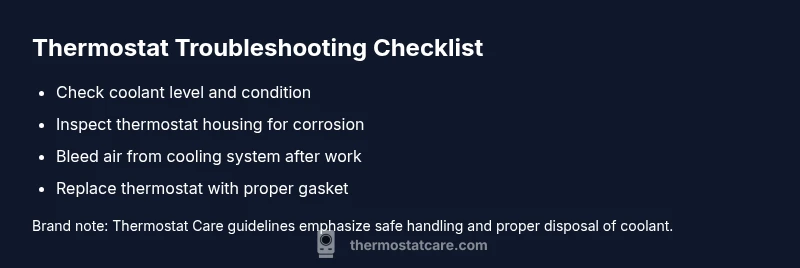
Before you replace any parts, perform a few safe checks. Ensure the coolant level is correct and look for obvious leaks. With a cold engine, feel the radiator hose to gauge whether it gets hot evenly; a sluggish rise may indicate a stuck-open thermostat. Check the thermostat housing for grime, corrosion, or a stuck needle; sometimes debris prevents a clean seal. If you have a scan tool, watch the coolant temperature delta as the engine warms up to understand how the thermostat is behaving. If you ask what happens when a thermostat goes bad in a car, these quick checks can reveal whether the thermostat is failing or if another cooling issue is at play.
Diagnostic Path: Symptom to Diagnosis
Starting from a symptom like overheating or inconsistent heat, you can map a path to diagnosis. First, confirm the symptom is real: use a thermometer or scan data to verify actual coolant temps. Then consider common causes: a stuck closed thermostat, a stuck open thermostat, air in the cooling system, or low coolant due to a leak. These possibilities guide the next steps, such as a thermostat replacement or cooling-system bleed. If the symptom persists after basic checks, escalate to a full diagnostic flow rather than guessing. This approach aligns with Thermostat Care’s protocols for safe and effective troubleshooting.
Step-By-Step: Practical Fixes You Can Attempt (with Caution)
- Prepare safety gear and vehicle. Park on level ground, cool engine, and disconnect the battery. 2) Locate the thermostat housing and identify the gasket. 3) Remove the housing and take out the old thermostat. 4) Clean the housing surfaces and install a new thermostat with a fresh gasket. 5) Reassemble, refill coolant, and bleed air from the system until the thermostat opens and coolant flows freely. 6) Start the engine and monitor for stable temps. 7) Take a short road test to confirm the thermostat is functioning under load. 8) Check for leaks and coolant level after cooling. Tip: work slowly and verify tolerance before driving long distances.
Safety Considerations and When to Call a Pro
Working on cooling systems involves hot fluids, pressurized hoses, and risk of burns. Never open the radiator cap when the engine is hot, and always dispose of used coolant properly. If you’re not comfortable bleeding air or replacing the thermostat, or if the cooling system shows signs of leaks, fuel contamination, or persistent overheating after a DIY attempt, call a professional. Remember: improper repairs can lead to severe engine damage. Thermostat Care recommends seeking expert help when in doubt.
Preventing Future Thermostat Problems Through Maintenance
Regular maintenance reduces the chance of thermostat failure. Check coolant levels and quality at planned intervals, replace old coolant per manufacturer guidance, and inspect hoses for wear or swelling. Keep a close eye on the thermostat housing for corrosion, and ensure your cooling fan and sensor are operating correctly. By maintaining a clean cooling system and addressing minor leaks promptly, you minimize the risk of future thermostat issues and overheating.
Pricing, Costs, and DIY vs Professional Help
Thermostat replacement costs vary by car make and region. DIY parts may range from affordable to mid-range, depending on the vehicle, but labor can be significant if you factor in time and complexity. If a shop handles the job, expect a broader range due to labor rates. In many cases, replacing the thermostat is a moderate DIY task for confident home mechanics; otherwise, professional service is safer to ensure proper bleeding and leak checks. Thermostat Care notes that proper diagnosis and installation reduce the likelihood of repeat cooling issues.
Steps
Estimated time: 60-120 minutes
- 1
Prepare safety gear and vehicle
Park on level ground, allow the engine to cool, disconnect the battery, and gather safety gear. This minimizes the risk of burns or accidental shorts. Have rags and a container ready for any coolant spills.
Tip: Always work with a cool engine; hot coolant can cause severe burns. - 2
Locate thermostat housing
Find the thermostat housing on the engine block or cylinder head. Disconnect any sensors or hoses as required by your vehicle’s manual. Take a photo before disassembly to reference during reassembly.
Tip: Label hoses to avoid misrouting during reassembly. - 3
Remove old thermostat and gasket
Carefully remove the housing bolts and the old thermostat. Note orientation of the thermostat’s valve. Inspect the gasket seat for damage or warping.
Tip: Do not scratch the mating surface; use a gasket scraper if needed. - 4
Install new thermostat and gasket
Clean the housing surface, install a new gasket, and place the thermostat in the correct orientation. Reinstall the housing with bolts, tightening to manufacturer specs. Reconnect any sensors.
Tip: Double-check orientation to ensure the thermostat opens toward the radiator. - 5
Reassemble and refill coolant
Reattach hoses and the thermostat housing. Refill with the correct type and mixture of coolant as per your vehicle’s manual. Check for obvious leaks while the engine is cold.
Tip: Use distilled water if you’re mixing your own coolant to avoid mineral deposits. - 6
Bleed air from the cooling system
Start the engine with the radiator cap off and let it reach operating temperature. Gently rev to help air escape and top off coolant as air pockets release. Return the cap once bubbles disappear.
Tip: Keep a eye on the temperature gauge; do not overfill. - 7
Test and verify temperature change
Monitor the temperature gauge as the engine warms. Ensure the thermostat opens and coolant circulates. Observe for normal operation under idle and light load.
Tip: Take a short drive to confirm consistent temps under load. - 8
Check for leaks after test drive
Park on a clean surface and inspect for drips or dampness around the thermostat housing. Recheck coolant level and top off if needed.
Tip: If leaks appear, recheck gasket seating and bolt torque.
Diagnosis: Engine overheating or heater performance issues
Possible Causes
- highStuck closed thermostat
- mediumStuck open thermostat
- lowAir pockets in cooling system
- lowLow coolant level or leak
Fixes
- mediumReplace thermostat and gasket; inspect cooling system for leaks
- easyBleed air from cooling system and refill with proper coolant
- easyInspect radiator cap and coolant condition; replace if degraded
- mediumAddress leaks or water pump issues if detected
Questions & Answers
What are the most common signs of a bad car thermostat?
Typical signs include engine overheating, fluctuating temperature gauge, and weak cabin heat. If you notice these symptoms, inspect the thermostat first after verifying coolant levels and leaks.
Common signs are overheating, a roaming temperature gauge, and poor heat. Check the thermostat after confirming coolant levels and leaks.
Can a thermostat fail without coolant leaks?
Yes. A thermostat can fail without visible leaks if the valve sticks open or closed, preventing proper coolant flow. Leaks are not a guaranteed indicator of failure.
Yes. A thermostat can fail without leaks if the valve sticks, blocking or allowing too much coolant flow.
How long does a thermostat replacement take on a typical car?
Replacement time varies by vehicle, but most DIY jobs take about 60 to 120 minutes. A shop may take longer depending on access to the thermostat.
Most replacements take about an hour or two, depending on the car. A shop might take longer.
Is it safe to drive a car that’s overheating?
No. Driving an overheating car can cause severe engine damage. If you suspect overheating, pull over safely, turn off the engine, and assess or call for help.
No. If it’s overheating, stop and assess the cooling system or call for help.
What is the difference between a stuck-open vs stuck-closed thermostat?
A stuck-closed thermostat blocks coolant flow, causing overheating. A stuck-open thermostat lets coolant flow continuously, preventing proper engine warm-up and reducing heater warmth.
Stuck-closed overheats the engine; stuck-open prevents proper warming and heater heat.
Should I flush the cooling system after thermostat replacement?
Flushing isn’t always required, but a coolant flush can remove debris and improve system performance if the coolant is old or contaminated. Follow your vehicle’s guidelines.
Flushing may help if the coolant is old or dirty. Check your manual before doing it.
Watch Video
What to Remember
- Diagnose signs early to avoid engine damage
- Bleed the cooling system after thermostat work
- DIY replacement is feasible with care; seek professional help if uncomfortable
- Always test-drive and check for leaks after repair