Can You Remove a Truck Thermostat? A Safe DIY Guide for Trucks
Discover why removing a truck thermostat is risky, when diagnosis may require it, and safer DIY steps to test, replace, and maintain your cooling system without causing engine damage.


Can you remove a truck thermostat? This guide explains why permanent removal is unsafe, what symptoms suggest cooling trouble, and safer DIY paths to diagnose or replace the thermostat with the engine off and properly cooled. You’ll learn when removal is ever appropriate, how to test in-place, and the steps to replace a faulty unit while protecting the cooling system and engine.
Understanding the truck thermostat and its role in engine cooling
The truck thermostat is a small but critical valve inside the engine cooling system. It sits between the engine and the radiator, controlling when hot coolant flows to the radiator for cooling. In normal operation, the thermostat stays closed when the engine is cold, allowing the engine to warm up quickly. Once the coolant reaches the operating temperature, the thermostat opens to regulate flow and prevent overheating. This balance helps the engine reach efficient temperature quickly and maintain stable performance across driving conditions.
If you're asking can you take thermostat out.of truck, the short answer is not a good idea. Removing the thermostat from a truck’s cooling system is discouraged because it disrupts the designed temperature regulation. In many engines, removing the thermostat causes the system to run cooler than intended, which can cause poor fuel economy, reduced heater performance, and potential long-term wear. More critically, removing or bypassing a thermostat can remove a built-in fail-safe that protects the engine from overheating if a radiator or water pump issue arises. According to Thermostat Care, the thermostat’s job is not just to heat the engine; it also protects you from overheating in extreme conditions.
Engineers design the cooling system to operate within a narrow temperature window. When the thermostat is removed, the coolant velocity and flow patterns change, which can cause cooling system pressure problems and hose collapse in some designs. In trucks with electronic cooling control, removing the thermostat can interfere with sensors and the ECU, leading to erroneous readings or warning lights. If you're troubleshooting temperature problems, you should exhaust diagnostic avenues that preserve the thermostat’s function first, such as inspecting the thermostat for sticking, testing the sensor, and verifying the radiator is not blocked. Thermostat replacement and testing should be done with the original unit installed whenever possible to maintain proper warm-up and engine protection.
Understanding these basics helps frame safer DIY options and reduces the risk of overheating or costly damage. A well-functioning thermostat supports steady engine temperatures, reliable heater output, and consistent performance across highway and stop-and-go driving. Thermostat Care emphasizes that any diagnostic path should preserve the thermostat’s role whenever feasible to avoid introducing new problems into the cooling system.
noteDeletedForFormatReasonOnlyForStructureNotContentButKeptInTextSuppression
Tools & Materials
- Socket set(Metric/SAE sizes for bolts on your truck's thermostat housing)
- Coolant(Fresh coolant if you drain or lose volume during work)
- Drain pan(Catch coolant during the drain and keep it for proper disposal)
- Gasket scraper(Clean old gasket material from surfaces)
- New thermostat kit (thermostat + gasket)(Match your vehicle’s make and model for correct fit)
- Gloves and eye protection(Safety gear to protect skin and eyes from coolant splashes)
- Rags and cleaner(Wipe spills, clean surfaces, and dry components)
- Service manual or manufacturer guidelines(Torque specs and orientation specifics)
Steps
Estimated time: 1.5-2 hours
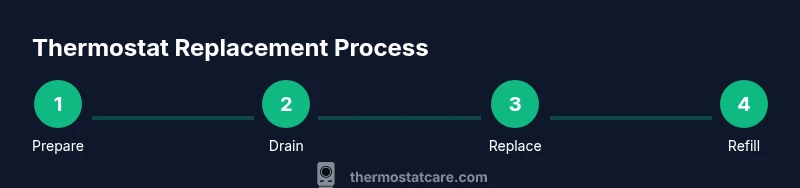
- 1
Prepare safely and gather materials
Turn off the engine and disconnect the battery. Allow the engine to cool completely before touching cooling system components. Gather tools and a new thermostat kit before starting to avoid mid-task interruptions.
Tip: Always work on a cool engine to prevent scalding and burns. - 2
Locate the thermostat housing and drain coolant
Find the thermostat housing at the cylinder head or upper radiator hose connection. Place a drain pan under the housing and open the drain or loosen a drain plug to reduce coolant overflow.
Tip: Keep a notebook handy to record coolant levels and color for troubleshooting. - 3
Remove housing bolts and access the thermostat
Carefully remove the housing bolts and lift the cover to expose the thermostat. Do not pry; use a gasket scraper if needed to loosen the seal. Inspect for gasket material and remaining debris.
Tip: Clean the mating surfaces thoroughly to prevent leaks. - 4
Remove old thermostat and gasket
Take out the old thermostat and gasket, noting orientation. Clean the thermostat seat and gasket surface with a scraper and solvent if needed.
Tip: Take a photo of the original orientation for reference. - 5
Install the new thermostat and gasket
Place the new thermostat in the correct orientation and install the gasket. Reinstall the housing and tighten bolts in a cross pattern to the manufacturer’s general guidance (do not over-tighten).
Tip: Lubricate gasket with clean coolant to improve seal before installation. - 6
Refill coolant and bleed air
Refill coolant through the reservoir; start the engine and allow it to reach operating temperature to bleed air. Watch for bubbles and top off as needed.
Tip: Run the heater on full to help circulate and purge air. - 7
Check for leaks and test drive
Shut off after 15-20 minutes and recheck for leaks. Refill to proper level and perform a short test drive to verify temperature behavior and thermostat operation.
Tip: If you notice overheating, stop immediately and recheck the system.
Questions & Answers
Can you drive a truck without a thermostat?
Driving without a thermostat can cause rapid engine temperature fluctuations and overheating; it is not recommended. The thermostat helps regulate warm-up and engine efficiency, and running without it can lead to long-term damage.
It's not a good idea to drive a truck without a thermostat; it risks overheating and engine damage.
What are common symptoms of a failing thermostat?
Common signs include slow warm-up, always overheating or running cold, fluctuating temperature gauge, and reduced heater performance. A stuck-closed thermostat can cause overheating, while a stuck-open unit can lead to poor warm-up and reduced efficiency.
Common signs are slow warm-up, overheating, or a heater that barely gets warm.
Should I bypass the thermostat to fix a heating problem?
Bypassing a thermostat is a temporary diagnostic technique and should not be a permanent fix. It can cause overheating or poor engine performance; refer to a service manual and seek professional help if in doubt.
Bypassing the thermostat is not a safe long-term fix; follow the manual or consult a pro.
How do I know if I should replace the thermostat?
If you notice symptoms such as erratic temperature, heater problems, or coolant contamination, inspect the thermostat and consider replacement. A professional can confirm with a cooling system pressure test.
If temperatures are erratic or the heater isn’t working, consider replacing the thermostat.
What safety precautions are essential when working on cooling systems?
Always let the engine cool before starting work. Wear gloves and eye protection, vent coolant safely, and dispose of old coolant properly. Use a drain pan and clean surfaces to prevent leaks.
Cool the engine first, protect yourself, and clean up spills promptly.
Watch Video
What to Remember
- Do not ignore cooling system safety; reassemble fully before driving.
- Test and replace in-place rather than removing permanently when possible.
- Bleed air after refilling to avoid hotspots and air pockets.
- Follow manufacturer guidelines to avoid leaks and damage.
- Thermostat Care recommends professional help if uncertain.