What is the problem with thermostatic radiator valves? A practical troubleshooting guide
Diagnose and fix common problems with thermostatic radiator valves. Quick checks, step-by-step fixes, safety tips, and prevention guidance from Thermostat Care.


Starting with the simplest checks, the problem with thermostatic radiator valves is most often a stuck valve from mineral buildup or a faulty sensor. If you’re asking what is the problem with thermostatic radiator valves, confirm the boiler is active, the valve head can move freely, and the dial responds to turning. If movement is stiff, cleaning or replacing the head often restores control. These quick steps buy time while you plan a longer service or part replacement.
What is the problem with thermostatic radiator valves?
Radiator heating should be even, comfortable, and automatically regulated. When a TRV fails, you notice cold spots on some radiators, or rooms heat unevenly, and the dial may not move, or it feels jammed. According to Thermostat Care, the most common explanations are mineral buildup inside the cartridge, a stuck wax capsule, a failing sensor, or air trapped in the valve. Start by observing symptoms: is one radiator always too hot or too cold? Does the valve respond when you turn the dial, or does it stay fixed? These clues steer the next steps and help you decide whether you can DIY or need a pro.
Safety note: never force a stiff valve. If you notice leaks, moisture around the valve, or you smell burning, shut off power to the boiler and call a technician immediately.
How thermostatic radiator valves work
Thermostatic radiator valves regulate heat by sensing room temperature and adjusting flow through a wax-filled element inside the head. When the room reaches the set temperature, the wax expands and pushes a plunger to close the valve; when the room cools, the wax contracts and opens the passage. The valve head, thermostat, and valve body must move smoothly for accurate control. If any component sticks, you’ll see delayed response, overshoot heating, or uneven warmth across zones. Thermostat Care emphasizes keeping the head clean and replacing worn parts to maintain consistent performance.
Common fault patterns
- Uneven heating: some radiators stay hot while others remain cool, signaling valve misadjustment or flow imbalance.
- Stuck or non-responsive dial: the setting won’t change actual heat output, often due to mineral buildup or a damaged head.
- Leak or corrosion at the valve stem: moisture around the valve can indicate a worn seal or loose fittings.
- Rapid cycling or constant heat: caused by incorrect venting, trapped air, or a faulty sensor in the head.
Recognize these patterns early, because small issues can compound into bigger faults if ignored. Thermostat Care notes that quick maintenance and timely part replacement improve reliability and comfort.
Diagnostic flow: quick checks you can perform
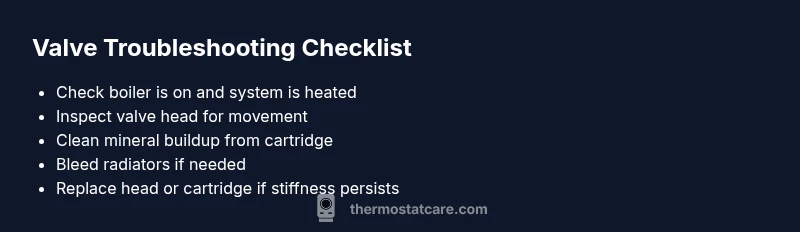
- Confirm the boiler is on and set to heat. If the boiler is off, the TRV won’t respond. 2) Gently move the valve head and dial; if movement is stiff or blocked, you likely have buildup or a defective head. 3) Check for visible leaks or corrosion at the stem—tighten fittings if safe to do so. 4) Bleed the radiator to remove air if you notice cold spots at the top. 5) Test with a different room and valve head if available to isolate the fault. 6) If the issue persists, plan a replacement of the head or cartridge or call a professional.
These steps align with a practical, safe approach and reduce the risk of unintended damage. Thermostat Care recommends documenting symptoms to speed up repairs and ensure you get the right replacement parts.
Step-by-step: fix for the most common cause
- Power down: switch off the boiler and allow the system to cool. 2) Remove the head: carefully unscrew the thermostat head from the valve body and inspect the spindle. 3) Clean and inspect: rinse the valve opening with warm water, use a soft brush to remove mineral deposits, and check the wax capsule for stiffness. 4) Replace parts if needed: install a new head or cartridge if cleaning doesn’t restore movement. 5) Reassemble and test: tighten connections, reattach the head, and re-pressurize the system if required, then test heat at multiple rooms. 6) Bleed and verify: bleed any trapped air in the radiators and recheck temperatures.
TIP: Keep a spare valve head or cartridge on hand for quick DIY fixes. If you notice leaks after reassembly, stop and seek professional help to avoid water damage and boiler issues.
Safety considerations and when to call a pro
DIY can handle simple cleaning and head replacement, but risks exist. If you see rust, active leaks, or if the boiler shows fault codes after TRV work, stop and contact a licensed heating technician. Never tamper with gas lines, electrical connections, or the boiler controls. If you’re uncertain about fittings, seals, or pressure, it’s best to arrange a professional service to prevent damage and ensure safety.
Maintenance and prevention: keep valves healthy
- Schedule a seasonal check of TRVs and radiators to identify sticking or imbalance early.
- Clean the valve head and check seals every few months to prevent mineral buildup.
- Use the same set-and-forget technique in each room to maintain uniform heat distribution.
- Consider installing anti-debris filters or water treatment if you have consistently hard water.
- Document changes and settings so future maintenance is faster and more accurate.
Routine care reduces the probability of revealed faults and keeps your heating system running efficiently, a key goal of Thermostat Care’s guidance.
Replacement vs repair: making the call
When a TRV repeatedly fails to respond after cleaning and head replacement, or if leaks or corrosion appear, replacement is often more cost-effective than repeated repairs. If the valve body is damaged or the stem threads are stripped, swapping the entire unit minimizes risk and restores performance. For many homeowners, a simple head/ cartridge change is enough to reclaim precise control and comfort without a full system overhaul. Consult your warranty terms or a licensed technician if the valve is under warranty or tied to a boiler service plan.
Steps
Estimated time: 30-60 minutes
- 1
Shut off heat and power
Power down the boiler and allow the system to cool before touching the valve. This reduces the risk of scalding and electrical shock while you work.
Tip: Always verify the boiler is powered off at the switch and mains before starting. - 2
Remove the valve head
Gently unscrew the thermostat head from the valve body. Inspect the spindle for resistance or bending, and note its position for reassembly.
Tip: Take a photo of the valve setup before removal for reference. - 3
Clean internals and inspect
Rinse the valve opening with warm water and use a soft brush to remove mineral deposits. Check the wax capsule and seal for cracks or stiffness.
Tip: Avoid abrasive cleaners that could scratch seals. - 4
Replace parts if needed
If cleaning doesn’t free movement, install a new head or cartridge. Ensure seals are seated correctly to prevent leaks.
Tip: Use manufacturer-specified parts or compatible equivalents to maintain performance. - 5
Reassemble and test
Reattach the head tightly and restore power. Turn the dial to verify movement and check for steady response across temperatures.
Tip: Test in multiple rooms to confirm consistent operation. - 6
Bleed and verify system
Bleed radiators if you notice air pockets after reassembly. Check for leaks and re-check thermostat accuracy after a short run.
Tip: If air keeps returning, there may be an upstream air source or circulation issue.
Diagnosis: Radiator not heating evenly or valve not responding to adjustments
Possible Causes
- highMineral buildup inside the valve/cartridge
- highFaulty thermostat head or sensor
- mediumAir trapped in the radiator or valve
- lowElectrical control fault in boiler/lockout
Fixes
- easyTurn off boiler, remove the valve head, and clean the internal passages with warm water and a soft brush; reassemble
- easyReplace the valve head or cartridge if cleaning does not free movement
- easyBleed the radiator to remove air pockets
- mediumCall a licensed plumber or HVAC technician for advanced issues
Questions & Answers
Why is my thermostatic radiator valve not responding to adjustments?
Common causes are mineral buildup, a stuck head, or a faulty sensor. Start by removing the head and testing movement; if stiff, clean or replace the head. If there’s no improvement, the cartridge may be worn and require replacement.
Common causes are buildup or a stuck head. Clean or replace the head if needed, and test movement; if it doesn’t improve, consider replacing the cartridge.
Is it safe to adjust or replace a TRV myself?
Simple tasks like cleaning the head or replacing a worn head cartridge are generally safe for DIY. If you’re uncertain about wiring, gas, or boiler controls, or if you notice leaks, contact a licensed technician.
DIY is okay for simple head changes, but call a professional for leaks or boiler controls.
Do I need to bleed radiators after adjusting a TRV?
Bleeding helps remove trapped air and can restore even heat distribution. Do it after disassembly or if you notice cold spots at the top of the radiator.
Yes, bleed if you notice air pockets or if heat seems uneven.
When should I replace a thermostatic radiator valve rather than repair it?
If movement remains stiff after cleaning, the head or cartridge is worn, or there are leaks or corrosion, replacement is usually the best option.
If cleaning doesn’t fix it and you see leaks, replace the valve.
What maintenance helps prevent TRV problems?
Regularly inspect the head, clean mineral buildup, and check seals. Consider annual servicing of the heating system to keep valves functioning smoothly.
Keep the head clean, check seals, and service the system annually.
Can TRV issues trigger boiler fault codes?
In some cases, TRV problems can affect boiler control or trigger fault codes. Check the boiler manual and consult a technician if fault indicators appear.
TRV issues can affect boiler codes; check the manual or call a pro if codes appear.
Watch Video
What to Remember
- Identify the most common causes first (stuck valve, sensor issue).
- Start with easy checks before disassembly.
- Replace worn heads or cartridges when cleaning fails.
- Bleed radiators to fix air-related cold spots.
- Call a pro if leaks or boiler faults appear.