How to Fit a Thermostatic Radiator Valve: Step-by-Step Guide
Learn how to fit a thermostatic radiator valve safely with a practical, step-by-step guide. Find compatibility checks, essential tools, and proven methods to improve heat control and energy efficiency.


You're about to learn how to fit thermostatic radiator valve safely and effectively. This step-by-step guide covers compatibility checks, essential tools, leak prevention, and aligning the TRV with a radiator head for precise heat control. If you're wondering how to fit thermostatic radiator valve, follow these actionable steps to improve comfort and energy efficiency.
Why fitting a TRV matters
According to Thermostat Care, a correctly fitted thermostatic radiator valve helps regulate room temperature more precisely and can reduce energy waste. A well-chosen TRV responds to ambient temperature and the hallmarks of hot days or cold nights, adjusting only the radiator it’s attached to and leaving other rooms unaffected. This means fewer hot spots, more comfortable living spaces, and a more efficient heating system over the heating season. In many homes, the TRV is the first line of defense against overheating rooms while maintaining an even overall temperature.
Before you begin, understand that a TRV is not a standalone thermostat. It’s a control valve fitted to a radiator that works alongside the room thermostat and boiler to modulate heat output. Positioning the TRV head and choosing the correct setting will have a direct impact on comfort, energy use, and boiler cycling. Tools and steps described below are designed for typical UK-style radiator systems with standard valve sizes; if you have unusual pipework or a non-standard thread, consult your manual or a pro.
Compatibility and safety checks
Before you touch any heating system, confirm compatibility and practice good safety. Check that your radiator has a standard M30 x 1.5 thread for the TRV body; many models use this common size, but there are exceptions. If you’re unsure, measure the old valve thread or bring it to a hardware store for confirmation. Ensure the existing lockshield valve on the opposite side is accessible and not stuck; you may need to reset or partially close it to avoid pressure buildup while you work. Turn off the system and let the radiator cool completely; do not attempt a cold-work replacement on hot surfaces. Use a cloth to catch any drips and avoid contact with hot metal.
Inspect the radiator for damage around the valve area; if threads are damaged or the pipework looks corroded, avoid replacing the valve yourself. A damaged thread can cause leaks or poor sealing, which defeats the purpose of the TRV and may require a professional. Finally, check manufacturer guidance for the TRV’s operating temperature range and ensure the valve you choose matches your heating schedule and boiler type. This reduces the chance of stuck settings and ensures accurate readings over the long term.
Tools and materials you’ll need
Having the right tools at hand makes replacement faster and safer. Gather a TRV kit, including the valve body and head, a lockshield valve key or adjustable wrench, a small spanner for tightening, PTFE tape or thread sealant for metal threads, a radiator bleed key, a bucket or tray to catch drips, and some rags for clean-up. Optional but helpful: penetrating oil to loosen stubborn fittings, and a can of do-not-use-in-combustion cleaner to wipe away old residue. Label spare parts and take photos during disassembly so you can re-create the original orientation if needed. Finally, if you’re replacing an old or corroded radiator valve, budget for a new radiator or additional fittings in case the pipework needs adjustment.
With your tools ready, double-check the radiator is isolated and the system is off. If your home uses a dual-locksystem, ensure the other valves on the loop are secured to prevent backflow during the job. Preparing the area with a towel or plastic sheet helps keep your workspace safe and tidy.
Understanding valve types and settings
TRVs come in several styles, but most homes benefit from a standard adjustable head that ranges from 0 (off) to a maximum setting. Some valves include additional features, such as frost protection or smart integration, that can affect compatibility with your boiler or smart hub. The most common misstep is fitting a high-flow TRV on a radiator that rarely needs maximum heat; this wastes energy and can cause uneven warming. Read the manufacturer’s guidelines for the torque limits and the direction of rotation for setting; you’ll usually rotate the dial clockwise to increase heat or anticlockwise to reduce heat. If your system uses a separate lockshield valve, consider a simple pairing to ensure balanced performance across the radiator network.
Take time to confirm the TRV's orientation so the dial faces outward and is easy to access. Some models have arrows showing flow direction; align this with your radiator valve body to avoid misreading the scale. If your radiator lacks a braced body or uses a sealed cap, consult a professional before making changes. Remember that a TRV is part of a larger heating control loop and its effectiveness improves when paired with a well-placed room thermostat and well-balanced radiators.
Installing the TRV body and head
Once you’re ready, start by removing the old head and any decorative cover. Use a cloth to protect the ceramic parts and avoid marring the valve. Gently loosen the valve body with the appropriate wrench, then unscrew the old head completely. Clean the thread on the radiator valve and inspect for corrosion. Apply PTFE tape to the male threads of the TRV body, then carefully screw the new body onto the radiator in the correct orientation. Hand-tighten first, then finish with a wrench to the manufacturer’s torque specification. Attach the new TRV head and align it with the hot-water flow direction; ensure the dial can turn smoothly without binding on the radiator. Take care not to overtighten, which can strip threads or crack fittings.
At this stage, confirm the TRV dial’s zero position or the “full heat” position per the model you chose. If your TRV has a locking nut, tighten it to secure your selected setting. After assembly, you can optionally install a second check valve or a cap on the lockshield for a neater look. Finally, verify the TRV head is properly seated and will rotate without obstruction when the radiator heats up.
Bleeding, testing, and calibration
With the TRV installed, bleed the radiator to remove any air trapped in the loop that could reduce efficiency. Use the bleed key to crack the valve slowly until you hear a hiss of air and a small amount of water appears; close immediately once the water runs clear. Refill the system if you notice a drop in pressure and check for leaks around the joints. Re-pressurize the boiler if needed and start the heating briefly to test the TRV’s response. Observe how the valve closes off heat as the room warms, and adjust the dial to your preferred temperature.
During the initial warm-up, listen for any unusual noises from the valve or radiator. If you notice persistent leaks, tighten the connection gently or reseal with PTFE tape. If the TRV does not respond to temperature changes, remove the head and re-seat it, ensuring the stem moves freely. If your system uses a smart thermostat integration, ensure the TRV setting is compatible with the thermostat’s scheduler and not overridden by a fixed system mode.
Troubleshooting common issues
If the TRV fails to close fully, check that the head is properly seated and the temperature setting is within the expected range. A valve that won’t turn could indicate a blocked stem or a stiff mechanism; try removing and re-seating the head, and apply a small amount of lubricant recommended by the manufacturer. Leaks at the joint typically come from a misaligned thread or insufficient sealant; reseal with PTFE tape and ensure both sides are clean before reassembly. If the radiator never warms, verify that the lockshield on the opposite side is open and that the boiler is firing as expected. For older systems, ensure your central heating pump is working and that there’s adequate water pressure.
If you’re still stuck after these checks, avoid forcing the mechanism; instead consult the TRV manual or a qualified plumber. In any case, avoid mixing components from brands that are not designed to work together, as mismatch can cause poor performance and safety risks.
Maintenance tips for long-term performance
Keep TRVs clean and free from dust to maintain smooth operation; wipe with a damp cloth occasionally and inspect for any signs of wear. Schedule a yearly check on your radiator valves to catch corrosion early, and replace worn seals to prevent leaks. When you upgrade your heating system, consult the TRV manufacturer for compatibility with new boiler controls or zone valves. A well-maintained TRV improves comfort, reduces boiler cycling, and helps stabilize your home’s temperature with less energy use.
Tools & Materials
- Thermostatic radiator valve (TRV) kit (body + head)(Ensure compatible with your radiator and thread size (common is M30 x 1.5).)
- Lockshield valve key / adjustable wrench(Used to isolate the radiator by turning the opposite valve.)
- Spanner or adjustable spanner(7-10mm depending on fittings.)
- PTFE tape or thread sealant(Seal threaded joints to prevent leaks.)
- Radiator bleed key(To bleed air after installation.)
- Bucket or old towel(Catch drips and protect floor.)
- Cloth or rag(Wipe surfaces and protect the finish.)
- Penetrating oil (optional)(Loosen stubborn fittings if needed.)
- Phone or notebook (optional)(Take photos of old valve orientation for reassembly.)
Steps
Estimated time: 45-75 minutes
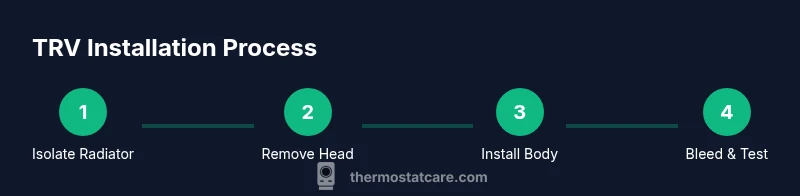
- 1
Isolate and prepare the radiator
Turn off the heating and allow the radiator to cool. Place a cloth and tray under the valve to catch any drips. If your system has a lockshield, close it a turn to minimize water flow while you work. This reduces spill risk and protects you from hot surfaces.
Tip: Use a spare towel to shield your floor and keep the work area dry. - 2
Remove the old TRV head
Grip the TRV head and unscrew it counterclockwise from the valve body. If it’s stubborn, apply a small amount of penetrating oil and wait a few minutes before retrying. Do not force the mechanism, or you could damage threads.
Tip: Take a photo of the orientation before removal for reference. - 3
Prepare the valve thread and body
Clean the exposed threads on the radiator valve with a cloth. If you see corrosion, avoid forcing a fit; consider replacing the radiator valve assembly. Apply PTFE tape to the male threads of the TRV body to ensure a tight seal.
Tip: Wrap PTFE tape in the direction of tightening to prevent unraveling. - 4
Install the TRV body
Screw the new TRV body onto the radiator valve by hand first, then tighten with a wrench to the manufacturer’s torque specification. Ensure the body is aligned so the head will turn freely. Do not overtighten, which can crack fittings.
Tip: Check that the valve body is straight to avoid future leaks. - 5
Attach the TRV head
Fit the TRV head onto the body and align it with the flow direction; ensure the stem moves smoothly when rotated. If there’s a locking nut, tighten it to secure the setting. Confirm the dial can rotate without resistance.
Tip: Keep the dial accessible for easy temperature adjustments. - 6
Bleed and test the radiator
Use the bleed key to let out any trapped air from the radiator. When water runs clear, close the valve and check for leaks at all joints. Re-pressurize the system if needed and run the boiler to test TRV response.
Tip: If you notice a drip, re-seal the joint and re-check the torque. - 7
Finalize and verify
Turn the heating back on and observe TRV performance across the room. Confirm the TRV responds to temperature changes by closing the valve as the room warms. If necessary, adjust the setting after a short heat-up period.
Tip: Document the final setting for future reference.
Questions & Answers
Do I need to depressurize the system before fitting a TRV?
Yes. Make sure the system is switched off and the radiator is cool. If you’re unsure how to safely depressurize, consult your boiler manual or a qualified plumber before proceeding.
Yes. Ensure the system is off and the radiator is cool before starting. If unsure, consult a professional.
Will a TRV fit all radiators?
Most standard radiators use a common thread size, but there are exceptions. Check the thread size on your current valve and compare it with the TRV you plan to install. If in doubt, take the valve to a hardware store for confirmation.
Most standard radiators fit TRVs, but always verify the thread size before buying.
Do I need a lockshield valve on the opposite side?
Having a lockshield valve on the opposite side helps balance the system, but some setups don’t require it. If balancing is important in your home, consider adding or adjusting the lockshield during installation.
Balancing helps efficiency; check if your system needs it and adjust as required.
What should I do if the TRV head won’t turn?
If the head won’t rotate, ensure the stem is free of debris, reseat the head, and try again. If it remains stiff, remove and inspect for damage or consult a professional.
If it won’t turn, reseat it and check for debris. Seek help if still stuck.
Is bleeding necessary after fitting a TRV?
Bleeding helps remove trapped air and ensures efficient heating. Do it after installation if you notice a cold spot or noisy radiator, and recheck for leaks after refilling.
Bleed if you notice air pockets or noises. Check for leaks afterward.
Watch Video
What to Remember
- Turn off heating and isolate the radiator before work.
- Verify thread size and compatibility before installation.
- Bleed the radiator after installation to remove air.
- Check joints for leaks and confirm valve responds to temperature changes.
- Maintain TRVs regularly to preserve efficiency and comfort.