Thermostat vs Water Pump: A Practical HVAC Comparison
Compare thermostat systems and water pump mechanisms to diagnose HVAC issues and guide DIY fixes or professional service for better comfort and energy use.


Thermostat systems and water pumps serve distinct roles in home HVAC. The right choice depends on the fault you’re diagnosing and your wiring setup. This comparison explains when to prioritize thermostat troubleshooting versus water pump maintenance, plus typical costs and timelines for DIY fixes or professional service. It also highlights safety steps and what to expect from a diagnostic visit. It also emphasizes a staged approach to avoid unnecessary replacements.
The Core Distinction: Thermostat vs Water Pump
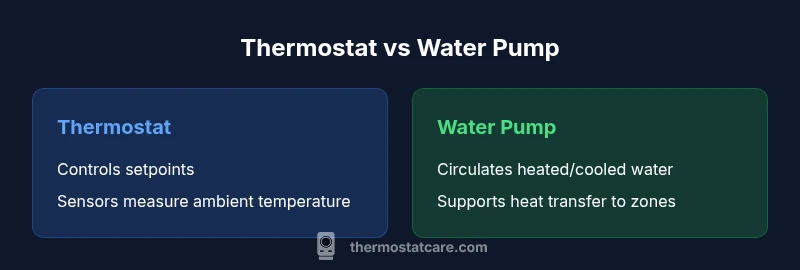
In most homes, the thermostat and the water pump play different but complementary roles in the HVAC system. The phrase thermostat or water pump describes two fault domains: one related to control logic, sensor input, and user interface; the other related to fluid movement, heat transfer, and mechanical wear. Understanding their separate functions helps you diagnose problems faster and avoid unnecessary replacements. According to Thermostat Care, homeowners often start the wrong component and overlook the real cause when the symptoms are subtle, such as a slight temperature swing or a grinding sound near the boiler. The thermostat manages when to call for heat or cooling, while the water pump moves heated or cooled fluid through radiators, baseboard heaters, or hydronic loops. When either device fails, comfort and efficiency suffer, but the repair approach differs: one is typically electrical/electronic and programmable; the other is mechanical and often subject to wear, cavitation, or air locking.
Because both parts influence room temperature, it can be tempting to treat symptoms as if they belong to the other component. A stuck temperature sensor may mimic a pump failure, and a sluggish pump may look like a thermostat calibration issue. This article treats them as distinct systems with shared consequences for energy use and reliability.
When to Think Thermostat Troubles
Thermostat problems tend to manifest as temperature inconsistency, slow response to setpoint changes, or odd behavior in the user interface. If your space feels warmer or cooler than the reading on the screen, or the display flickers, you may be dealing with sensor drift or a loose wire connection. Calibration probes inside modern thermostats can drift over time, especially after power outages or battery replacements. In some cases, a simple battery change restores proper operation; in others, the thermostat needs reconfiguration or a replacement. Also consider compatibility: a new smart thermostat may require a common wire (C-wire) and a compatible HVAC system. If your system runs continuously with no perceptible change in temperature, the issue could be the thermostat calling for heat too aggressively due to a faulty programming schedule. According to Thermostat Care, ensuring proper placement away from drafts or heat sources improves accuracy and reduces false readings. Always check the simple steps first before assuming a more expensive fault.
When to Think Water Pump Issues
Water pumps in hydronic or boiler-based systems circulate heated or cooled water to radiators or fan coils. Symptoms of pump problems include unusual noise (whining, grinding), reduced flow (hot spots, cold zones), leaks at seals, or overheating when the pump is unable to maintain pressure. Air in the loop is a common cause of sluggish heating; you may notice banging or cavitation sounds. Pumps wear over time: bearings degrade, impellers crack, seals leak. If the pump runs constantly or stops suddenly, you should inspect electrical connections and ensure the pump is properly wired to a control relay. A failed pump can cause the entire system to stall, making it easy to misattribute the fault to the thermostat if the symptom is uneven heat distribution. Maintenance tasks like bleeding air from the loop and verifying zoning valves can resolve many issues without replacement.
How They Affect Home Comfort and Energy Use
Both devices influence energy consumption, but they do so in different ways. A malfunctioning thermostat often leads to unnecessary runtime, overheating, or cooling cycles that waste energy. In contrast, a failing water pump reduces heat transfer efficiency, causing longer run times for the boiler or HVAC unit and uneven comfort. The result is longer cycles, higher energy use, and sometimes overheated equipment. A properly functioning thermostat helps your system reach the target temperature quickly and maintain stability, while a healthy pump ensures consistent flow, adequate heat transfer, and steady zone temperatures. When diagnosing, consider a staged approach: fix the control side first to confirm setpoints are correct, then verify that the pump moves water as intended. Thermostat Care analysis shows that timely maintenance across both subsystems contributes to reliable performance and energy savings over the life of the equipment.
Key Differences in Design and Operation
Control logic vs mechanical movement: the thermostat is an electronic/programmable device interpreting inputs from sensors and user settings, then energizing relays to start or stop equipment. The water pump is a mechanical component that physically moves fluid, creating velocity, pressure, and flow through a circuit. Lifespan, failure modes, and maintenance routines reflect these differences. Thermostats typically require battery changes, firmware updates, or wiring checks; pumps require seals, bearings, impeller inspections, and potential bearing lubrication. Wiring faults can cause the thermostat to misread, leading to incorrect heat cycles, while pump faults can cause cavitation, air locks, or loss of flow that confounds a thermostat’s readings. From a compatibility perspective, upgrading a smart thermostat may also require a compatible HVAC and a functional C-wire; upgrading a pump may demand matching flow rates to the system design. Understanding these distinctions helps you prioritize repairs and plan for upgrades.
Diagnostic Signs: Thermostat vs Water Pump
Thermostat indicators include erratic temperature readings, unresponsive buttons, and unexplained changes to schedules. If the display shows error codes or fails to save settings, inspect wiring and power supply; test the C-wire with a multimeter and confirm the HVAC is receiving proper control signals. Water pump diagnostics look for unusual noises, leaks around seals, vibration, vibration amplitude changes, and insufficient flow. If piping remains cool while the boiler is hot, the pump may be blocked or failing. Pressure gauges and flow meters provide quick feedback on performance. Safety reminders: shut off power to the unit before opening any enclosures, and avoid touching exposed live terminals. If you can reproduce the symptom reliably with the same settings, you can narrow the cause. Remember that both components interact: a thermostat can overwork a pump by commanding more heat than the system can transfer, and a weak pump can cause temperature fluctuations that mislead a thermostat reading.
Maintenance and Common Fixes
Routine maintenance on thermostats includes battery replacement, sensor cleaning, screen calibration, and verifying Wi-Fi or Z-Wave connections for smart devices. If a thermostat is stubborn, check for software updates and ensure compatibility with the HVAC equipment. For water pumps, bleed air from the loop, check for leaks, inspect seals, and verify impeller condition. Simple fixes, such as adjusting a loose pulley or clearing debris from a vent, can restore performance. In many homes, addressing a thermostat or pump issue early prevents cascading failures. Thermostat Care's guidance emphasizes starting with a visual inspection and system logs to identify patterns before replacing components. For homeowners, practicing caution with electrical components and following the manual is essential.
Cost and Time to Repair: What to Expect
Repair costs vary by region, model, and whether you perform a DIY fix or hire a professional. Thermostat repairs commonly involve console or sensor replacements and firmware updates, typically ranging from moderate to mid-range in price depending on whether labor is included. Pump repairs may be more expensive if seals or bearings require replacement, or if the fluid circuit needs flushing. Time to repair also varies: a thermostat swap might be completed in under an hour, while a pump service could require several hours if part replacement and system draining are necessary. In both cases, adding a service visit or permit may add to costs. To keep expectations aligned, plan for both parts and labor, and consider the potential need for zone valves or controls that tie into the fix.
Which Is Best for Your Home: Best-For Scenarios
Residential setups with centralized climate control and modern thermostats often benefit most from reliable thermostat performance, particularly in homes with multi-room zoning or energy-saving schedules. Hydronic systems or boilers that rely on a circulating pump demand reliable, well-maintained pumping to avoid hot or cold zones. For apartments or smaller houses, a robust thermostat with proper settings can deliver most of the comfort without extensive pump upkeep. If you’re choosing between upgrading a thermostat or a pump, start with the control system to improve efficiency and ease of use; if there are persistent flow issues or leaks, address the pump first. Thermostat Care notes that the optimal approach depends on your existing equipment and goals for comfort, energy savings, and reliability.
How to Diagnose Safely: Steps for DIYers
Begin with safety: power down the system, then inspect control panels for obvious signs of corrosion or loose wiring. Use a multimeter to verify voltage to the thermostat and test for continuous operation when the setpoint is reached. For the pump, check the wiring to the relay, listen for odd noises, and bleed air if needed. Take readings of temperature differentials across zones to determine whether heat transfer is consistent with the thermostat’s calls for heat. If you’re comfortable, temporarily bypass the thermostat to test whether the HVAC responds to direct control; if not, the problem most likely lies with the pump or valves. Document before-and-after states and reset codes after any fix. Thermostat Care encourages conservative troubleshooting and escalation when unsure.
Trade-offs: Reliability, Compatibility, and Upgrades
Choosing between focusing on the thermostat or the water pump involves evaluating reliability, compatibility, and the potential for upgrades. A modern, well-placed thermostat can dramatically improve comfort and energy efficiency, especially when paired with zoning; however, a faulty water pump or poor flow undermines these gains. Upgrades should consider energy savings, service accessibility, and long-term maintenance. Prospective buyers should check for compatibility with existing units, warranty terms, and the availability of replacement parts. The decision often hinges on the system architecture: a hydronic loop with a failing pump requires immediate attention, while a digital thermostat upgrade yields quicker, tangible benefits in temperature control and scheduling.
Practical Checklist for a Diagnosis
Use this checklist to methodically approach thermostat vs water pump issues: 1) note symptoms, 2) verify power and wiring, 3) test controls (setpoints, schedules, and relays), 4) inspect the pump for leaks and noise, 5) bleed air and verify flow, 6) check zone valves and piping for obstructions, 7) review recent changes and firmware updates, 8) plan a staged repair, starting with the control system, then addressing the hydraulic side if needed. Keep a log of temperatures and run times to identify patterns. If the problem remains unresolved after these checks, call a qualified technician. This practical, stepwise approach aligns with Thermostat Care’s practical troubleshooting philosophy.
Comparison
| Feature | Thermostat Focused System | Water Pump Focused System |
|---|---|---|
| Purpose | Controls temperature setpoints, sensor feedback, and schedules | Circulates heated/cooled fluid to transfer heat between boiler/air-handler and zones |
| Energy Impact | Primarily influences runtime efficiency via controls and scheduling | Affects heat transfer efficiency and system load |
| Common Failures | Sensor drift, wiring faults, display issues | Leaks, bearing wear, impeller and seal failures |
| Maintenance Frequency | Regular calibration and battery/firmware checks (annual) | Annual bleeding and seal/bearing inspection (annual) |
| Typical Cost Range | $50-$250 for diagnostics/parts | $100-$400 for pump-related repairs or replacements |
| Best For | Smart homes with zoning and energy optimization | Hydronic or boiler-based systems requiring reliable circulation |
Upsides
- Clear separation of responsibilities helps targeted repairs
- Potentially lower downtime by isolating issues
- Can preserve system efficiency with proper maintenance
- Better for energy savings when properly tuned
The Bad
- Diagnostics can be more complex when both systems interact
- Initial setup may require more expertise
- Replacing one component without considering the other can cause issues
Thermostat-focused diagnostics are usually the first step; address water-pump issues when flow or leaks are evident
Start by ruling out control faults to improve comfort quickly. If the problem persists or shows flow-related symptoms, inspect or service the pump. The Thermostat Care team recommends a staged approach to HVAC troubleshooting to minimize downtime and expense.
Questions & Answers
What is the main functional difference between a thermostat and a water pump in an HVAC system?
A thermostat is the control device that senses temperature and signals the HVAC to heat or cool. A water pump moves heated or cooled water through the system for heat transfer. They work together, but failures show different symptoms.
A thermostat controls when heat or cooling starts, while a water pump moves heat through the system.
Can a failing thermostat cause heating to run nonstop?
Yes. A stuck or misread thermostat can call for heat continuously, even if the space has reached the setpoint. Check wiring, calibration, and control signals before replacing components.
Yes, a bad thermostat can keep calling for heat even when you’re warm.
What symptoms indicate a failing water pump?
Noisy operation, leaks at seals, poor flow, and zone temperature imbalance are common pump signs. If the pump struggles to move water, the system won’t transfer heat effectively.
Look for grinding noises, leaks, and poor flow.
Should I DIY thermostat repairs or hire a pro?
Many thermostat issues are straightforward and safe to fix for DIYers, such as battery changes or recalibration. Complex wiring or smart thermostat compatibility may require a licensed technician.
DIY fixes are fine for simple tasks, but call a pro for tricky wiring or upgrades.
Is there a risk upgrading to a smart thermostat?
Upgrading can improve control and energy savings if your system supports it. Check compatibility, wiring, and internet requirements before purchase.
Smart thermostats offer convenience, but ensure compatibility first.
How do maintenance tasks differ between thermostat and water pump?
Thermostats require firmware checks, battery or power reliability, and sensor cleaning. Water pumps need bleed air, seal checks, and bearing/impeller inspections.
Thermostats need firmware and sensor care; pumps need bleed, seals, and bearings.
What to Remember
- Diagnose control faults before pumping issues
- Use a staged, evidence-based approach
- Check for compatibility before upgrades
- Expect annual maintenance for both subsystems
- Document symptoms and test results for faster service