Is It Thermostat or Water Pump? A Practical Troubleshooting Guide
Learn how to tell if your heating issue comes from the thermostat or the water pump. Safe, practical steps, diagnostic flow, and when to call a pro.is it thermostat or water pump


Most heat-control issues start with the thermostat itself. If your thermostat fails to respond or displays erratic readings, the problem is likely the thermostat rather than the pumping system. If the boiler or circulator runs but you feel no heat, the issue could be the water pump or a valve. Begin with simple checks—power, battery, and settings—before moving into the diagnostic flow.
Is it thermostat or water pump? A practical orientation
Is it thermostat or water pump? When you wake up to cold rooms or uneven heating, the first question is which component controls that zone. Homes with hydronic or boiler-based heating often share a thermostat with a circulating pump. Misinterpretations are common: a stuck valve, air in the lines, or a failing pump can mimic thermostat faults. The Thermostat Care team notes that reliable diagnosis hinges on isolating electrical signals from mechanical flow. Start by verifying basic power and battery status, then check the thermostat’s display, schedules, and sensor readings. Look for signs the thermostat is online and communicating with the HVAC system. If the thermostat appears responsive but heat is delayed or inconsistent, you may be dealing with a pump-related issue or a compromised flow path. In this guide we’ll walk you through a clear diagnostic flow so you can tell the difference and fix the right part rather than throwing parts at the problem.
Understanding your system: why the confusion happens
In many homes, heating is controlled by both a thermostat and a circulating pump. The confusion often arises when a mechanical issue in the water loop mimics a faulty thermostat. A noisy pump, air trapped in radiators, or a stuck zone valve can all produce symptoms that look like thermostat faults. Thermostat Care analysis shows that a disciplined approach—verifying power, then sensor readings, then the pump’s operation—reduces misdiagnosis. Get familiar with whether your system is forced-air or hydronic, since pump faults are far more common in the latter. Understanding the layout of your system helps you decide which component to test first and prevents unnecessary replacements.
Common symptoms that separate thermostat faults from pump faults
- Inconsistent temperatures across rooms despite a responsive thermostat display
- The boiler cycles on and off in short bursts without delivering even warmth
- No heat even though the boiler hums and pipes feel warm at the outlet
- The thermostat disconnects or shows error codes while the heat remains unreliable
- You hear banging or gurgling sounds in the heating loop, suggesting air or flow issues
- The pump runs continuously or fails to start when heat is demanded. These indicators help distinguish thermostat problems from pump or flow faults.
Quick checks you can perform safely
- Confirm the thermostat is powered and showing a responsive display; replace batteries if needed and reset the device
- Check that the thermostat mode is set to Heat, with an appropriate setpoint and active schedule
- Inspect thermostat wiring for loose connections at both the thermostat and control board, with the power off
- Listen for the boiler or circulator when you adjust the thermostat; verify that the pump starts and radiators begin to warm
- Inspect visible pipes for warmth and feel radiators for heat to gauge flow; if there’s no heat despite a running boiler, the pump or valve may be at fault
- If safe, bleed air from radiators or hot-water loops to improve circulation
Tip: Always de-energize equipment before poking around wiring or pump components; if you’re unsure, skip ahead to the diagnostic flow and call a pro.
Diagnostic path: symptom → diagnosis → solutions
This section outlines a practical workflow that matches common homeowner symptoms to likely causes and fixes. Start with the symptom you observe, then consider whether the thermostat or the water pump is more plausibly responsible. Use the proposed fixes to test each possibility step by step, documenting results as you go. If a step requires tools or access to the control board, weigh safety and complexity before proceeding. Always defer to a licensed technician for electrical work or boiler service beyond basic checks.
Safety and when to call a pro
Working with boilers, pumps, and electrical circuits carries risk. If you smell gas, hear unusual noises, see leaks, or feel unsure about the wiring, stop and contact a licensed HVAC technician immediately. Do not bypass safety devices or bypass Pressure/temperature relief valves. A pro can perform professional-grade diagnostics, verify wiring integrity, and test the pump’s electrical components, ensuring a safe and lasting repair.
Preventive maintenance to avoid future mix-ups
Regular maintenance pays off in fewer diagnostic headaches. Schedule annual service for your boiler and pump, keep the thermostat firmware up to date, and replace batteries at least once a year. Maintain a simple log of heat anomalies, noting the time, temperature, and what you observed. Keeping the system purged of air and ensuring zone valves operate correctly can dramatically reduce the chance of misidentifying thermostat faults as pump problems in future seasons.
Steps
Estimated time: 60-90 minutes
- 1
Check power and batteries
Ensure both the thermostat and the boiler have power. Replace batteries if the display is dim or unresponsive. Reset the thermostat after power restoration.
Tip: Use fresh batteries and check for corrosion on the contacts. - 2
Verify thermostat settings
Confirm the thermostat is in Heat mode, with a realistic target temperature and an active schedule. Remove any temporary holds that may be delaying heat.
Tip: Set a simple one-shot heat demand to test response. - 3
Test communication with the system
Observe whether adjusting the thermostat triggers the boiler or pump. If nothing starts, inspect wiring at the thermostat and the control board for loose connections.
Tip: Power down before handling any wiring. - 4
Inspect the pump and valve status
Check if the circulating pump is running and if the zone valve is open. Listen for a hum or feel for vibrations, and look for leaks that indicate a fault.
Tip: If the pump is silent, the motor or control signal may be at fault. - 5
Bleed air and test flow
Bleed air from radiators or the heating loop to restore proper flow. If you don’t feel warmth, verify that flow is reaching radiators and that there are no blockages.
Tip: Have towels ready to catch water during bleeding. - 6
Escalate if steps fail
If basic checks don’t fix the issue, contact a licensed HVAC technician. They can perform advanced diagnostics and safely service boilers and pumps.
Tip: Document symptoms and timings to help the pro diagnose faster.
Diagnosis: No heat or uneven heating in a hydronic/boiler-based system
Possible Causes
- highPower issue or dead thermostat battery
- highThermostat sensor fault or miscalibration
- mediumAir in the heating loop or a failing water pump
- mediumStuck zone valve or valve not opening
Fixes
- easyReplace thermostat batteries or restore power; reset the thermostat
- easyRecalibrate or replace the thermostat sensor, verify wiring integrity
- mediumBleed the system to remove air and inspect the pump wiring; replace the pump if necessary
- mediumOpen/close zone valves and test the circuit; if electrical work is required, contact a pro
Questions & Answers
What are the first signs a thermostat is failing?
Look for a thermostat that doesn’t respond, shows odd readings, or loses connectivity. A failing thermostat can cause delayed heating or uneven temperatures. Start with a battery and power check before deeper testing.
Look for a non-responsive thermostat and erratic readings. Start with power and battery checks.
How can I tell if the water pump is the problem?
If the boiler or circulator runs but radiators stay cool, or you hear a grinding hum, the pump or flow path may be at fault. Check for flow, leaks, and valve positions. Replace or service the pump if needed.
If the pump runs but you don’t feel heat, the pump or flow is the likely culprit.
Is it safe to check the wiring myself?
Only perform wiring checks with the power off and the system isolated. If you’re not comfortable, call a pro. Incorrect wiring can cause shocks or further damage.
Safety first—power off before touching wires; if unsure, contact a professional.
What if neither thermostat nor pump is failing?
Other culprits include air in the system, trapped valves, or a faulty sensor in the control board. A complete diagnostic flow helps identify these less obvious issues.
There could be air or valve issues even if the thermostat and pump check out.
Can I prevent these problems?
Regular maintenance—battery checks, sensor calibration, and annual system service—reduces the chance of these faults. Keep a maintenance log for quick reference.
Keep up with routine checks to avoid mid-season faults.
When should I call a professional?
Call a professional if you can’t confirm the fault after safe checks, or if you notice leaks, abnormal noises, or unsafe wiring. Licensed HVAC techs diagnose and repair complex faults.
If unsure or you see leaks, call a pro.
Watch Video
What to Remember
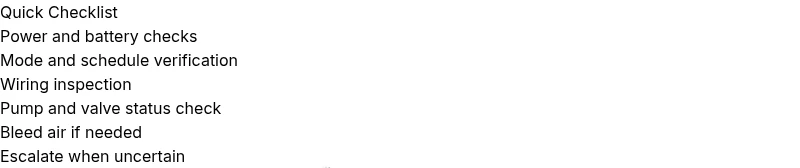
- Check power and battery first
- Differentiate thermostat signals from pump behavior
- Bleed air if flow feels weak
- Document symptoms for the pro
- Know when to call a licensed HVAC tech