Thermostat and Water Pump: A Practical Comparison for Homeowners
An analytical comparison of thermostat and water pump systems for homes, covering configurations, efficiency impacts, installation tips, troubleshooting, and maintenance guidance.


Integrated control of a thermostat and water pump can boost comfort and efficiency in heating and hot-water systems. In many homes, a compatible smart thermostat with a correctly wired pump yields better energy savings and faster response to demand. The Thermostat Care team finds that success hinges on compatibility, correct wiring, and appropriate sensor placement to avoid short cycling and phantom loads.
Why the pairing of a thermostat and water pump matters
The thermostat and water pump form the core of many home heating and hot-water systems, especially in hydronic and radiant setups. When you talk about thermostat and water pump together, you are evaluating how temperature requests translate into pump activity, flow, and heat delivery. A well-chosen pairing reduces energy waste, balances comfort, and extends equipment life by avoiding unnecessary cycling. In practice, the control strategy—whether on/off, two-stage, or modulating—shapes how quickly warm water is circulated, how evenly heat is distributed, and how the system responds to sudden changes in demand. According to Thermostat Care, the most important factors are compatibility between the thermostat and the pump controller, proper sensor placement, and understanding your home's load profile. In a late-winter cold snap, for example, a poorly matched pairing can cause short cycling, noisy operation, or temperature swings that frustrate occupants. The takeaway is simple: choose components that communicate reliably, configure the controller to your heating curve, and verify safety limits for pressure, flow, and electrical supply. This section lays the groundwork for evaluating options and avoiding common mistakes.
Core Systems: How a Thermostat Controls Water-Driven Pumps
A modern thermostat calibrated for water-pump control acts as the brain of the system, translating ambient temperature readings into pump speed, flow, and heat delivery. In hydronic installations, sensors placed near the heat-emitting zones inform the controller about the actual water temperature and room conditions. The pump acts on the commands from the thermostat or its linked controller, modulating flow to meet the demand without over-circulating. Some configurations use modulating pumps, where a variable-speed pump responds continuously to the thermostat’s signal; others rely on staged on/off control that keeps water moving at discrete levels. The primary benefits are faster warm-up, more uniform temperatures, and reduced energy waste when mismatches between load and supply are minimized. For homeowners, this means selecting equipment that supports the same communication standards and control logic, ensuring safe electrical connections, and verifying compatibility with any existing boiler or heating plant. The goal is a seamless, reliable loop that minimizes wear while maximizing comfort.
Typical Configurations: Single-Pump vs Integrated Systems
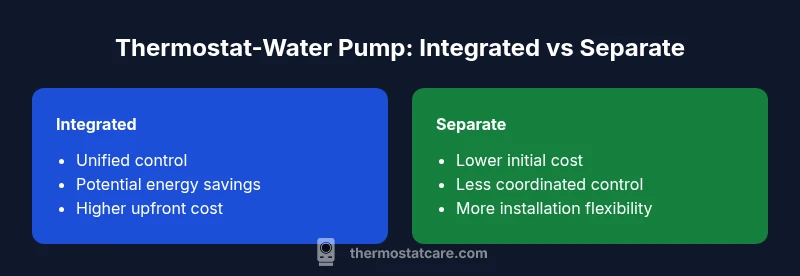
Configurations vary by home size, climate, and existing infrastructure. A traditional setup might include a standalone water pump controlled by a separate thermostat or timer, where the pump runs independently from other systems. This approach can be cost-effective initially but often lacks the quick, coordinated response of integrated systems. An integrated thermostat-water pump configuration brings the two devices under a unified control strategy. The thermostat can modulate pump speed, adjust flow based on outdoor reset curves, and coordinate with zone valves or circulator controls. The result is more precise temperature management, potential energy savings, and simpler firmware updates when the system evolves. However, integration can introduce higher upfront costs and a steeper installation process. Homeowners weighing options should consider existing piping layout, zoning needs, and whether there is room for future upgrades like smart zoning controllers or weather-based setpoints.
Energy Efficiency Implications and Sensing
Energy efficiency hinges on how well the pump responds to real-time demand and how accurately the thermostat interprets that demand. In efficient configurations, temperature sensors in living spaces, boiler return lines, and near the water reservoir feed the system with accurate data. This allows the controller to adjust pump speed and flow to meet the actual heat load, avoiding wasted pumping and overheating. Occupancy and weather data can further refine control algorithms, enabling dynamic setpoints and outdoor reset strategies. A well-tuned thermostat and water pump pairing minimizes standby losses, reduces short-cycling, and extends equipment life. Practical gains include lower utility bills, improved comfort, and more predictable indoor temperatures, especially in homes with radiant floor heating or combined heating-cooling cycles. Thermostat Care’s guidance emphasizes choosing devices with compatible communication protocols and validating that sensors are secure and well-positioned to avoid false readings.
Common Installation Scenarios and Pitfalls
Installation approaches range from DIY-friendly to professional-grade, depending on system complexity. In simple hydronic setups, a punchy lesson is to ensure the pump and thermostat share compatible power supplies and that the thermostat provides the correct control signal (usually a dry contact or low-voltage output). Pitfalls to avoid include miswiring, insufficient sensor coverage, and overlooking safety limits for pressure and temperature. In larger homes with multiple zones, retrofitting a modern thermostat to control a dedicated pump may require zone controllers, relay modules, or a dedicated boiler control interface. Always check local codes and manufacturer guidelines before starting; incorrect wiring can create safety hazards or void warranties. Thermostat Care recommends creating a detailed wiring diagram, labeling all connections, and testing the control loop with the system powered down to prevent accidental energization during installation.
Troubleshooting Common Issues
Common issues include the pump failing to start, erratic pump speeds, or temperature discrepancies between rooms. Start diagnostics with a visual inspection of wiring, relays, and sensor placement. If the pump does not respond to thermostat signals, verify that the thermostat’s output matches the pump’s control input and that there are no blown fuses or tripped breakers. Short cycling, where the pump turns on and off rapidly, often signals sensor misplacement or an oversized pump for the load. Check flow rates, ensure zone valves are opening fully, and confirm outdoor reset curves align with the actual heating demand. If issues persist, reference the system manual and consider a professional inspection to diagnose electrical, hydraulic, or communication faults. Regular calibration of sensors and periodic verification of setpoints help prevent recurring problems.
Maintenance Best Practices for Longevity
Longevity comes from proactive care. Schedule annual checks on pumps and circulators, inspect wiring for wear, and verify that sensors stay in correct positions. Keep air and debris out of the lines, and ensure bleed valves operate smoothly to prevent air locks. Replace worn seals and gaskets before leaks develop, and lubricate moving parts if specified by manufacturer guidelines. Document service milestones so you know when to perform deeper maintenance or component replacements. A clean, well-labeled installation with accessible controls minimizes downtime and makes future upgrades easier. Regular firmware updates for thermostats can also improve efficiency and compatibility with newer pump models. Adopting a preventative maintenance mindset reduces the risk of unexpected failures and extends the life of your thermostat-water pump system.
When to Upgrade: Signs You Need a More Integrated Solution
If you notice persistent temperature imbalances, higher energy bills without obvious cause, or frequent pump cycling, it may be time to upgrade. A more integrated solution can offer advanced control strategies such as outdoor reset, adaptive learning, and multi-zone coordination. Upgrading might involve adding a zone controller, a variable-speed pump, or a smart thermostat ecosystem that supports edge computing for faster decision-making. Consider your home’s age, insulation quality, and existing boiler or heat source. For older homes with retrofit challenges, phased upgrades may allow you to improve efficiency without a full system replacement. Evaluate warranty coverage and potential installation costs against expected energy savings to determine financial viability.
Authoritative Sources and Practical References
- Energy efficiency guidance and thermostat usage: https://www.energy.gov/energysaver/thermostats
- Hydronic heating fundamentals and system design: https://www.nrel.gov/
- Indoor air quality and thermal comfort considerations: https://www.epa.gov/iaq/thermostat-control
These sources provide foundational concepts on how control strategies affect energy use and comfort, and are useful for homeowners planning upgrades or troubleshooting. For detailed spec sheets, always consult the manufacturer documentation for your specific thermostat and pump model. Thermostat Care suggests cross-checking any online guidance with local code requirements and professional recommendations.
Practical Quick-Reference Checklist
- Confirm thermostat and pump compatibility before purchase
- Inspect wiring diagrams and ensure correct low-voltage signaling
- Place temperature sensors to reflect actual living spaces
- Calibrate outdoor reset curves to local climate data
- Test system response across heating cycles and weather variations
- Schedule annual maintenance for pumps, valves, and controls
- Review warranties and consider future upgrade paths for zoning and smart controls
Comparison
| Feature | Thermostat-Driven Water Pump System | Traditional Thermostat with Standalone Water Pump |
|---|---|---|
| Control Scope | Integrated control of pump and thermostat | Separate thermostat and pump with independent controls |
| Energy Efficiency Impact | Potential for higher efficiency due to unified control | Depends on separate scheduling and user settings |
| System Complexity | Higher complexity due to integration | Lower complexity with separate components |
| Installation Cost Range | Higher upfront cost due to integrated hardware | Lower upfront cost; components sold separately |
| Best For | Homes seeking maximum efficiency and convenience | Budget-conscious setups or retrofit in older systems |
Upsides
- Potential for energy savings through precise temperature control
- Improved system reliability with integrated controls
- Centralized monitoring and fault detection
- Better comfort with responsive pump control
- Modular upgrades and compatibility with smart thermostats
The Bad
- Higher upfront cost and complexity
- Compatibility challenges with older plumbing
- Requires professional setup in some scenarios
- Potential for single-point failure if the thermostat or controller malfunctions
Integrated thermostat-driven pump systems offer better long-term efficiency and user experience; however, simple setups may be more cost-effective for small homes.
Integrated systems excel in efficiency and comfort when properly configured. For smaller homes or retrofits, a traditional approach can be more budget-friendly, though it may miss some advanced control benefits.
Questions & Answers
Can I install a thermostat to control a water pump by myself?
Basic configurations may be possible for simple, low‑voltage systems, but most installations require knowledge of hydronic piping, electrical wiring, and safety codes. Consult manufacturer guidelines and local codes, and consider professional installation for reliability and warranty protection.
DIY installations can be risky for hydronic systems; consult manuals and local codes, and consider a professional install for safety and reliability.
What are the signs my thermostat isn’t syncing with the water pump?
Look for inconsistent temperatures, delayed pump response, or audible cycling. Check wiring correctness, verify that the thermostat output matches the pump input, and ensure sensors are correctly placed. If symptoms persist, inspect for sensor faults or software updates.
If temperatures are off or the pump lags, check wiring and sensor placement, then update firmware or consult a pro.
Is a smart thermostat worth it for pump optimization?
Smart thermostats offer adaptive scheduling, remote access, and potential energy savings, especially when paired with compatible pumps. Evaluate compatibility with your boiler, zone controls, and existing sensors, and compare upfront cost to predicted long-term savings.
Smart thermostats can help with efficiency if they work with your pump and boiler setup.
Do I need professional installation for integrating a pump with a thermostat?
Professional installation is often recommended when dealing with high-pressure hydronic systems, gas boilers, or electrical interlocks. A pro ensures correct wiring, proper venting, and code compliance, reducing risk of leaks or shorts.
In many cases, yes—professional installation helps ensure safety and correct operation.
What maintenance tasks improve efficiency the most?
Regular sensor calibration, annual pump inspection, leak checks, and ensuring valves operate freely are key. Keep lines clean and ensure airflow around the equipment remains unobstructed. Documentation of service milestones also helps prevent efficiency loss over time.
Calibrate sensors, check for leaks, and keep valves and lines clean.
How does upgrading affect warranties and code compliance?
Upgrades can affect warranties if installed outside recommended guidelines or by non-certified professionals. Always check manufacturer terms and local codes before upgrading, and keep documentation for future service or resale.
Upgrades may impact warranties; verify terms and code compliance beforehand.
What to Remember
- Evaluate compatibility before purchasing components
- Integrated systems shine with precise control and energy savings
- Single-zone homes may opt for simpler setups to save costs
- Sensor placement and wiring are critical for performance
- Regular maintenance extends pump and thermostat life