Car Thermostat Troubleshooting: Quick Fixes and Step-by-Step Guide
Urgent guide to diagnose and fix a car thermostat not working. Learn safe checks, diagnostic flow, and a step-by-step replacement to prevent overheating.


Most likely the car thermostat is stuck open or closed, causing overheating or the coolant to stay cold. Start with the simplest checks: verify the cooling system has proper coolant level, inspect for leaks, and ensure the radiator fan runs when the engine warms. If the problem persists, the thermostat or temperature sensor may be failing and require replacement. For safety, consult a professional if you’re unsure.
What to know when the thermostat in car not working
When a car thermostat fails, it disrupts the engine’s ability to regulate temperature. You may see overheating, the gauge sitting at abnormal highs, or the engine taking longer to warm up. According to Thermostat Care, many thermostat failures stem from aging, mineral buildup, or degraded seals that prevent the valve from opening and closing properly. In some cases, the issue is not the thermostat itself but related cooling-system components like the radiator, water pump, or coolant sensors. Understanding the symptom helps you choose the safest, most efficient path to a fix without guessing. If you’re unsure, don’t gamble with overheating engines—safety first, because a failed thermostat can lead to serious engine damage.
How a thermostat helps regulate engine temperature
The thermostat acts like a temperature gatekeeper. When the engine is cold, the valve stays closed to help heat the engine quickly. As the engine warms, the valve opens to let coolant flow through the radiator, preventing overheating. If the valve gets stuck closed, the engine can overheat; if it sticks open, the engine may run too cool, reducing efficiency and causing poor heater performance. Modern vehicles coordinate thermostat activity with the engine control module (ECM) and various sensors. A malfunction can trigger incorrect temperature readings, triggering warning lights and abnormal cooling/heating behavior.
Safe, practical checks you can perform before diving in
- Ensure the engine is cool before handling any cooling-system components to avoid burns or scalding coolant.
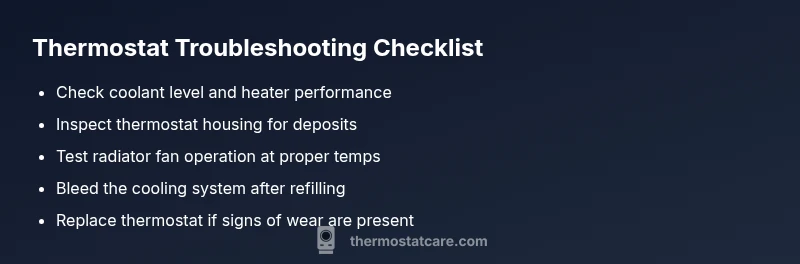
- Check coolant level in the overflow reservoir and radiator (when cool). Low coolant can mimic thermostat problems by causing overheating or inconsistent temperature readings.
- Inspect hoses for bulges, cracks, or leaks and look for obvious coolant loss around the radiator and engine bay. A small leak can worsen overheating over time.
- Listen for the radiator fan cycling; a non-running fan when the engine is hot can indicate electrical issues or a failed temperature switch.
- If you can access the thermostat housing, check for corrosion or mineral buildup around the valve. A stuck-open valve may show normal temp readings but poor heater performance.
Diagnostic flow for the symptom 'thermostat not working' (high-level)
- Temperature gauge and heater performance: Is the heater working poorly or the gauge reading abnormal? This helps differentiate possible stuck-open vs stuck-closed scenarios.
- Coolant flow check: If the radiator fan runs and coolant is circulating, the issue may be a faulty thermostat rather than a leak.
- Physical inspection: Look for leaks, damaged hoses, or a visibly stuck valve in the thermostat housing.
- Electrical checks: Inspect thermostat sensor wiring and cooling-system fuses if applicable.
- Replacement decision: If the thermostat shows signs of wear or debris that blocks opening, replacement is likely required.
- Post-fix verification: Refill coolant, bleed air from the system if needed, and monitor temperature with a test drive. If any uncertainties arise, seek professional service.
Step-by-step guide to replace a faulty thermostat (most common scenario)
- Prepare and safety: Park on a level surface, allow the engine to cool, disconnect the battery, and gather necessary tools.
- Locate the thermostat housing: It’s typically near the cylinder head, connected to upper radiator hose.
- Drain some coolant: Place a drain pan under the housing and open the drain valve or remove the lower radiator hose slightly to reduce spillage.
- Remove housing and old thermostat: Detach hoses, unbolt the housing, and carefully remove the thermostat. Inspect the gasket surface for damage.
- Install the new thermostat: Place the thermostat in the correct orientation with the spring facing the engine and attach a new gasket or sealant as recommended by the vehicle manufacturer.
- Reassemble and refill: Reattach hoses, tighten clamps, refill coolant, and bleed air from the cooling system as required. Start the engine and check for leaks and proper temperature behavior.
Safety and common mistakes to avoid
- Do not open the cooling-system cap when hot. Hot coolant can cause severe burns.
- Avoid using a mismatched thermostat or improper gasket; an incorrect seal can cause leaks and overheating.
- Do not rush the bleed/air removal process; trapped air can cause overheating and reduced heater performance.
- If you’re unsure about the process, don’t hesitate to consult a professional mechanic; a small mistake can lead to bigger engine damage.
Prevention tips to minimize thermostat issues
- Schedule regular coolant flushes and replace coolant as recommended by the vehicle manufacturer.
- Use the correct type of coolant for your vehicle and mixed ratios; improper coolant can cause mineral buildup.
- Inspect hoses and clamps for wear at each service interval to prevent leaks that mimic thermostat problems.
- Monitor the temperature gauge and heater performance; early signs often indicate a developing thermostat issue before a breakdown.
Steps
Estimated time: 60-90 minutes
- 1
Prepare safely
Park on level ground, let the engine cool, disconnect the battery, and gather tools. This prevents burns and spills and ensures you have everything you need.
Tip: Keep a flashlight handy to inspect the thermostat housing. - 2
Locate thermostat housing
Find the housing connected to the upper radiator hose near the engine. Confirm you’re looking at the thermostat assembly before disassembly.
Tip: Take a photo of hoses and clamps before removal. - 3
Drain coolant
Drain a small amount of coolant to avoid spills when removing the housing. Use a drain pan and disconnect the lower hose if needed.
Tip: Never open the cap when the engine is hot. - 4
Remove and inspect
Unbolt the housing, remove the thermostat, and inspect for deposits or corrosion. Clean the seating area and replace if worn.
Tip: Use a soft scraper; avoid scratching the mating surface. - 5
Install new thermostat
Install the thermostat in the correct orientation with a new gasket or sealant as specified by the manufacturer. Reassemble housing and hoses.
Tip: Double-check orientation before tightening. - 6
Refill and test
Refill coolant, bleed air, start engine, and monitor for leaks and proper temperature behavior under test drive.
Tip: Check for air pockets and listen for abnormal noises.
Diagnosis: Car engine overheating or not reaching normal operating temperature
Possible Causes
- highThermostat stuck closed
- mediumThermostat stuck open
- lowCooling-system leak or low coolant level
Fixes
- easyIf stuck closed: replace the thermostat and inspect the cooling system for blockages.
- easyIf stuck open: replace thermostat and verify the coolant temperature readings are accurate.
- mediumCheck for leaks and refill coolant; bleed air from the system if needed.
Questions & Answers
What are the signs of a failing car thermostat?
Common signs include overheating, a heater that won’t warm up, and a temperature gauge that behaves erratically. You might also notice coolant leaks or low coolant levels. If any of these occur, inspect the thermostat and associated cooling-system components.
Signs include overheating, poor heater warmth, and erratic temperature readings. Check the thermostat and cooling system if you notice these symptoms.
Can I drive with a faulty thermostat?
Driving a car with a suspected thermostat issue can cause engine damage due to overheating or poor temperature regulation. If you notice signs, minimize driving and seek professional inspection promptly.
If you suspect a thermostat problem, limit driving and have it checked soon to prevent engine damage.
How do I know if I should replace the thermostat or the radiator?
If overheating occurs with normal coolant flow and the thermostat is old or clogged, replacement is common. If you see persistent leaks or damaged radiators, address those components first. A professional can confirm via pressure tests and diagnostic tools.
Replacement is often the fix for a clogged thermostat; leaks point to the radiator or hoses needing attention.
Is it safe to replace a thermostat myself?
Yes, with proper tools and safety precautions. Ensure you follow the vehicle manufacturer’s service manual and use the correct replacement part. If you’re unsure about any step, consult a professional.
You can DIY, but follow the manual closely and don’t hesitate to seek help if unsure.
How long does a car thermostat last?
Thermostats are designed to last many years, but wear, mineral buildup, and heat cycling can shorten life. Regular coolant maintenance helps extend lifespan and prevent premature failure.
Thermostats last many years, but proper coolant maintenance helps prevent early failure.
What other components should I inspect if the thermostat is not working?
Check coolant hoses for damage, the water pump for noise or leaks, the radiator for blockage, and coolant sensor wiring. A comprehensive check reduces misdiagnosis and helps locate the real issue.
Inspect hoses, pump, radiator, and sensor wiring to avoid missing underlying problems.
Watch Video
What to Remember
- Diagnose with a systematic flow, not guesswork
- Replace a faulty thermostat to restore proper flow
- Bleed air and refill coolant for a safe test drive
- Prevent future issues with regular coolant maintenance
- Consult a professional if uncertainty remains