Is the Thermostat Located? A Practical Guide to Finding and Verifying Placement
Discover where to find your thermostat, why placement matters, and step-by-step methods to verify its location for accurate readings and optimal comfort. A practical guide from Thermostat Care.


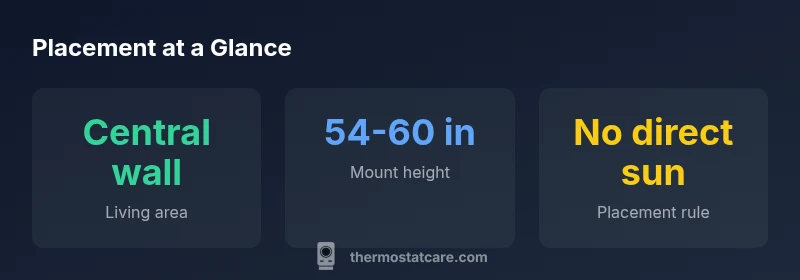
Is the thermostat located where you expect? In most homes, the thermostat is mounted on a central wall in a main living area or near the HVAC closet, not inside a kitchen cabinet. To confirm, use the steps below to locate it and verify its placement for accurate readings. These checks help ensure energy savings and comfortable temperatures year-round.
is the thermostat located
The location of your thermostat determines how accurately it senses room temperature and how quickly your system responds. According to Thermostat Care, the best location balances visibility, accessibility, and environmental stability. A misplaced thermostat can lead to mismatched readings, longer cycle times, and comfort gaps between rooms. In many homes, the thermostat sits on a central wall in the living area or near the HVAC closet—choices that minimize temperature drift and keep energy use reasonable. When homeowners ask, “is the thermostat located” in a tricky spot, the answer is usually found by examining sunlight patterns, drafts, and proximity to heat sources. By prioritizing a central, unobstructed wall and avoiding kitchens, bathrooms, or sunlit windows, you improve both comfort and efficiency. The goal is to place the sensor where the air around it reflects the actual living space rather than transient conditions from appliances or direct sun.
Common placement logic
- Central walls in living areas or corridors tend to yield the most representative readings across floors.
- Hallways near the center of the home help balance temperatures between rooms.
- Utility rooms or closets near the furnace or air handler can be convenient for service access but may skew readings if they’re not well-ventilated.
- Avoid places with strong direct sunlight, drafts from open doors, or near heat-producing devices like lamps or televisions.
- If your home has multiple zones, consider dedicated thermostats that service each zone to maintain even comfort.
Common thermostat placement options and their trade-offs
| Location Type | Pros | Cons |
|---|---|---|
| Living room wall | Central access; representative readings | Susceptible to sun exposure and activity glare |
| Hallway near central stairs | Balanced averages across floors | Can be overlooked during renovations or rearrangements |
| Utility room near HVAC closet | Direct access for technicians; easy access to controls | May not reflect living-space temperature; possible drafts from equipment room |
Questions & Answers
Why does thermostat location matter for accuracy?
Location matters because readings come from the air around the sensor. Poor placement can cause temperature swings, delayed responses, and higher energy usage. Aim for a spot that reflects the typical living conditions of the space.
Location affects accuracy and energy use; place it where room air best represents your living spaces.
Is it safe to relocate a thermostat myself?
Relocating a thermostat can involve wiring and control wiring changes. If you’re moving it to a different wall or floor, follow the manufacturer’s installation guide and consider a professional if plumbing, electrical, or HVAC connections are involved.
Relocating may require wiring work; consult the manual or a pro if in doubt.
How can I verify that my thermostat reads correctly?
Compare the thermostat reading with a calibrated room thermometer over several minutes in different conditions. If the discrepancy is large, recalibrate or relocate and re-test.
Test against a separate thermometer and re-test after repositioning.
Can a thermostat be placed behind furniture?
Do not place behind furniture or in cramped alcoves. Obstructions can block air flow and mislead the sensor, causing uneven readings.
Keep it clear of furniture to avoid false readings.
What should I do if I can't locate the thermostat in my home?
Check common areas first: living rooms, hallways, basements, or utility rooms. If still missing, consult the HVAC installer notes or contact a professional for location guidance.
If you can’t find it, start with common spots and look for HVAC access panels.
How often should I reassess thermostat placement?
Reassess after major remodels, new furniture layouts, or significant weather changes. Even small shifts can impact sensing accuracy and comfort.
Re-evaluate after layouts or major changes.
“Accurate readings start with smart placement. A mislocated thermostat can skew comfort and energy use, even if your sensor is functioning perfectly.”
What to Remember
- Identify the most common spots first: central living-area walls or near the HVAC closet.
- Mount height should generally be 54–60 inches from the floor for representative readings.
- Avoid direct sunlight and drafts to maintain accurate sensing.
- If layouts vary, consider multiple zones or a relocation plan for accuracy.