How to Tell If Your Thermostat Is Stuck Open: Fast, Safe Fixes
Learn how to tell if your thermostat is stuck open and fix it fast. This guide covers symptoms, common causes, safety tips, and when to call a pro for reliable, energy-saving results.


Most commonly, a thermostat is stuck open due to sensor or wiring faults. Quick checks: 1) ensure power to both the thermostat and furnace; 2) confirm the thermostat is calling for heat and showing an accurate room temp; 3) inspect for loose or corroded wires and a weak battery. If issues persist, escalate to a professional repair.
Quick assessment: symptoms and impact
According to Thermostat Care, if you’re asking how to tell if thermostat is stuck open, you’re likely noticing the furnace running for long periods, rooms that never quite warm up, and higher energy bills. This pattern happens when the thermostat fails to close the heat call even after reaching the desired temperature. Early symptoms include the display showing the correct setpoint while the actual room temperature lags behind, or the furnace cycling on and off rapidly without stabilizing. The first instinct is to check basic power and wiring before assuming a complex fault. By catching the issue early, you can avoid wasteful energy use and uncomfortable rooms while you identify the root cause.
In most homes, a stuck-open condition is intermittent rather than continuous, which makes it easy to misinterpret. The Thermostat Care team notes that many cases stem from simple issues like a loose wire, a drained battery, or a miscalibrated sensor. Start with the fundamentals so you know exactly what you’re dealing with and can explain the problem clearly if you need a professional to intervene.
Common causes: sensor fault, wiring, or calibration
Thermostats are tiny electronics that can drift out of calibration, lose connection to wires, or suffer from aging sensors. A common cause of a stuck-open state is a misreading of the room temperature, which keeps the furnace energized well past the intended setpoint. Loose terminal screws, corroded contacts, or damaged insulation on the wires between the thermostat and the furnace can also mimic a failed thermostat. In some cases, a weak battery in the thermostat (for wireless units) causes erratic signals, making the system think heat is still needed. Thermostat models with improper installation or compatibility issues with the HVAC system can display false readings as well. Robust diagnostics require checking both the thermostat and the furnace control path. Thermostat Care analysis shows wiring faults and sensor drift are among the most frequent culprits, so prioritize those areas during your checks.
- Battery health: Replace if required and re-test readings.
- Wire connections: Tighten screws and inspect for damage.
- Sensor calibration: If available, run a calibration test or replace the thermostat if drift is evident.
- Compatibility: Confirm the thermostat is compatible with your furnace and heat type.
If you rule out battery and wiring problems and the issue persists, a professional assessment is warranted to avoid risking unsafe operation or warranty issues.
Safety and best practices when troubleshooting
Safety first: always cut power to the thermostat and furnace before touching any wiring. If you smell gas or notice damaged gas lines, leave the area and call your gas provider or a licensed HVAC tech immediately. Do not bypass safety devices or jump the system to force a working state. Use a non-contact voltage tester to confirm circuits are de-energized before handling terminals. Keep a clear space around the furnace and thermostat to prevent accidental contact with hot surfaces or moving parts. If you’re unsure at any step, pause and contact a qualified technician. Remember that DIY fixes carry risk, so limit your actions to safe, documented steps and avoid disassembly of sealed components.
For homeowners, documenting symptoms and steps taken helps the tech diagnose more quickly and accurately.
How to test at home: basic checks
Start with the simplest checks that can reveal a stuck-open condition without specialized tools. 1) Power cycle the thermostat and furnace: turn off at the breaker for 30 seconds, then restore power and observe behavior. 2) Verify the thermostat is actually calling for heat when the room is cool and stopping as the room warms—watch the furnace on-cycle duration. 3) Check the display against a trusted room thermometer; if there’s a consistent mismatch, calibration or sensor replacement may be needed. 4) Inspect the wiring at both ends for loose connections, stray strands, or signs of overheating. 5) For wireless thermostats, replace the batteries and re-pair the device with the base unit. If none of these basic tests resolve the issue, a more thorough diagnostic with professional tools is recommended.
Document your readings and the exact steps you took so the next technician has a clear history to work from.
When to replace vs repair and next steps
If testing reveals persistent calibration drift and the thermostat continues to misread the room temperature, replacement often offers a faster, more reliable outcome than repair, especially for older units. When the thermostat is relatively new but performs poorly, a field diagnostic by an HVAC pro can confirm whether the issue lies with the device or the furnace control circuitry. If the furnace control board or relay shows signs of wear or heat damage, replacement by a licensed technician is usually the safest course. In any case, address the underlying cause rather than applying temporary workarounds, as a stuck-open condition can waste energy and shorten equipment life. Thermostat Care recommends verifying compatibility with your HVAC system before purchasing a new unit and ensuring professional installation if you’re not confident in wiring connections.
Prevention: keep your thermostat in good health
Regular maintenance is the best defense against a stuck-open thermostat. Schedule annual checkups for your HVAC system, keep the thermostat firmware up to date if it’s a smart device, and test the system seasonally to confirm it cycles correctly. Change batteries on wireless models as recommended by the manufacturer, and inspect wiring for signs of wear or corrosion after seasonal changes. Store a simple troubleshooting checklist somewhere accessible so you can run through the steps quickly if a problem arises. Practicing these habits reduces future risk of a stuck-open condition and helps your heating system stay efficient and comfortable.
Steps
Estimated time: 30-45 minutes
- 1
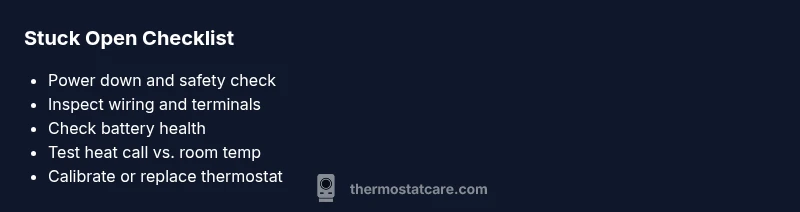
Power down and safety check
Turn off power at the thermostat and at the furnace breaker. Confirm the area is safe to work in and use a non-contact tester to verify circuits are de-energized before touching wires.
Tip: Always start with de-energizing power to avoid shock or short circuits. - 2
Inspect and reseat wiring
Remove the thermostat cover, look for loose screws or frayed insulation at terminals, and reseat all connections firmly. If you see corrosion, clean terminals carefully or replace the terminal block.
Tip: Take a photo of wiring before unplugging to ensure correct reassembly. - 3
Check battery and sensor health
If your thermostat is battery-powered, replace the batteries with fresh ones and re-test. For smart thermostats, run a sensor/calibration test if available and note any drift in readings.
Tip: Dead batteries can cause erratic readings that mimic a stuck-open condition. - 4
Test the heat call and readings
Set a cool room temperature and observe whether the furnace turns off when the room warms to the setpoint. Compare thermostat reading with a room thermometer to detect calibration drift.
Tip: If readings differ by more than a couple of degrees, calibration or replacement is likely needed. - 5
Power cycle and reset
Power down all equipment, wait 30 seconds, then restore power and perform a full system test. If your thermostat has a reset option, perform a factory reset or re-pair the device as directed by the manufacturer.
Tip: A reset can clear minor software glitches that mimic hardware faults. - 6
Decide on replacement vs professional help
If the issue persists after steps 1–5, evaluate thermostat age and warranty. A professional should inspect the furnace control board or relay to determine if replacement is necessary.
Tip: Don’t hesitate to contact a licensed HVAC technician for complex checks or gas-fired systems.
Diagnosis: Thermostat indicates heat is needed, but the furnace runs continuously and does not reach the set temperature.
Possible Causes
- highSensor drift or calibration error causing inaccurate temperature readings
- highLoose, damaged, or corroded wiring between thermostat and furnace
- mediumFaulty furnace control board or relay causing continuous heat call
Fixes
- easyPower down, reseat all thermostat wiring, and replace batteries if applicable
- mediumTest and recalibrate the thermostat or replace it if drift persists
- hardInspect furnace control board/relay or call a pro for board replacement
Questions & Answers
What does it mean if my thermostat is stuck open?
It means the thermostat continues to call for heat even after the space reaches the desired temperature, causing the furnace to run longer and harder. This wastes energy and can wear parts prematurely.
A thermostat stuck open means the heater keeps running even when the room warms to the set temperature.
How can I tell if the thermostat is accurate?
Compare the thermostat display with a calibrated room thermometer. If there’s a consistent mismatch of more than a couple of degrees, recalibration or replacement may be needed.
Check the display against a reliable room thermometer to confirm accuracy.
Can a battery-powered thermostat be stuck open?
Yes. Weak or dead batteries can cause inaccurate readings and miscommunication with the furnace. Replace batteries and test again.
Yes—low batteries can cause misreads; replace them and re-test.
Should I DIY or call a pro for a stuck-open thermostat?
Start with safe, simple checks such as wiring and battery replacement. If the issue persists, especially with gas furnaces or control boards, call a licensed HVAC technician.
Begin with safe DIY checks; if unresolved, contact a pro.
What safety concerns should I know?
Grounded safety practices include turning off power, avoiding gas line work, and not bypassing safety features. If you smell gas or suspect a leak, evacuate and call emergency services.
Turn off power and avoid dangerous parts; call a pro if you suspect gas or wiring hazards.
Watch Video
What to Remember
- Identify if heat is being called and if readings match room temperature.
- Check and secure wiring, then replace batteries if applicable.
- Differentiate thermostat issues from furnace control problems.
- Use safe DIY steps and know when to call a professional.