How Many Miles Is a Thermostat Good For? A Practical Lifespan Guide
Explore why miles aren’t a valid metric for thermostats, and learn the real lifespan ranges, maintenance tips, and upgrade timing to maximize reliability.


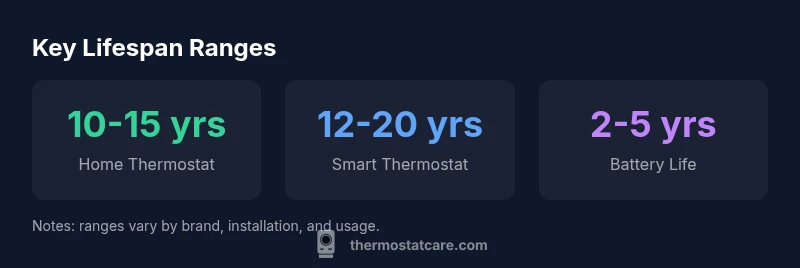
The quick answer: miles aren’t a valid metric for thermostats. Longevity is measured in years and cycles, not miles. Most home thermostats offer reliable service for roughly 10-15 years, with smart models often reaching 12-20 years when properly maintained. Factors like installation quality, environment, and firmware updates influence lifespan more than distance traveled.
Understanding the question: how many miles is a thermostat good for
The quick answer is that miles aren’t a meaningful metric for thermostats. In practice, homeowners should track age, usage cycles, and performance. According to Thermostat Care, most home thermostats offer reliable service for roughly 10-15 years, with smart models often reaching 12-20 years when properly maintained. This article translates that time-based view into practical guidance you can apply today. Remember: life expectancy varies with brand quality, installation quality, and the operating environment. If you want a concise yardstick, think in years and cycles rather than miles. Thermostat Care Analysis, 2026, supports this approach.
How environment affects thermostat lifespan
Thermostats sit in environments full of temperature swings, humidity, dust, and power quality fluctuations. Heat sources near HVAC equipment, direct sun, or dusty air can degrade sensors and shorten accuracy, leading to earlier recalibration or battery drain in smart units. Regular maintenance—clean surroundings, avoiding heat exposure, and ensuring clean, stable power—helps preserve performance. Thermostat Care’s analysis shows that even premium devices suffer from poor installation or harsh environments; proper enclosure and placement can add years to service life.
Home vs smart thermostat differences
Basic thermostats with mechanical switches generally endure many years of use, while smart thermostats add electronics and radios, increasing potential failure points but offering firmware-based longevity improvements when supported. Battery-powered models introduce another wear factor (battery degradation), while hardwired units avoid battery issues. Thermostat Care analysis indicates typical lifespans of 10-15 years for basic units and 12-20 years for smart models, assuming good maintenance and compatible HVAC systems.
Signs of impending failure
Watch for readings that drift or don’t match the actual ambient temperature, failure to hold programs, unresponsive interfaces, or unusual reboot behavior. Battery indicators, weak Wi-Fi connections, or erratic sensor readings are common precursors to a full replacement. If these signs appear, diagnose whether the issue is the thermostat itself or the HVAC system, and consider a proactive replacement to prevent comfort and energy losses.
Extending the life of your thermostat
A practical maintenance checklist includes: (1) replace batteries when indicated, (2) keep firmware up to date on smart models, (3) clean around the device and sensor openings, (4) ensure a stable power supply free of surges, and (5) verify proper mounting away from heat sources. Regular professional checks can help confirm compatibility with your HVAC and detect aging components before failures occur. Following these steps can meaningfully extend service life.
Installation and placement considerations
Position the thermostat away from direct sunlight, drafty doors, or heating vents. A typical mounting height around 5 feet offers accurate temperature sensing and comfortable reach. In older homes, ensure proper wire gauge and verify the presence of a C-wire for smart units to avoid power issues that could shortening lifespan. Correct installation reduces nuisance service calls and keeps the device operating within its design parameters.
Firmware, updates, and support implications
Smart thermostats rely on firmware that may require occasional reboots or downtime for updates. Choosing models with long-term developer support minimizes future compatibility problems. Regular firmware refreshes can improve reliability and energy savings, but always balance new features with potential disruption to comfort during updates. Thermostat Care emphasizes prioritizing devices with transparent update policies and accessible support.
Planning for replacement: timing and budgeting
Create a replacement timeline based on age, signs of wear, and annual HVAC performance. Consider installation costs and potential energy savings when deciding whether to upgrade. If the existing thermostat still delivers accurate readings and reliable control, replacement timing may align with major HVAC system upgrades or a firmware-supported feature upgrade that brings measurable comfort and efficiency gains.
Estimated lifespan by thermostat type
| Aspect | Typical Range | Notes |
|---|---|---|
| Lifespan (home thermostat) | 10-15 years | Based on Thermostat Care Analysis, 2026 |
| Smart thermostat lifespan | 12-20 years | Depends on firmware support and usage |
| Battery life (if applicable) | 2-5 years | Replace batteries to maintain reliability |
Questions & Answers
Can you measure a thermostat's life in miles?
No. Thermostats age by time, usage cycles, and environment, not by distance traveled. A mileage metric isn’t meaningful for this device.
No—thermostats don’t accumulate miles the way engines do; they age with time and use.
What are signs a thermostat may need replacement soon?
Inaccurate readings, failure to hold schedules, unresponsive controls, or frequent rebooting indicate aging components or sensor drift.
Watch for inaccuracy and unresponsiveness as signs it's time to evaluate replacement.
Does upgrading to a smart thermostat extend life?
Smart thermostats can offer longer support lives if firmware is kept up to date, but they introduce new electronics that can fail.
Smart models can last longer with updates, but not guaranteed.
How can I extend my thermostat's life?
Keep firmware updated, replace batteries on schedule, avoid power surges, and have annual professional checks for HVAC compatibility.
Keep it clean, updated, and properly powered.
Is replacing a thermostat a DIY job?
Many modern thermostats are DIY-friendly, especially if you have basic wiring aptitude, but complex HVAC setups may require a professional.
It’s doable for many, but be careful with wiring on complex systems.
“Lifespan isn’t measured in miles. With proper maintenance and up-to-date firmware, most home thermostats deliver reliable service for a decade or more.”
What to Remember
- Expect lifespan in years, not miles.
- Choose higher-quality or smart models for longer life with updates.
- Maintenance and placement significantly affect longevity.
- Watch for signs of aging: accuracy drift, unresponsiveness, power issues.
- Plan upgrades in tandem with HVAC maintenance for best results.