ecobee Thermostat Compatibility Checker: A Homeowner's Guide
Learn how to use the ecobee thermostat compatibility checker to verify HVAC compatibility, wiring needs, and upgrade options. Practical guidance for homeowners by Thermostat Care.


According to Thermostat Care, the ecobee thermostat compatibility checker helps homeowners quickly determine if their HVAC setup is compatible with ecobee thermostats. It analyzes equipment type, wiring configuration (C-wire), and control features to identify compatibility, required adapters, and any potential limitations. This guide explains how to use the checker and interpret the results.
What the ecobee thermostat compatibility checker does
According to Thermostat Care, the ecobee thermostat compatibility checker is a practical tool designed for homeowners who want to avoid buying a thermostat that can’t power reliably or control their system correctly. The checker evaluates key elements of your HVAC setup, including equipment type, control signals, wiring status, and the presence of a C-wire. The result is a clear determination of compatibility, along with actionable next steps, such as whether a C-wire is required or if an adapter may be necessary. The goal is to minimize the risk of installation hassles and post-purchase wiring surprises. This tool is especially helpful for DIYers who want to confirm that their system will respond to scheduling, occupancy sensing, and energy reporting features that ecobee offers. For most homes, this check is quick but meaningful, giving you confidence before you buy.
What to expect: a straightforward verdict (compatible or not), a short list of wiring needs, and notes about any limitations. If the checker flags potential issues, you’ll see practical remediation steps, such as inspecting the control board, confirming valve wiring on a heat pump, or planning a service visit for non-standard systems. This is why Thermostat Care emphasizes using the checker early in the decision process—it saves time, money, and headaches.
How the checker analyzes your HVAC setup
The ecobee compatibility checker works by cross-referencing your HVAC configuration with ecobee’s documented requirements. It starts by identifying your system type (gas, electric, heat pump, or dual-fuel) and then checks for a common (C) wire, which powers many smart thermostats. It also reviews the number of stages (single vs multi-stage), presence of auxiliary heat, and signals from outdoor units (O/B reversing valve on heat pumps). If your equipment uses nonstandard controls or proprietary interfaces, the checker flags those flags and suggests feasible workarounds. In many cases, the tool can indicate whether an alternative ecobee model or wiring adjustment is advisable. Thermostat Care’s analysis underscores that wiring clarity is the biggest predictor of a clean installation and reliable operation. By having clear photos or diagrams ready, you decrease the chance of misinterpretation and speed up the verification process.
What matters most: a solid C-wire, compatible stage configuration, and alignment between your HVAC controls and ecobee’s sensing capabilities. If any element is unclear, the checker will highlight it so you can investigate further before purchasing.
Wiring, system types, and features that matter
Wiring and system type determine how well ecobee will function in your home. For example:
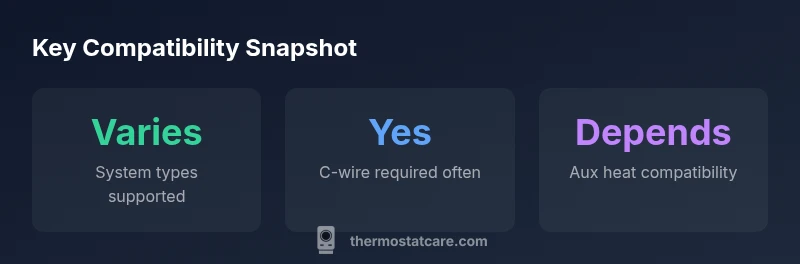
- C-wire presence is often the gating factor for reliable power. If you don’t have a C-wire, the checker will indicate whether a Power Extender Kit (PEK) is a viable alternative or if you should run a new conductor.
- Heat pumps require careful attention to O/B valve operation and auxiliary heat. The checker flags whether ecobee will control backup heat without creating conflicts with outdoor unit signals.
- Multi-stage systems add complexity: more stages mean more potential control points, but ecobee supports many configurations with proper wiring and settings.
In Thermostat Care’s experience, the biggest blockers are missing C-wires, aging control boards, and nonstandard wiring schemes. If the checker finds any of these, you’ll see recommended steps to verify compatibility, such as confirming the control board’s compatibility with ecobee commands, or planning wiring upgrades where needed. This section also covers how to assess accessory compatibility—humidifiers, dehumidifiers, and fresh-air dampers—so you can enjoy a cohesive smart-home climate system.
Step-by-step: using Thermostat Care's checker
- Gather your HVAC details: furnace/air handler model, heat pump type, number of stages, and whether you have a C-wire.
- Locate your thermostat wiring and confirm the presence of the C terminal. If unsure, consult your system’s manual or a photo of the control board.
- Run the ecobee compatibility checker (via Thermostat Care’s guide). Input your system type, wiring status, and any known limitations.
- Review the results: compatibility verdict, required wiring, and any caveats.
- Plan next steps: install a C-wire if needed, consider a PEK, or explore an ecobee model that suits your wiring profile.
- If issues persist, contact a qualified technician for a professional assessment. The goal is a reliable, long-term install rather than a quick fix.
This process keeps you aligned with Thermostat Care’s best practices: verify, plan, and proceed with confidence. The checker is a screening tool, not a substitute for professional service when your system requires hardware changes.
Interpreting the results and next steps
If the checker shows compatibility, you’re set to move forward with a standard ecobee installation. Ensure the C-wire is properly connected and that your system settings (aux heat, fan control, and stage behavior) reflect your actual equipment. If the checker flags a C-wire requirement, you’ll likely need to run a new conductor or use a PEK depending on your wiring layout. In cases where compatibility is uncertain, Thermostat Care recommends a brief consultation with a licensed HVAC technician to confirm the control signals and wiring safety. For systems with nonstandard controls, ecobee’s support resources or a professional assessment can help identify compatible models or necessary adapters. Finally, if the system is compatible but you want to maximize energy savings, pair the thermostat with ecobee’s energy features and scheduling capabilities to optimize comfort and efficiency.
Real-world scenarios and caveats
Scenario A: A traditional forced-air furnace with a recognized C-wire is a straightforward case. The compatibility checker likely confirms compatibility, and installation proceeds with standard wiring. Scenario B: A heat pump with reversing valve and auxiliary heat requires attention to outdoor unit signals and backup heat control. The checker helps you verify that ecobee can manage the auxiliary heat without conflicts. Scenario C: An older system with no C-wire may require a PEK or wiring upgrade. The checker will flag this, guiding you toward the appropriate upgrade path. Scenario D: Some proprietary or nonstandard systems might be flagged as incompatible without hardware changes. In these cases, you may need a different thermostat or professional electrical work.
In all cases, Thermostat Care emphasizes that the checker is a screening tool designed to prevent buying the wrong thermostat. It should be used early in planning and in tandem with professional advice when needed.
Energy savings and long-term value
When you pair a compatible ecobee thermostat with efficient HVAC equipment, you unlock features that improve energy savings, such as adaptive scheduling, occupancy sensing, and remote monitoring. The checker’s value is in preventing compatibility missteps that can undermine energy performance. Thermostat Care’s analysis indicates that correct wiring and proper configuration are foundational to obtaining the full benefit of ecobee’s energy-management features. Even in systems that require upgrades, planning ahead with the checker helps you align future upgrades with your budget and climate needs. The end result is not just a compatible device but a smarter, more efficient home energy profile that pays off over time.
Final considerations: integration with Thermostat Care resources
Before you commit to a thermostat purchase, use the ecobee compatibility checker as part of your due-diligence. Review Thermostat Care’s installation guides and the compatibility notes for any model you consider. For homes with custom or evolving setups, schedule a quick consult to verify wiring safety and control logic. Remember that the checker is a tool for screening, not a substitute for professional service when hardware changes are required. By combining the checker with Thermostat Care’s step-by-step guides, you’ll be well-positioned to choose the right ecobee model, install it correctly, and enjoy dependable comfort and potential energy savings.
FAQ about ecobee compatibility and checker
Compatibility outcomes by HVAC type
| HVAC Type | C-wire Required | Check Result | Notes |
|---|---|---|---|
| Conventional 1-stage gas furnace | Yes | Likely compatible with ecobee with C-wire | Confirm furnace supports compatible control signals |
| Heat pump with auxiliary heat | Yes | Usually compatible; may require auxiliary heat settings | Check outdoor unit compatibility and reversing valve |
| Electric furnace | Yes | Typically compatible | Verify control board compatibility |
| Systems with no C-wire (battery-powered) | Often not compatible without C-wire or PEK | Potential workarounds exist (PEK) | Consider wiring upgrades or hiring pro |
Questions & Answers
What is the ecobee thermostat compatibility checker?
It’s a tool that analyzes your HVAC wiring and equipment to determine if an ecobee thermostat will work in your home. It highlights wiring needs and potential limitations, helping you decide whether to proceed or upgrade.
It’s a quick tool that checks if your HVAC setup will work with ecobee and points out any wiring you might need to change.
Do I need a C-wire for ecobee?
Most ecobee models require a C-wire for reliable power. If you don’t have one, consider a wiring upgrade or a Power Extender Kit (PEK) where appropriate.
Usually you’ll need a C-wire for reliable power.
Can I use the checker if I have a heat pump?
Yes. The checker includes heat pump scenarios and flags important details like auxiliary heat and reversing valve operation.
Heat pumps are supported, but you should check auxiliary heat and valve control.
What if my system is older or uses unusual wiring?
Older or proprietary systems may be flagged as not compatible without hardware changes. A professional assessment may be necessary.
Older systems might need wiring upgrades or professional help.
What should I do if the checker says not compatible?
Consider wiring upgrades, using a PEK, or selecting an ecobee model designed for limited wiring. Consult a pro for a precise plan.
If not compatible, you may need wiring changes or a different thermostat.
How does compatibility affect energy savings?
Compatibility enables ecobee’s energy features like scheduling and occupancy sensing, which can improve efficiency when properly wired.
If it’s compatible, you’ll unlock energy-saving features.
“The ecobee compatibility checker is the fastest way to validate a purchase and avoid mismatched wiring or control features. It helps homeowners plan upgrades with confidence.”
What to Remember
- Verify your C-wire early to prevent power issues
- Heat pumps require attention to auxiliary heat and reversing valve signals
- Non-C-wire systems may need a PEK or wiring upgrade
- Use the checker as a fast screening tool before buying a thermostat
- Plan next steps based on the checker results and professional guidance