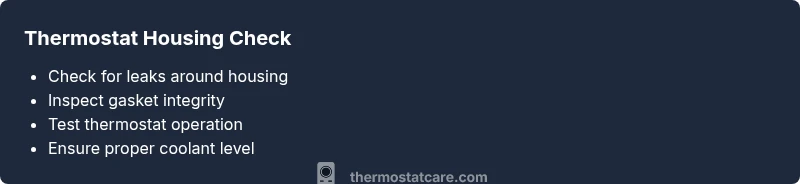
Can Thermostat Housing Cause Overheating? A Diagnostic Guide
Discover whether a faulty thermostat housing can cause engine overheating, common signs, a practical diagnostic flow, safe fixes, and prevention tips from Thermostat Care.


Yes. A thermostat housing issue can cause overheating by restricting coolant flow or failing to regulate temperature, which leads to excessive engine heat. Common problems include a thermostat that sticks closed, a housing crack, gasket leaks, or poor hose connections. Even a minor failure can cascade into higher temps, reduced heater performance, and potential engine damage if not addressed promptly.
Can thermostat housing cause overheating? What you should know
Engine cooling relies on a properly sealed thermostat housing that routes coolant between the engine and radiator. In practice, can thermostat housing cause overheating? Yes—when the housing or thermostat inside it fails to regulate flow, the engine can overheat. According to Thermostat Care, aging cooling components are a leading cause of overheating events in many vehicles. The thermostat housing is not a standalone fix, but a critical junction where failures can propagate if not diagnosed early. This guide explains how the housing works, the faults that commonly occur, how to test for them, and practical fixes you can perform safely in a home workshop. The goal is to empower DIYers with clear steps and a sensible plan, backed by Thermostat Care insights.
The housing sits at the crossroads of the cooling loop, and even small cracks or gasket leaks can disrupt pressure and flow. If you notice rising temperatures, sudden heat from the heater, or a coolant puddle near the front of the engine bay, start here. Treat coolant leaks seriously—they dilute lubrication and can damage water pumps and belts over time. Stay methodical: identify the symptom, check the most likely culprits first, and proceed with the least invasive fixes before replacing major components.
Signs that point to a housing problem and where to look
Engine temperature rise is the primary red flag. But other symptoms can clue you in to thermostat housing issues:
- Coolant leaks around the housing gasket or at the hose connections.
- A visible crack or discoloration on the housing itself.
- A thermostat that sticks closed or opens late, causing the gauge to spike.
- Heater performance that fluctuates or fails to warm the cabin.
- Erratic temperature readings on the dashboard gauge, sometimes with a coolant odor.
If you observe any of these signs, document the symptoms and proceed with a structured diagnostic flow. Do not ignore coolant contamination or misting around the housing hose clamps, as these indicate compromised seals. Regular visual checks, especially after road debris exposure or prior cooling-system work, can catch issues early and save expensive repairs later. As you troubleshoot, remember that modern cooling systems rely on precise seals and coolant flow; a single compromised gasket can undermine the entire loop.
Diagnostic flow: symptom to diagnosis to solution (overview)
A systematic diagnostic flow helps you separate the housing issue from other cooling-system faults. Start with the simplest checks and progress to more involved tests:
- Symptom: Overheating gauge, coolant loss, or poor heat output.
- Initial checks: Look for obvious leaks, inspect hoses at the housing, and verify cap condition.
- Diagnosis: If leaks and a cracked housing are ruled out, test the thermostat valve response and the housing seal integrity.
- Solutions: Tighten clamps, replace gaskets, or replace the housing if it shows cracks or excessive wear. If overheating persists, broaden the scope to water pump, radiator, and head gasket checks.
This flow minimizes time wasted on mistaken causes and aligns with practical DIY workflows. For more technical steps, see the Step-by-Step section below. Thermostat Care recommends documenting temperatures and coolant types to track changes over time and avoid repeat issues.
When in doubt, prioritize safety and consider scheduling a professional inspection if you encounter high-pressure coolant or a suspected head-gasket problem.
Safety-first fixes and what not to do
Before you dive in, ensure your engine is cool, the battery is disconnected if you’re working near electrical components, and you’re wearing eye protection and gloves. Do not remove the radiator cap when the system is hot. Avoid forcing hose clamps or using metal tools that could nick the housing or nearby fittings. If you discover a warped housing or a deteriorated gasket, replace both the housing and the gasket to restore a proper seal.
In rare cases, a thermostat housing issue may be a symptom of a larger cooling-system problem, such as a water-pump failure or a clogged radiator. If you notice persistent overheating after a housing repair, step back to re-check the entire cooling loop and consider a professional diagnostic to prevent head-gasket damage.
Brand notes and practical takeaways
According to Thermostat Care, regular inspection of the thermostat housing and associated hoses is a smart maintenance habit. By staying proactive, you reduce the risk of overheating and extend the life of cooling-system components. A quick annual check can catch hairline cracks or gasket shifts before they become expensive breakdowns.
Quick checks you can perform this weekend
- Visually inspect the housing for cracks or coolant residue.
- Check all hose clamps for tightness and look for bulges or soft spots.
- Confirm the thermostat operation by carefully feeling for a steady heat output when the engine warms up.
- Inspect the radiator cap for proper sealing and pressure retention.
- Verify coolant color and level; low coolant can exaggerate temperature fluctuations and mask housing issues.
Steps
Estimated time: 60-120 minutes
- 1
Prepare and safety-check
Park on a level surface, let the engine cool completely, and disconnect the battery. Gather the tools you’ll need and inspect the area around the thermostat housing for leaks or corrosion. This initial check saves time and avoids accidental injury.
Tip: Wear gloves and eye protection; never open the cooling system while hot. - 2
Inspect cooling-system level and hoses
Check the coolant level in the reservoir and radiator. Look for damp spots around the thermostat housing and hoses. Replace any damaged hoses or clamps that show signs of wear, and clean any residue from the housing area.
Tip: Old coolant can become acidic; use the correct type for your vehicle and dispose of old fluid properly. - 3
Remove and test the thermostat
Carefully remove the thermostat and test it in a pot of boiling water to verify it opens at the correct temperature. If it sticks or fails to open, replace it with an OEM-equivalent part. Reinstall with a new gasket or O-ring.
Tip: Do not reuse old gaskets; a new seal reduces the chance of leaks. - 4
Inspect the thermostat housing
Examine the housing for cracks, warping, or signs of heat damage. If you detect damage, replace the housing and ensure the mounting surface is clean and flat before reassembly.
Tip: Clean mating surfaces thoroughly to avoid suction gaps and leaks. - 5
Refill and bleed the cooling system
Refill with the correct coolant mix and bleed air from the system following your vehicle’s procedure. Start the engine and watch the temperature gauge; look for stable temperatures as the coolant circulates.
Tip: Slowly top off as air bubbles rise; do not overfill. - 6
Test-drive and monitor
Take a short drive to reach normal operating temperature and monitor the gauge. Check for new leaks and verify heater performance. If the temperature rises again, recheck connections and consider professional service.
Tip: Keep a log of temperatures and any leakage to share with a mechanic.
Diagnosis: Engine overheating with suspected thermostat housing involvement
Possible Causes
- highCoolant leaks at the housing gasket or hose connections
- highCracked or warped thermostat housing
- mediumStuck thermostat (closed or slow to open) within the housing
- mediumImproperly seated gasket or contaminated coolant causing seal failure
- lowAncillary issues (water pump or radiator blockage) affecting flow
Fixes
- easyTighten or replace hose clamps and reseat gasket if leaks are minor
- mediumReplace the thermostat housing and gasket if cracks or warping are present
- mediumTest thermostat operation and replace if stuck closed/open; ensure correct thermostat part number
- mediumFlush cooling system and replace coolant to remove contaminants and restore proper flow
- hardInspect water pump and radiator for blockages or failures; address as needed
Questions & Answers
Is a thermostat housing separate from the thermostat itself?
Yes. The housing is the outer shell that seals the thermostat and routes coolant. A failure in the housing or its gasket can cause leaks or flow restrictions, leading to overheating. Do not confuse a housing leak with a failed thermostat alone.
Yes, the housing is the outer shell. A leak or crack there can cause overheating and should be fixed before replacing other parts.
Can engine overheating be caused by other cooling-system parts?
Absolutely. Water pumps, radiators, fan belts, and radiator caps can all contribute to overheating. After ruling out the housing, inspect these components as part of a thorough diagnostic.
Yes, other cooling parts can cause overheating, so check the whole cooling loop if the housing isn’t the culprit.
How can I tell if the thermostat is the issue?
A thermostat that sticks closed will prevent coolant flow, causing rapid overheating. A stuck-open unit can prevent engine warming. Test by removing the stat and physically testing its opening or use a professional diagnostic tool.
Check if the stat opens and closes properly; if not, replace it.
What safety precautions should I take before inspecting the cooling system?
Work only with a cool engine, disconnect the battery if needed, and wear protective gear. Avoid open flames near coolant, and dispose of used coolant responsibly.
Make sure the engine is cold and use protective gear; coolant is toxic.
When should I replace the thermostat housing?
Replace the housing if you see cracks, warped surfaces, or persistent leaks after gasket replacement. A damaged housing can compromise the entire cooling system.
If cracks or leaks persist after gasket changes, replace the housing.
Is it safe to drive the vehicle if overheating recurs?
No. Driving a vehicle that repeatedly overheats can cause severe engine damage. Stop driving, let the engine cool, and seek professional help if the issue persists.
If overheating keeps returning, pull over and get it checked.
Watch Video
What to Remember
- Assess the housing and gasket first when overheating occurs
- Look for visible leaks or cracks around the thermostat housing
- Test the thermostat valve before replacing the housing
- Flush and refill coolant to restore proper flow