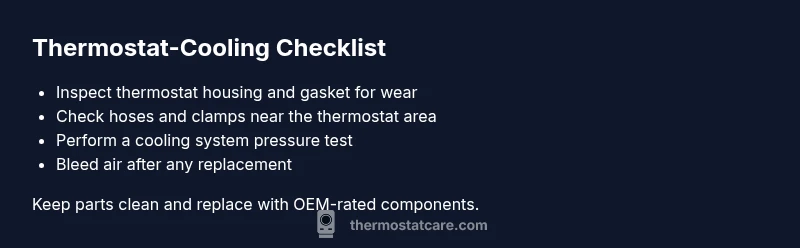
Can a Thermostat Cause a Coolant Leak? Urgent Troubleshooting Guide
Find out if a thermostat can cause a coolant leak, how to diagnose safely, and practical fixes to prevent engine damage. Thermostat Care provides urgent, actionable guidance for homeowners.


can thermostat cause coolant leak? Thermostats don't typically leak coolant by themselves, but a failing thermostat or its housing can contribute to leaks indirectly by causing overheating, warped hoses, or a damaged gasket. Early signs include temperature spikes, steam, or coolant puddles near the thermostat housing. According to Thermostat Care, inspect the housing, gaskets, and connected hoses first before assuming a leak from other components.
How a thermostat interacts with the coolant system
The engine cooling system relies on a properly functioning thermostat to regulate flow between the engine and radiator. When the engine warms up, the thermostat opens to allow coolant to circulate, and when it cools, it closes to maintain operating temperature. A faulty thermostat can disrupt this balance, leading to overheating or uneven cooling. While the thermostat itself does not typically leak coolant, a damaged thermostat housing or gasket can be the point where coolant escapes. According to Thermostat Care, a failing thermostat can indirectly contribute to leaks by causing excessive pressure on seals and hoses, which may fail earlier than expected. If you notice signs of overheating alongside dampness near the thermostat area, investigate both the thermostat and the surrounding components rather than assuming a direct leak from the thermostat core.
Quick diagnostic hints
- Look for coolant residue around the thermostat housing.
- Check hose clamps and hoses for cracks or bulges near the housing.
- Inspect the thermostat housing for warping or cracks after temperature fluctuations.
- Verify you’re using the correct coolant type and that the system is properly bled of air.
Key note
Thermostats control flow, not coolant itself. However, a stuck or failing thermostat can push more pressure on the cooling system, stressing gaskets and connections that ultimately leak. This is why a careful inspection of the thermostat housing, gasket, and adjacent hoses is essential when you suspect a leak.
Steps
Estimated time: 60-90 minutes
- 1
Park and let the engine cool completely
Before you touch the cooling system, ensure the engine is cool to avoid burns and steam. Set the parking brake, turn off the ignition, and wait at least 15-30 minutes after a run. Gather safety glasses and gloves for protection.
Tip: If you’re unsure whether the engine is cool enough, test with the back of your hand near the radiator cap distance—if you feel heat, wait longer. - 2
Locate the thermostat housing and inspect obvious leaks
Find the thermostat housing on the engine block where coolant lines enter. Look for dampness, white crust, or oily residue. Check all bolts for tightness and verify the gasket sits flat without gaps. A simple visual can reveal a failed seal or warped housing.
Tip: Use a flashlight and mirror to inspect hard-to-see angles around the housing. - 3
Perform a cooling system pressure test
Attach a cooling system pressure tester to the radiator cap or reservoir and pressurize the system to the manufacturer’s rating. Watch for the leak location as the pressure increases. This helps differentiate a housing leak from other sources like hoses or the radiator.
Tip: Do not exceed the recommended pressure and replace the coolant cap if it’s old or damaged. - 4
Check hoses and clamps around the thermostat area
Carefully inspect all hoses connected to the thermostat housing for cracks, bulges, or soft spots. Re-tighten clamps if they’re loose; replace any damaged sections. Ensure the hose ends are clean before resecuring them to prevent leaks.
Tip: If a hose is swollen or very hard, replace it rather than just tightening. - 5
Replace faulty components and bleed air
If the housing, gasket, or thermostat shows signs of wear, replace them with correct OEM parts. After replacing, bleed the cooling system according to your vehicle’s procedure to remove air pockets that cause hot spots and leaks.
Tip: Always use the correct coolant type and follow the bleed sequence specified in your service manual.
Diagnosis: Engine overheating or temperature gauge rising, with coolant leakage near the thermostat housing
Possible Causes
- highDamaged thermostat housing or gasket
- highLoose or cracked hoses near the thermostat housing
- lowOverfilled coolant reservoir causing pressure spillover
- mediumWater pump issues contributing to poor circulation
- lowRadiator cap failure leading to pressure losses
Fixes
- easyInspect and replace the thermostat housing gasket and housing if warped or cracked
- easyTighten clamps, replace damaged hoses, and reseal connections around the housing
- mediumPerform a cooling system pressure test to locate the leak source
- easyReplace the thermostat if it’s sticking or not opening properly
- easyInspect and test the radiator cap for proper sealing and pressure rating
Questions & Answers
Can a thermostat cause a coolant leak?
Not usually, but a failing thermostat or its housing can cause overheating and stress seals that lead to leaks. Always inspect the housing and adjacent hoses first.
A thermostat issue can indirectly cause leaks by overheating, which stresses seals and hoses.
What are the first signs of a thermostat-related leak?
Look for dampness around the thermostat housing, steam from the engine bay, a rising temperature gauge, and a sweet smell of coolant.
Dampness near the thermostat housing and overheating are typical hints.
Should I drive the car if I notice a leak?
No. A coolant leak can cause rapid overheating and severe engine damage. If you notice a leak, pull over safely and assess the situation.
Stop driving and check for leaks before continuing.
Is the thermostat the only possible cause of leaks around the engine?
No. Leaks can originate from hoses, radiator, water pump, or the coolant reservoir. Thermostat issues may accompany these problems.
Thermostat problems can be part of a larger leak issue but aren’t the sole cause.
What maintenance helps prevent thermostat-related leaks?
Regular cooling system maintenance, proper coolant type and level checks, and periodic thermostat replacement at the manufacturer’s intervals reduce leak risk.
Keep up with cooling system maintenance to prevent thermostat-related leaks.
When should I replace the thermostat?
Replace if it’s sticking, failing to open/close, or causing overheating. Do not delay if performance is degraded.
Replace if it sticks or causes overheating.
Watch Video
What to Remember
- A thermostat can contribute to leaks indirectly, not by itself.
- Inspect housing, gasket, and nearby hoses first when you see dampness.
- A pressure test helps locate the exact leak source quickly.
- Bleed air after replacing cooling system components to prevent future leaks.
- If overheating continues, seek professional help to avoid engine damage.