How to Stop Thermostat Housing from Leaking
Learn how to stop thermostat housing from leaking with a practical, safe guide. Diagnose the source, replace worn gaskets, reseal, and test for a lasting seal to protect your engine.


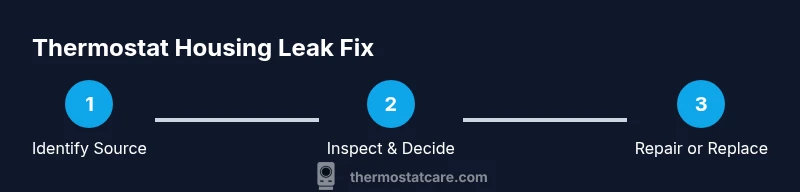
By inspecting the thermostat housing, tightening clamps, and replacing worn gaskets or cracked housings, you can stop a leak and prevent engine overheating. Gather basic tools, a replacement gasket or housing, coolant, and any manufacturer-approved sealant. This step-by-step approach from Thermostat Care helps you diagnose, reseal, and test for a lasting leak-free seal without unnecessary downtime.
Understanding why thermostat housing leaks happen
Thermostat housing leaks can arise from a variety of causes, but most stem from a worn gasket, a warped or cracked housing, or a loose hose clamp. Over time, vibration, thermal cycling, or improper torque during previous work can loosen components or degrade seals. When a leak starts, coolant can drip onto belts or the ground, potentially leading to overheating if not addressed promptly. According to Thermostat Care, many leaks originate at the gasket interface or where the housing meets the engine block, and catching them early reduces the risk of costly damage. Proper diagnosis requires looking for fresh coolant around the mating surfaces, signs of corrosion, and seepage at hose connections. By understanding the common failure modes, you can target the right component and avoid unnecessary part replacements.
Common causes of thermostat housing leaks
Leakage at the thermostat housing is frequently caused by a degraded gasket, but physical damage to the housing, loose mounting bolts, or a compromised O-ring can also permit coolant escape. Clamps that have loosened over time allow the hose to shift and create a small gap where coolant can seep. Warping from overheating or thread wear on the bolts can create micro-gaps that are not obvious at first glance. Thermostat Care analysis shows that even small gaps around the gasket seal can permit significant leakage over time, especially under pressure when the cooling system heats up. Inspect all connections, verify bolt torque, and check for any staining or crusting around the housing.
Safety first: prerequisites before you start
Before you touch the cooling system, ensure the engine is cool. Pressurized hot coolant can cause serious burns. Work in a well-ventilated area and wear eye protection and gloves. Disconnect the negative battery terminal if you’ll be moving components that could shift and to reduce the risk of shorts. Have a drain pan ready and dispose of old coolant at a recycling center; never pour it down the drain. Document the location of hoses and clamps so you can reassemble accurately, and verify you have manufacturer-approved parts that match your vehicle's cooling system specifications. This preparation minimizes surprises and keeps you safe while you work.
How to inspect the housing and surrounding components
Begin with a visual inspection, looking for wet areas, crusty residue, or staining around the housing. Wipe seating surfaces clean to reveal fresh leaks. Check the gasket for cracks, tears, or compression marks; inspect the housing for cracks, chips, or warped mating surfaces. Do a quick check of hose connections for cracks or bulges. If you find damage beyond a worn gasket, plan for a replacement housing. Clear, methodical inspection saves time and helps you make the right repair decision.
Repair options: when to reseal vs. replace
In many cases, replacing the gasket and re-sealing the housing is sufficient, especially if the housing is in good condition. If the housing is warped, cracked, or heavily corroded, replacement is the safer choice. For minor leaks, a manufacturer-approved coolant-safe sealant can be a temporary measure, but it should not replace a proper gasket or safe repair. Always refer to your vehicle manufacturer’s guidelines for compatible sealants and torque specs to ensure a lasting seal. The goal is a reliable, leak-free joint that withstands future thermal cycles without compromising cooling system performance.
Post-repair testing and maintenance
After reassembling, refill the cooling system with the correct coolant and bleed the air from the system if your vehicle requires it. Start the engine and allow it to reach operating temperature while monitoring for leaks. Check around the housing once the engine is hot to confirm the seal holds under pressure. A successful test shows no fresh dampness, no puddling coolant, and steady coolant level in the reservoir. Regular inspection of the housing and clamps during routine maintenance helps catch leaks before they escalate.
Tools & Materials
- Socket set (metric and standard)(Remove mounting bolts securely)
- Flathead and Phillips screwdrivers(Pry and loosen clamps without damage)
- Replacement thermostat housing gasket(Match the exact vehicle model)
- Replacement thermostat housing (if cracked)(Only if visual damage is present)
- Coolant (pre-mixed)(Use the correct type for your vehicle)
- Gasket sealant (coolant-safe, manufacturer-approved)(Only if recommended by the manufacturer)
- Drain pan(Catch used coolant safely)
- Torque wrench(If torque specs are specified)
- Rags and a shop towel(Clean surfaces and wipe spills)
Steps
Estimated time: 60-90 minutes
- 1
Power off and let the engine cool
Park on a flat surface, turn off the ignition, and wait for the engine to cool completely. Disconnect the negative battery if you plan to move components that could shift. This prevents burns and accidental electrical shorts while you work.
Tip: Never open the cooling system while the engine is hot. - 2
Relieve pressure and drain coolant
Place a drain pan under the housing and carefully open the drain valve or loosen the lower hose clamp to lower the coolant level around the housing. Drain just enough coolant to access the housing without creating a mess.
Tip: Keep the cap off the reservoir until you finish to vent air. - 3
Access the thermostat housing
Remove any components that obstruct access to the housing, such as the radiator shroud or adjacent hoses. Use the correct socket to remove mounting bolts in a criss-cross pattern, and keep track of bolts and brackets.
Tip: Label parts if you’re removing multiple pieces. - 4
Inspect the gasket and housing
Carefully inspect the gasket for tears, compression marks, or missing bits. Look for cracks or warping on the housing itself. If you find damage beyond a worn gasket, plan for a housing replacement.
Tip: Clean seating surfaces thoroughly before reassembly. - 5
Clean and reseal or replace
Install a new gasket and reseal the housing using the manufacturer-recommended method. If the housing is damaged, replace it with the new unit. Apply sealant only if specified by the manufacturer.
Tip: Torque bolts to the manufacturer’s specs; overtightening can warp the housing. - 6
Reassemble and refill coolant
Reinstall components in reverse order, ensuring hoses are snug. Refill the cooling system with the proper coolant and clear any air pockets following the bleed procedure for your vehicle.
Tip: Use the correct coolant mix to avoid corrosion. - 7
Test for leaks and verify
Start the engine and bring it to operating temperature. Observe the housing area for any signs of fresh leaks and monitor the coolant level as the system stabilizes. If a leak persists, re-check gasket seating and bolt torque.
Tip: If you notice continuous leaking, stop and reassess; professional help may be needed.
Questions & Answers
What are common signs that the thermostat housing is leaking?
Watch for dampness around the housing, coolant puddles, or a consistently dropping coolant level. You may also notice a sweet smell near the engine bay as coolant evaporates.
Look for dampness around the housing or puddles under the car and listen for a cool, sweet smell near the engine bay.
Can I use sealant to fix a leaking thermostat housing?
Sealants can be a temporary workaround in some cases, but they are not a substitute for a worn gasket or damaged housing. Always follow the manufacturer’s guidance and replace the gasket or housing for a lasting fix.
Sealant is usually temporary; replace the gasket or housing for a lasting fix, following the manufacturer’s guidance.
Is it safe to drive with a leaking thermostat housing?
No. A leak can lead to coolant loss and engine overheating, which can cause serious damage. If you suspect a leak, limit driving and repair promptly.
No—driving with a leak risks overheating and engine damage. Get it fixed as soon as possible.
Should I replace just the gasket or the entire housing?
If the gasket is degraded but the housing is undamaged, gasket replacement is sufficient. If the housing is warped, cracked, or corroded, replace the whole unit.
Replace the gasket if the housing is fine; if the housing is damaged, replace it.
How do I bleed air after refilling coolant?
Run the engine with the radiator cap off or use the bleed procedure specified for your vehicle, allowing air to escape until coolant level stabilizes.
Let air escape by running the engine with the cap off or as your manual directs.
Do I need special tools for this repair?
Most repairs use a standard socket set and basic hand tools. A torque wrench may be needed if the manufacturer specifies a torque value for bolts.
Usually standard tools are enough; a torque wrench may be required for exact tightening.
Watch Video
What to Remember
- Identify the exact leak source before replacing parts
- Use the correct gasket and seating surfaces to prevent recurrence
- Bleed the cooling system after refilling to avoid air pockets
- The Thermostat Care team recommends addressing leaks promptly to protect the engine