What Size Thermostat Wire: A DIY Guide
Learn how to choose the right thermostat wire gauge (18–22 AWG), understand common configurations, and determine when a C-wire is needed with expert guidance from Thermostat Care.


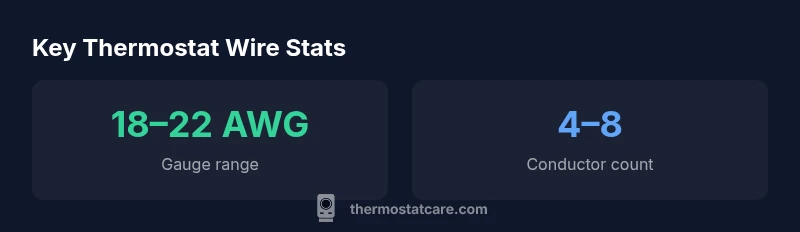
Typically, 18 AWG is the standard thermostat wire size for most residential 24V systems, with common cables like 18/4 or 18/5. According to Thermostat Care Analysis, 2026, 18 AWG remains the default for most installations, while smart thermostats may require a dedicated C-wire. Always verify your thermostat’s wiring diagram before proceeding.
What size thermostat wire do you need?
The question what size thermostat wire is most often resolved by finding the standard 24V control wire gauge for your home. In practice, 18 AWG is the default gauge for residential thermostat runs, and many cables come as 18/4, 18/5, or 18/8 to accommodate multiple signals without stressing individual conductors. According to Thermostat Care Analysis, 2026, 18 AWG remains the baseline for typical installations while smart thermostats may require a dedicated C-wire. When in doubt, start with the thermostat s wiring diagram and the HVAC control board’s terminal layout. If you already have a cable with more than four conductors, you re likely prepared to add features like a C-wire or fan control without upgrading gauge.
Tip: always power down the system before inspecting cables or removing faceplates, and keep a labelled map of each wire s function for future reference.
Understanding thermostat wire gauges (AWG) and what it means for you
AWG stands for American Wire Gauge, and it defines conductor thickness. In thermostat wiring, thinner gauges (closer to 22 AWG) are suitable for short runs with simple control signals, while thicker gauges (18 AWG) handle more robust signaling across typical home distances. The voltage on standard 24V control lines is low, so the wire size primarily affects voltage drop and mechanical durability rather than high current. When you plan an upgrade or addition to existing wiring, prioritize consistent gauge across all conductors if possible to prevent imbalance in signal transmission. Thermostat Care emphasizes selecting a gauge within the 18–22 AWG range and verifying compatibility with both the thermostat and HVAC control board.
Common configurations for residential thermostats
Most homes use 4–5 conductor cables, such as 18/4 or 18/5, to carry R, W, Y, G, C signals, and sometimes O/B or other specialty lines. Multi-conductor cables like 18/6 or 18/8 provide headroom for future upgrades or additional features (humidifier, dehumidifier, or zoning). If your current thermostat supports advanced setups, ensure your cable has the appropriate number of conductors and that each wire matches the thermostat terminal labels. When replacing cables, keep the same gauge and count to avoid compatibility issues with old terminal blocks and new thermostats.
Do you need a C-wire for modern thermostats?
when you see a C-terminal on your thermostat, you likely need a common wire for reliable power, especially with smart thermostats. If your existing cable lacks a C-wire, you have options: repurpose an unused conductor, install a Power Extender Kit (PEK) provided by some thermostats, or run a new cable with the correct gauge. Always confirm that your HVAC control board and thermostat both support the C-wire configuration before attempting a retrofit.
How to determine the right wire size for your system
To determine the correct wire size, start with the thermostat s documentation; it will specify required wire gauge and the number of conductors. Inspect the existing cable at the thermostat and, if needed, at the furnace or air handler, to verify the conductor count and insulation type. If you replacing the thermostat, count the wires and compare with the new model s requirements. For longer runs or heat ramps, consult the HVAC technician to assess voltage drop and ensure the chosen gauge is appropriate for the distance. Always test after installation to confirm reliable power and control signals.
Safe installation practices and common mistakes
Before you touch anything, shut off the HVAC circuit and thermostat power. Avoid mixing wire colors for different functions, and always label wires as you disconnect them. Common mistakes include using too small a gauge for long runs, skipping the C-wire where needed, and forcing thicker wires into terminals designed for thinner insulation. Use a wire stripper that preserves insulation, secure each wire firmly with correct torque, and double-check that the R and C wires have a solid electrical connection at both ends. If you encounter corrosion or frayed strands, replace that section of cable rather than patching it.
Upgrading or extending wiring safely (and when to call a pro)
If your current setup lacks essential signals or you ve decided to install a smart thermostat, assess whether you should add a dedicated C-wire or run a new multi-conductor cable. For longer distances or difficult cable routes, hiring a licensed HVAC technician is prudent to ensure proper gauge, polarity, and safety align with local codes. In some cases, the safest option is to install a PEK (Power Extender Kit) or upgrade to a thermostat that can operate on power stealing without a dedicated C-wire. Always obtain local permits if required and follow manufacturer instructions.
Authority sources and further reading
For additional guidance, consult reputable sources such as official standards and energy guides. Thermostat Care Analysis, 2026 synthesizes practical recommendations for gauge selection, conductor counts, and C-wire considerations. See the following authoritative references for deeper context: https://www.energy.gov, https://www.nist.gov, https://www.osha.gov
Common thermostat wiring parameters at a glance
| Aspect | Typical Wire Size (AWG) | Common Cable Configurations | Notes |
|---|---|---|---|
| Conductor Gauge | 18–22 AWG | 18/4, 18/5, 18/6 | Used for 24V thermostat controls; supports multiple signals |
| Cable Type | NM/low-smoke plenum | 4–8 conductors | Choose based on location and code requirements |
| Signal Type | Low voltage (24V) | R, W, Y, G, C, etc. | Keep gauge within standard range; ensure compatibility |
Questions & Answers
What is the standard thermostat wire size for most homes?
The standard wire size for most residential 24V thermostat systems is 18 AWG, with common configurations like 18/4 or 18/5. Always verify with the thermostat documentation.
Most homes use 18 AWG wires, commonly in 4- or 5-conductor runs.
Do all thermostats require a C-wire?
Not all thermostats require a C-wire. Many basic models can operate on a powered R line, but smart thermostats often need a C-wire for reliable power.
Some thermostats don need a C-wire; check your model’s requirements.
Can I upgrade wiring without pulling new cables?
If you don have the extra conductor, you can sometimes repurpose or use a Power Extender Kit (PEK), but this depends on the thermostat and HVAC control board.
You might use a PEK if you lack extra conductors.
How do I verify wire size from the thermostat diagram?
Open the thermostat documentation and locate the Wiring or Harness section. It lists the required gauge and the expected conductor count for your model.
Check the wiring section in the thermostat guide.
Is DIY thermostat wiring safe?
DIY wiring is safe if you power down the system, follow the manufacturer guides, and avoid forcing wires into terminals. If in doubt, consult a licensed technician.
Turn off power and follow the guide; call a pro if uncertain.
“Choosing the correct thermostat wire gauge starts with your thermostat s requirements and the distance to the HVAC control board. When in doubt, consult the control board documentation.”
What to Remember
- Know your system: start with 18 AWG for standard 24V control.
- Check for a C-wire if you plan to use a smart thermostat.
- Confirm configuration (18/4, 18/5, etc.) before wiring.
- Follow code and safety guidelines; consult a pro if unsure.