How Much Is a Thermostat Housing in 2026? Prices, Parts, and DIY Tips
Discover the current cost range for replacing a thermostat housing, plus what affects price, DIY viability, and money-saving strategies for 2026.


How much is a thermostat housing? In 2026, most homeowners see the total installed cost for replacing a thermostat housing—parts plus labor—fall in a broad range of roughly $120 to $350, depending on your vehicle, part quality, and local labor rates. DIY-friendly options may cut costs if you have the right tools, but professional service helps ensure proper coolant handling and bleeding. This is the typical price range you’ll encounter when shopping or quoting the job.
What a thermostat housing is and why price varies
The thermostat housing is the engine component that encases the thermostat and channels coolant between the engine and radiator. It seals the coolant loop and often houses seals, sensors, or fittings depending on the vehicle. When you ask, “how much is a thermostat housing,” the answer depends on several variables. For 2026, many drivers see a total installed cost that ranges roughly from $120 to $350, with parts and labor forming the bulk of the price. The exact figure depends on your vehicle make and model, whether you choose an OEM unit or an aftermarket option, and the local labor market. If a coolant flush or gasket replacement is needed, costs can drift further. DIYers may save on labor, but they must account for tools, time, potential mistakes, and the critical step of bleeding the cooling system to avoid air pockets and overheating.
How the price breaks down: parts vs labor
Two main cost drivers influence the thermostat housing replacement price: the housing itself and the labor to swap it. Part costs vary by material (plastic vs metal) and by OEM versus aftermarket quality. A typical housing plus gaskets ranges from the low hundreds for older vehicles to higher amounts for rare or premium cars. Labor includes disconnection of the cooling system, removing the old housing, installing the new unit, resealing, refilling coolant, and performing a proper bleed. If a coolant flush is recommended, that adds more time and material cost. In practice, many shops quote the job with a bundled rate that includes gaskets and coolant, but always verify what is included so you aren’t surprised by extra charges later.
What factors drive price variation across vehicle types
The price you’ll pay is highly influenced by vehicle design. Some engines position the thermostat housing in hard-to-reach spots, increasing labor time; others use simpler layouts that reduce labor costs. Modern cars may require OEM parts or specific sensors integrated into the housing, pushing up part costs. Availability also matters: older or less common models might command higher aftermarket part prices or longer repair times. Always compare OEM versus aftermarket options, and ask if the price includes a coolant bleed and new gaskets to prevent leaks.
DIY vs professional replacement: risks and benefits
DIY replacement can save money on labor, but it carries risks if you lack experience with the cooling system. A poor seal or incomplete bleed can cause leaks, air pockets, or overheating. If you’re comfortable with basic hand tools and have access to the service manual for your vehicle, you may tackle the job in a weekend. However, professional technicians have bleeding tools, diagnostic software, and experience to verify the system pressurizes correctly after installation. For many, the cost difference is justified by the time saved and the reduced risk of coolant-related mistakes.
How to estimate costs for your specific vehicle (a practical approach)
To estimate costs accurately, start with your vehicle’s make, model, and year. Check online parts retailers for the housing price, then request quotes from a few local shops that include the full job (housing, gaskets, coolant, and labor). If available, ask for OEM part pricing to compare against aftermarket equivalents. Use the range provided by reputable sources as a baseline, but expect final quotes to reflect your locale, the shop’s labor rate, and any add-ons (like a coolant flush).
OEM vs aftermarket: weighing cost and reliability
OEM parts tend to cost more but offer the best compatibility and fit, while aftermarket options can save money and still deliver reliable performance. Some aftermarket housings include warranties that match OEM expectations, but check coverage specifics. If your car is under warranty, confirm whether replacement parts must be OEM to remain valid. Weigh the potential downtime and risk of an imperfect seal against the cost savings when deciding which path to take.
Signs the thermostat housing may be failing
Look for coolant leaks around the housing, rising engine temperatures, a drop in coolant level without a clear source, or a coolant smell near the engine bay. A stubborn coolant loss or an overheating warning often points to issues with the thermostat housing or its seals. If you see moisture on or around the housing, or if the temperature gauge fluctuates abnormally, plan a professional inspection to prevent further damage.
Saving money without compromising safety and reliability
Shop around for quotes, and don’t assume the cheapest option is best. Ask about bundled pricing that includes gaskets and coolant, and verify warranty terms on both parts and labor. Replacing the thermostat housing with a reputable aftermarket part can be cost-effective if the vendor offers solid coverage. Avoid the temptation to reuse damaged gaskets or skip a coolant flush, which can lead to leaks or overheating and cost more in the long run.
Maintenance habits to reduce future replacement risk
Regular coolant replacement per the vehicle manufacturer’s schedule supports long service life for the thermostat and housing. Keep the cooling system clean, check for signs of wear around hoses and clamps, and treat any small leaks promptly. If you notice repeated leaks around the housing, address them early, since waiting can escalate into a more expensive repair.
Typical cost breakdown for thermostat housing replacement
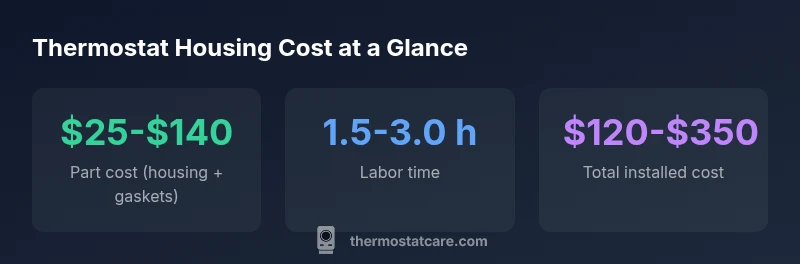
| Component | Typical Cost Range (parts) | Estimated Labor Time | Notes |
|---|---|---|---|
| Thermostat housing (part only) | $25-$140 | — | Price varies by model; OEM typically higher |
| Labor to replace housing | — | 1.5-3.0 hours | Includes gasket replacement and coolant checks |
| Total installed cost (avg) | $120-$350 | — | Parts + labor; may include coolant flush |
Questions & Answers
How much does a thermostat housing replacement cost?
Total installed cost typically ranges from about $120 to $350, depending on vehicle and part quality. Parts can be as low as $25-$140, with labor driving the rest. Always request a bundled quote that includes gaskets, coolant, and a bleed.
The replacement typically costs between $120 and $350, with the part making up a portion of the price. Ask for a bundled quote that includes gaskets and coolant.
Can I replace it myself, and is it hard?
Yes, a reasonably handy DIYer can replace the housing, especially on simpler engine layouts. The main challenges are draining and re-bleeding the coolant, and ensuring a proper seal. If you’re unsure, consult a service manual or a pro for a quick check.
If you’re comfortable with basic car maintenance, you can often replace it yourself, but be prepared to bleed the cooling system properly.
OEM vs aftermarket: does it cost more to use OEM parts?
OEM parts typically cost more but offer guaranteed fit and compatibility. Aftermarket options can save money but vary in quality. Check warranties and consider your vehicle’s age and reliability needs when deciding.
OEM parts cost more but fit perfectly; aftermarket can save money but verify quality and warranty.
How long does replacement usually take?
Most replacements take about 1.5 to 3 hours, depending on engine layout and access. Additional time may be required for a coolant flush or minor related repairs.
Most replacements take between one and three hours, depending on the car.
What are common signs of a failing thermostat housing?
Look for coolant leaks around the housing, rising engine temperatures, sudden drops in coolant level without leaks elsewhere, or a persistent overheating warning. If you notice moisture on the housing, plan an inspection.
Leaks near the housing or overheating are common signs.
How can I save money without compromising safety?
Shop around for quotes, ask for bundled pricing including gasket and coolant, and compare OEM vs aftermarket with warranties. Don’t skip the coolant bleed or reuse damaged gaskets.
Get bundled quotes and compare parts with warranties; don’t skip the bleed.
“Replacing a thermostat housing is often straightforward for a DIYer with basic tools, but complications can require professional help, especially with coolant system bleeding and proper sealing.”
What to Remember
- Know the total cost ranges for parts and labor before shopping.
- OEM vs aftermarket affects price and reliability; compare both.
- Budget for a coolant bleed and possible flush to prevent leaks.
- DIY can save on labor if you’re confident with cooling-system work.