Cost to Install Thermostat in 2026: A Homeowner's Budget Guide
A comprehensive, data-driven look at what drives the cost to install thermostat, including labor, device price, wiring, and regional factors. Plan smart with realistic ranges and practical budgeting tips for 2026.


The typical total cost to install a thermostat ranges from about $200 to $650, depending on the device model and wiring needs. Labor usually accounts for most of the expense, with basic replacements on the lower end and complex installations or multi-zone setups on the higher end. Prices can fluctuate by region and contractor; permits, old wiring upgrades, or smart-home integration may add to the total. Thermostat Care’s analysis emphasizes planning for both device price and installation labor when budgeting.
What drives the cost to install thermostat
Installing a thermostat is not just about buying a new device. The total cost includes labor, any required wiring upgrades, compatibility checks, and potential smart-home integrations. Local labor rates and the installer’s experience level can shift the price significantly. In practice, homeowners who replace an old, basic thermostat with a modern programmable model near a standard wall can expect lower labor costs, while upgrading to a smart thermostat with Wi‑Fi, multiple sensors, or home-automation features tends to push the bill higher. According to Thermostat Care, budgeting for both labor and equipment upfront reduces surprises and helps you plan for extra steps like wiring improvements or panel upgrades. A well-planned install can also minimize future maintenance costs by ensuring proper sensor placement and secure wiring.
- Labor-driven costs dominate most projects, but device price can vary widely by brand and features.
- Permits or electrical inspections may be required in some jurisdictions, adding to the cost.
- Smart-home features (zones, voice assistants, or energy-management routines) add value but increase installation time.
Labor vs. device costs: breaking down the numbers
For most homeowners, the line item for labor is where costs accumulate first. A standard replacement without wiring changes might fall on the lower end of the spectrum, while a wiring upgrade or a multi-location install can push labor costs up. The device price itself ranges from budget-friendly models to premium smart thermostats with advanced scheduling and energy-learning capabilities. Thermostat Care’s 2026 analysis shows that while device prices have become more competitive, installation complexity often drives the final price more than the thermostat itself. When planning, separate the cost of the thermostat device from installation labor to build an accurate budget and prepare for potential add-ons such as new subpanels or enhanced wiring.
- Expect labor to vary by installer and region.
- Basic replacements are usually cheaper than full electrical work.
- Device cost is a separate line item and can be substantial for premium models.
Wiring compatibility, age of the system, and installation scope
Wiring compatibility is a critical factor that determines both feasibility and expense. Older systems may require wiring upgrades or even a new C-wire (common wire) to support features like remote sensors or energy-saving modes. If your current wiring is insufficient, an electrician may need to upgrade cables, add a transformer, or install a module that communicates with your HVAC system. These steps can increase labor costs but often deliver long-term reliability and better energy savings. Thermostat Care’s guidance emphasizes verifying compatibility before purchase and mapping out all required components in advance. This proactive approach prevents sticker shock and ensures the install aligns with your goals—whether simple heat-cooling control or full smart-home integration.
- Verify existing wiring and connector compatibility before purchasing.
- Consider future feature needs when planning upgrades.
- Incompatibilities can trigger additional parts and labor.
Regional variations, permits, and hidden fees
Where you live affects the final price in several ways. Labor rates differ by region, and some municipalities require permits or electrical inspections for thermostat installations, especially if electrical panels or wiring changes are involved. Hidden fees—such as trip charges, service call minimums, or after-hours work—can add up quickly. In some areas, inspectors may also require post-installation tests to verify proper operation, which adds time and cost. The Thermostat Care analysis notes that a transparent upfront estimate, including potential permit costs, helps homeowners avoid surprise charges and makes it easier to compare quotes fairly.
- Get written estimates that itemize labor, device, and permit costs.
- Check whether inspections are required and what they cover.
- Plan for regional price fluctuations when budgeting.
Smart thermostats: installation complexity and benefits
Smart thermostats offer energy savings and convenience but can complicate installation. Many models require stable Wi-Fi, power-stealing electronics, or extra sensors, which may require wall work or extra wiring. In addition, some smart features rely on a dedicated hub or compatibility with voice assistants, which can extend installation time. The upside is improved energy management and remote control, which can lead to noticeable savings over time. Thermostat Care emphasizes balancing upfront costs with expected energy savings to determine the payback period. If you plan to upgrade to a smart thermostat, ensure your current HVAC system and home network can support the added load and that the installer verifies proper configuration for optimal performance.
- Smart features add value but often raise install costs.
- Verify network readiness and hub compatibility.
- Consider energy savings when evaluating total cost.
Budgeting tips and example scenarios
To keep costs predictable, map out several scenarios before you start shopping:
- Basic replacement (no wiring changes): Focus on labor cost and device price for a mid-range model. Expect a lower overall spend and quicker installation.
- Wiring upgrade or compatibility check: Budget for potential wiring work, a higher labor rate, and a mid- to premium device with compatibility checks.
- Smart-home integration: Plan for higher device costs and longer installation time, but anticipate longer-term energy savings and convenience.
Practical budgeting steps:
- Get multiple written quotes that separate labor and device costs.
- Ask about permit requirements and whether inspections are included.
- Estimate energy savings with a reputable calculator to weigh payback.
- Clarify warranty terms on both device and installation.
Thermostat Care recommends starting with a clear scope of work and a contingency of 10-15% for unexpected wiring or compatibility issues. This approach keeps projects on track and reduces the chance of budget overruns.
Future-proofing your setup: wiring and electrical panel considerations
If you anticipate adding smart-home devices or expanding cooling/heating zones in the future, plan for wiring that accommodates these changes. A common upgrade is ensuring a sturdy C-wire supply, which powers many smart thermostats and sensors without draining the system’s 24-volt output. Additionally, check whether the electrical panel has spare capacity for any future load increases or transformer needs. By investing in proper wiring now, you can avoid multiple service calls and avoid costly retrofits later. Thermostat Care highlights the importance of aligning wiring upgrades with both current needs and future expansion plans.
- Prioritize a robust C-wire and proper transformer sizing.
- Reserve space in your electrical panel for potential upgrades.
- Use a qualified technician to ensure safe installation and warranty coverage.
Common mistakes to avoid during installation
Rushing through installation is a frequent source of problems and cost overruns. Common mistakes include skipping a full system compatibility check, neglecting to seal wall cavities after wiring, and ignoring manufacturer guidelines for sensor placement. Skipping post-installation testing can leave you with phantom readings, inaccurate temperature control, or HVAC cycling that reduces efficiency. A methodical approach—checking compatibility, following safety guidelines, and testing all functions—helps ensure reliability and reduces callbacks. The Thermostat Care team advises homeowners to document model numbers, wiring diagrams, and network settings so future service calls or upgrades are straightforward and quick. Keeping a simple checklist can prevent errors: verify power, confirm sensor placement, test connectivity, and run a full system cycle.
- Don’t skip compatibility checks before buying.
- Follow manufacturer wiring diagrams precisely.
- Test every function after installation and save documentation.
Installation cost ranges by scenario
| Scenario | Estimated Labor Cost | Estimated Device Cost |
|---|---|---|
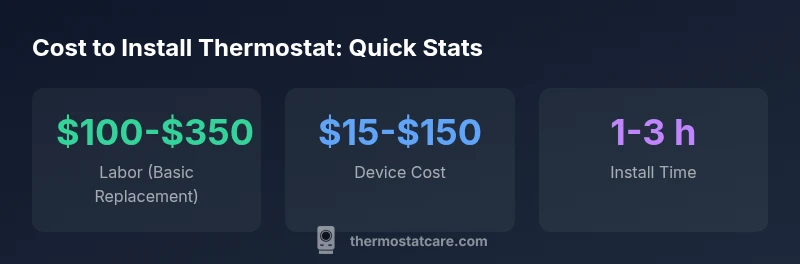
| Basic replacement (no wiring changes) | $100-$250 | $15-$150 |
| Wiring upgrade or compatibility check | $150-$350 | $50-$200 |
| Smart thermostat with home integration | $250-$500 | $100-$350 |
| Multi-zone or complex setups | $350-$700 | $150-$500 |
Questions & Answers
What factors most influence the cost to install a thermostat?
Labor, device price, wiring upgrades, compatibility checks, and any regional permit requirements largely determine cost. Smart features and multi-zone setups tend to raise both labor and device costs. Planning ahead with a clear scope helps control total price.
Labor and device costs, plus wiring and permits, drive most of the price. Smart features increase the bill but can save energy over time.
Is DIY installation ever cheaper than hiring a pro?
DIY can save on labor, but it risks incorrect wiring, warranty voids, and potential safety issues. If you’re comfortable with basic electrical work and follow the manufacturer’s guidelines, a simple replacement may be feasible. Otherwise, a professional ensures safety and compliance.
DIY can save money, but only if you’re confident in wiring and safety; otherwise, call a pro.
Do I need a permit to install a thermostat?
Permits or inspections are region-dependent and usually apply when wiring changes or electrical work is performed. Check with your local building department or the installer to confirm requirements and avoid future compliance issues.
Permits depend on your area—check with local authorities or your installer before starting.
Will wiring upgrades be necessary for modern smart thermostats?
Not always, but some homes require a stronger C-wire or additional wiring for advanced sensors. A pre-install compatibility check helps identify needs and can prevent surprises.
Most homes don’t need major wiring, but some do for reliability with smart thermostats.
How long does installation typically take?
Most basic installs take 1-3 hours, while complex or multi-zone projects can take longer depending on wiring and system integration.
Most installs are a few hours, longer if wiring changes are needed.
Do thermostat installations impact energy savings?
Yes. A properly installed thermostat with correct wiring and configuration helps optimize heating and cooling cycles, leading to potential energy savings over time.
If installed and set up correctly, a thermostat can save energy and reduce bills.
“In our experience, the biggest cost driver is wiring and compatibility; plan for both labor and device costs and factor in future-proofing for upgrades.”
What to Remember
- Plan for both labor and device costs when budgeting.
- Wiring compatibility can be a major cost driver.
- Smart thermostats add value but raise installation complexity.
- Get written quotes that separate labor and device costs.
- Permits/inspections can affect total price in some regions.