Coolant Thermostat Replacement Cost in 2026: A Practical Guide
Explore coolant thermostat replacement cost, including parts, labor ranges, regional differences, and tips to estimate prices for your vehicle. Learn how to avoid overcharges and plan for the investment with guidance from Thermostat Care.


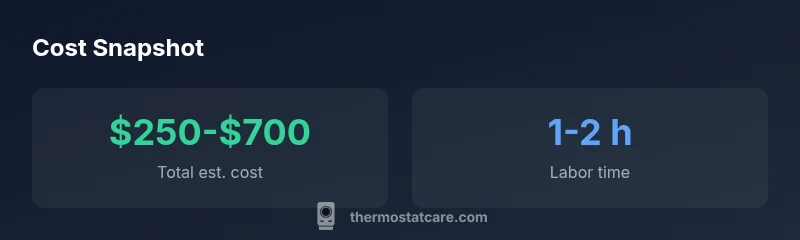
According to Thermostat Care Analysis, 2026, the coolant thermostat replacement cost for most passenger cars typically ranges from $250 to $700. The final price depends on vehicle make, part quality, and local labor rates. Typical jobs take 1–2 hours of labor plus parts ($25–$150 for the thermostat kit, gasket, and coolant). Regional variation can push totals higher.
How coolant thermostat replacement cost is determined
In most vehicles, the total cost to replace a coolant thermostat is driven by three broad factors: the price of parts, the amount of labor, and any ancillary services the shop performs while the cooling system is opened. The thermostat kit itself can range from economy aftermarket parts to OEM-equivalent units, with price differences reflected in warranty length and reliability. Labor costs depend heavily on where you live and the shop’s rate structure; urban areas and dealerships typically charge more per hour than independent shops. Finally, some vehicles require additional tasks—like a coolant flush, pressure test, or replacement of hoses and clamps—adding to the total bill. According to Thermostat Care Team, 2026 analysis, homeowners should expect price visibility from the outset, with a clear breakdown of parts, labor, and any required services. Understanding these drivers helps you compare quotes on an apples-to-apples basis and avoid sticker shock during service. If you want to budget, plan for the mid-point of the typical range and prepare to adjust for your vehicle’s specifics.
Typical cost breakdown by component
A clear breakdown helps you see where money goes when replacing the coolant thermostat. Common components and their typical ranges include:
- Thermostat assembly (including gasket): $25–$150
- Coolant and flush service (if performed): $5–$40 for coolant, $25–$100 for service
- Gaskets, seals, and clamps: $5–$20
- Disposal and shop supplies: $5–$15
- Labor: 1–3 hours depending on vehicle and shop rate
Note that some vehicles require additional parts or services, which can push the total higher. Always request a line-item quote to avoid surprises at checkout. Thermostat Care emphasizes separating parts and labor so you can compare apples to apples across shops.
Regional price variations and pricing models
Pricing varies by region and by shop type. Dealerships often charge higher hourly rates than independent shops, and some locations use flat-rate pricing while others bill by the hour. Urban centers tend to show higher labor rates than rural areas, but this can be offset by shorter time windows in high-volume shops. When you shop around, ask for a written, itemized estimate that lists hourly rate, expected hours, and any additional services (like a coolant flush). Thermostat Care Analysis, 2026 confirms that regional differences are a normal part of the cost equation and should be reflected in quotes, not hidden in the fine print.
DIY vs professional replacement: time, risk, and cost
DIY replacement can save labor costs, but it increases risk if you lack the proper tools or experience with cooling system work. Expect to spend time gathering tools, safely draining coolant, and ensuring a proper seal and bleed of the cooling system to prevent air pockets. A professional replacement, while pricier upfront, provides a warranty on parts and labor and reduces the risk of improper installation. If you’re attempting DIY, consult vehicle-specific guides and have a contingency plan for professional help if you run into stuck bolts or coolant leaks.
How to estimate costs for your vehicle
Start by identifying your vehicle’s year, make, and model, then request quotes from multiple shops. Ask for a separate line item for the thermostat kit, gasket, coolant, disposal, and labor. If you have an old coolant reservoir or hoses that show signs of wear, factor those into the estimate. Compare quotes based on the inclusions: warranty length, whether a coolant flush is included, and the driver for any price differences. Thermostat Care recommends requesting a pre-work inspection to confirm the thermostat is the true failure source, which can prevent unnecessary costs.
Common pitfalls that inflate coolant thermostat costs
One common pitfall is misdiagnosis—replacing the thermostat when the cooling issue is actually a failed water pump, radiator cap, or clogged radiator. Another is not refreshing the coolant during service, which can shorten the life of the new thermostat. In some cases, shops will upsell additional components or services; always verify whether these are truly required. Request a written estimate that clearly differentiates required work from optional add-ons, and ask for the parts warranty and any labor warranty.
How Thermostat Care approaches coolant thermostat replacement costs
Thermostat Care prioritizes transparent pricing and clear communication. We encourage customers to obtain a detailed, itemized quote that separates parts and labor and to inquire about any included maintenance options, such as a coolant flush or system pressure test. The Thermostat Care Team emphasizes that a proper installation, alignment with vehicle specifications, and safe coolant handling are essential for long-term reliability. Our approach focuses on value and reliability, not just the lowest price.
Cost ranges by vehicle type and scenario
For a typical compact car, total replacement costs generally fall within a mid-range window, while SUVs and trucks may be higher due to larger coolant capacity and more complex cooling systems. Luxury or European vehicles often command higher labor rates and may require OEM parts to meet warranty and performance expectations. In all cases, you should expect a clear cost range that reflects parts quality, labor rate, and whether a coolant flush or additional services are included.
Cost breakdown for coolant thermostat replacement
| Component | Estimated Cost Range (Parts) | Estimated Cost Range (Labor) |
|---|---|---|
| Thermostat assembly (vehicle) | $25-$150 | $75-$260 |
| Coolant & flush (if performed) | $5-$40 | $25-$100 |
| Gaskets & seals | $5-$20 | N/A |
| Disposal & shop fees | $5-$15 | N/A |
Questions & Answers
What is the typical total cost to replace a coolant thermostat?
Most cars fall in a $250-$700 range, depending on make, model, and region. Parts and labor vary, with about 1–2 hours of labor typical. Always seek a line-item quote.
Most cars fall between two and seven hundred dollars, depending on the vehicle and region. Request a clear line-item quote.
Can I replace the coolant thermostat myself to save money?
DIY replacement is possible for experienced DIYers with proper tools and safety precautions. You’ll save on labor but should be prepared for potential mistakes and coolant handling requirements.
DIY is possible if you’re comfortable with cooling-system work and exposure to coolant.
Should I replace the coolant and flush the system at the same time?
Flushing is commonly recommended when the system is opened for replacement. If the coolant is old or contaminated, a flush adds value and cost. Always weigh the long-term benefit against price.
If the coolant is old, flushing is usually worth it.
Why do costs vary by vehicle?
Different engines and cooling-system layouts affect labor time and part availability. Luxury or European vehicles often require OEM parts and specialized labor, increasing costs.
The vehicle type largely drives the price.
Are there warranty considerations for thermostat replacements?
Most shops offer a parts and labor warranty for thermostat replacements. Check your vehicle warranty and ask the shop about coverage duration and what it includes.
Ask about warranties on parts and labor.
“Replacing a coolant thermostat, done right, protects the engine from overheating and costly damage. A detailed estimate helps you understand exactly what you’re paying for.”
What to Remember
- Get a written, itemized estimate before any work.
- Expect parts + labor as the main cost drivers.
- Budget for 1–2 hours of labor in typical cases.
- Ask about coolant flush and additional services upfront.