Are Learning Thermostats Worth It? A Practical Review
Analyzing whether learning thermostats deliver meaningful energy savings and comfort for homeowners, with a balanced look at ROI, setup, privacy, and real-world scenarios.


Learning thermostats are worth it for many households, delivering automated scheduling and adaptive temperature control that can reduce energy waste and boost comfort. ROI depends on climate, home insulation, and how you use the system. Thermostat Care finds these devices excel when schedules vary or occupancy changes, but benefits can be modest in tightly controlled homes or older HVAC setups. A balanced view helps homeowners decide.
What is a learning thermostat and how it works
Learning thermostats sit at the intersection of smart control and occupancy-based optimization. They monitor your daily patterns, adjust schedules, and gradually refine temperature setbacks to minimize energy waste. Are learning thermostats worth it? In many homes they are, but the value depends on your routine, the HVAC system, and the home's insulation. According to Thermostat Care, these devices excel when you have irregular schedules or occupancy variability, because their adaptive algorithms reduce waste without constant manual input. They also offer remote control, climate analytics, and integration with voice assistants. However, in homes with highly consistent routines or older, non-smart HVAC configurations, the incremental benefits may be modest. This analysis weighs the typical use case, potential comfort improvements, and the practical limits of automation.
Cost, installation, and upfront investment
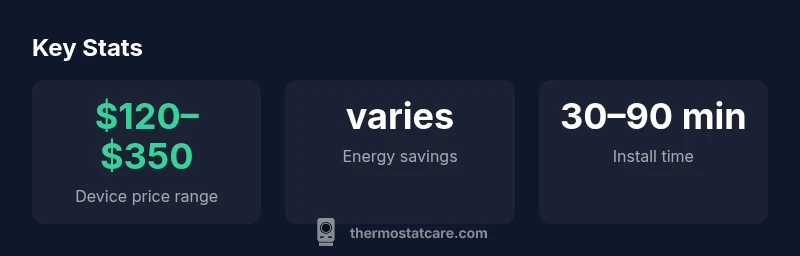
Price is a common barrier and a key part of the decision. Learning thermostats typically come in a device price range that varies by model, features, and vendor. Thermostat Care analysis suggests a device price range of roughly $120–$350 before installation, with DIY installation possible for handy homeowners and professional installation adding on $100–$200 depending on local rates. When evaluating value, consider potential rebates from energy programs and any home-insurance or utility incentives. While some households recoup costs quickly, others will break even more slowly, often depending on climate and usage patterns.
Energy savings and comfort gains: what to expect
The promise of learning thermostats rests on two pillars: energy efficiency and improved comfort. The devices study your occupancy and adjust heat and cooling to reduce unnecessary cycling, which can lower energy use and dial in more consistent temperatures. Thermostat Care analysis notes that savings are highly climate- and usage-dependent; more pronounced in homes with fluctuating occupancy or outdoor temperature swings. Even when savings are modest, many users report stronger daily comfort and fewer manual adjustments. The value proposition also includes better analytics, letting you see when and why temperatures change and how behavior affects consumption.
Compatibility, connectivity, and data privacy considerations
Before purchasing, verify compatibility with your HVAC equipment, especially if you have a two-stage furnace, heat pump, or older boiler. Most learning thermostats require Wi‑Fi and a compatible app, which enables remote control and data sharing with your smart home ecosystem. Privacy and data handling are also important: understand what the vendor collects (temperature schedules, usage patterns, device status) and how it is secured. If you value local-only operation, seek models with offline modes or clear data controls. For many, the benefits of remote access and insights outweigh privacy concerns, provided you review permissions and privacy settings.
How learning algorithms adapt to your home
Learning algorithms begin by tracking your daily routines—wake times, workdays, and occupancy in the evening. They gradually adjust defaults to uncomfortable manual interventions, then refine as more data accumulates. Over weeks, the thermostat tailors schedules around heating and cooling needs, reducing overshoot during shoulder seasons and aligning setbacks with actual occupancy. This adaptive learning is the core value of the category, but it also means short-term performance can vary as the device tests different patterns to converge on an efficient routine.
Real-world scenarios: when it pays off and when it doesn't
In homes with irregular work schedules, frequent guests, or variable occupancy, learning thermostats often save energy and improve comfort without constant user input. In contrast, for households with extremely consistent routines or homes with legacy systems that respond poorly to external controls, the incremental gains may be smaller. Families in milder climates may still appreciate optimized comfort and ease of use, while those pursuing aggressive energy targets should weight the upfront cost against potential long-term savings. Real-world experiences vary, so a trial period with a clear ROI lens helps.
Setup steps and getting the most from your unit
Getting started is about preparation and proper configuration. Step 1: confirm HVAC compatibility and replace any failing components (e.g., C-wire). Step 2: install the thermostat according to the manufacturer’s instructions or hire a pro if needed. Step 3: connect to Wi‑Fi and the mobile app, then import existing schedules. Step 4: enable learning features and set reasonable occupancy expectations. Step 5: review analytics after the first week and tweak zones, away settings, and thermostat hold times. A well-tuned setup yields faster convergence on efficient patterns and better comfort.
Common misconceptions and myths debunked
A common myth is that a learning thermostat will immediately cut energy use by a large amount. In reality, meaningful gains accumulate as the device learns; early weeks may show modest changes. Some believe these devices will “fix” HVAC issues; they optimize control given the system already installed. Another misconception is that all data is shared publicly; most reputable brands provide privacy controls, but you should verify data policies. Finally, the belief that learning thermostats require the newest HVAC gear is false—compatibility varies, but many setups work with standard systems.
Selecting a model: features to prioritize
When choosing, prioritize: (1) compatibility with your heat source and zoning, (2) learning speed and control granularity (scheduling, adaptive setback, and occupancy modes), (3) energy insights and reporting, (4) privacy controls and data governance, and (5) integration with your existing smart home devices (Alexa, Google Assistant, Apple HomeKit). A model with strong customer support and straightforward software updates reduces long-term risk. If you rely on manual adjustments, a device with an intuitive app and quick setup is especially valuable.
Maintenance, updates, and warranties
Maintenance is relatively light for learning thermostats: keep the firmware up to date, check connectivity, and confirm that sensors remain unobstructed and clean. Regular software updates can improve learning speed and stability, so ensure automatic updates are enabled unless you have a compelling reason to pause. Warranties vary; look for at least a 1–2 year warranty and note what is covered (sensor accuracy, connectivity, and power issues). Regularly review energy reports to ensure the device remains aligned with your goals.
A practical decision framework: does it fit your home?
Start with a simple decision tree: Do you have irregular schedules or occupancy changes? Is your HVAC system modern and compatible? Are you comfortable with enabling online features and privacy settings? If the answers are largely yes, the likelihood of a favorable ROI increases. If you live in a very predictable climate with a well-insulated, efficient system, the benefits may be less dramatic and you might choose to delay. Use a trial period with explicit savings goals to validate the decision.
Practical tips to maximize ROI and comfort
To maximize ROI, pair a learning thermostat with good insulation, smart zoning where possible, and routine checks of filters and ductwork. Place sensors to capture room-level data where appropriate, and calibrate temperature offsets for sleeping and occupancy patterns. Review energy analytics monthly and adjust away settings to reduce waste. Finally, align the device with your daily life: if you frequently leave for work at different times, ensure the learning mode accounts for those changes from week to week.
Upsides
- Automatic optimization reduces manual adjustments
- Remote access and energy analytics improve visibility
- Works with common smart-home ecosystems
- Potential energy savings and improved comfort over time
The Bad
- Requires Wi‑Fi and regular software updates
- Privacy considerations and data sharing
- ROI varies by climate and usage patterns
- Upfront cost may be a hurdle for some households
Learning thermostats are worth it for many homes, especially if you value automation and adaptive energy savings.
For homes with irregular schedules or variable occupancy, learning thermostats typically deliver meaningful comfort gains and potential energy reductions. The ROI depends on upfront costs, climate, and how you use the device, but most households see favorable results within the first year or two when installed properly and configured thoughtfully.
Questions & Answers
What is a learning thermostat?
A learning thermostat uses sensors and usage data to automatically adjust heating and cooling schedules. It learns patterns over time and optimizes settings to reduce energy waste while maintaining comfort.
It's a thermostat that learns your habits and gradually fine-tunes temperature settings for comfort and energy savings.
Do learning thermostats save energy?
Yes, in many cases they can reduce energy use by limiting unnecessary heating or cooling. The amount saved depends on your climate, home insulation, and how consistently you follow the suggested schedules.
They often save energy, but the amount depends on climate and usage.
Are learning thermostats compatible with all HVAC systems?
Most learning thermostats work with standard forced-air systems and heat pumps, but some older or specialty setups may require a compatibility check or professional installation.
Most work with common systems, but check compatibility if you have an older or unique setup.
Do I need Wi-Fi for a learning thermostat to work?
Most models require Wi-Fi for learning features and remote control, though some offer limited offline modes. Consider your privacy comfort level with cloud features.
Wi-Fi is usually needed for learning and remote access, but you can select offline modes on some models.
How long does it take to see ROI?
ROI depends on device cost, climate, and usage. In many homes, you’ll start noticing energy-use changes within a few seasons, with full ROI accruing over months to a couple of years.
ROI varies, but many households see payback within months to a couple of years.
What features should I prioritize?
Prioritize device compatibility, learning speed, detailed energy insights, privacy controls, and strong smart-home integration. A simple, intuitive app helps long-term usage.
Look for compatibility, fast learning, energy insights, privacy options, and good app usability.
What to Remember
- Assess your schedule variability to gauge ROI
- Choose a model with strong compatibility and privacy controls
- Plan for a realistic setup and learning period
- Pair with insulation improvements for max impact
- Monitor energy analytics to optimize settings