Can You Change a Thermostat in an Apartment? Practical Guide
Learn whether you can replace or upgrade a rental thermostat, what to check with your landlord, wiring basics, and safe alternatives to improve comfort and energy efficiency without violating lease terms.


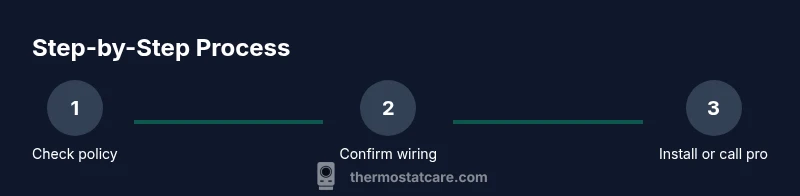
Step 1: Confirm landlord permission before touching any HVAC components. Step 2: Identify if the unit is a central thermostat or a tenant-controlled device. Step 3: If allowed and compatible, select a thermostat that matches wiring (R, C, W, Y, G) and system type. Step 4: Install or hire a licensed pro and test thoroughly. can you change thermostat in apartment? With permission and proper wiring, you can upgrade.
Can you change thermostat in apartment?
In most rental scenarios, the thermostat is part of the building's central HVAC system and not a tenant-owned device. According to Thermostat Care, apartment thermostats are often locked or controlled by the property management to protect the system and ensure consistent energy use. The quick answer may be nuanced: you typically cannot replace a central thermostat without explicit written permission from the landlord or property manager. If permission is granted and the thermostat is compatible with the building's controls, upgrading is possible. This section will explore what you should know before taking any action.
Legal and policy considerations for renters
Your lease and local regulations set the rules on thermostat modifications. Many landlords require written consent for any device change, and some buildings prohibit altering the thermostat housing or wiring at all. Before purchasing a new unit, read the lease terms about alterations, sub-basements, and access to the thermostat wiring. If you want to proceed, document approval in writing, keep receipts, and ensure the change aligns with energy policies. A careful approach reduces disputes and protects your security deposit. Thermostat Care emphasizes that clear communication with your landlord is the most reliable path to a successful upgrade.
The wiring you may encounter in rental units
Most residential thermostats use a handful of standard wires: R (power), C (common/ground), W (heat call), Y (cool call), and G (fan). Some apartments use heat pumps or boilers with more specific configurations. If the current setup lacks a C-wire, you may face powering challenges for smart thermostats. Do not guess wire colors or force connections. Always turn off power at the breaker and verify with a non-contact tester before touching any terminals. If you’re unsure, consult the building’s maintenance team or a licensed technician. Remember: incorrectly wiring a thermostat can damage the HVAC system and void warranties.
What to do if you have permission to upgrade
First, verify the thermostat base type and confirm compatibility with the building’s HVAC controller. If the landlord approves, choose a thermostat that supports your system (single-stage vs multi-stage, heat pump vs furnace). Before installation, photograph the existing wiring, label wires, and consult the wiring diagram in the thermostat's manual. If the system uses a proprietary control, you may need to retain the original device and add an external control only, rather than replacing the unit altogether. Thermostat Care recommends documenting permission and ensuring a proper, code-compliant installation.
Alternatives to a full replacement
If you cannot replace the thermostat, consider non-invasive options to improve comfort and efficiency. Use programmable schedules for the existing unit if possible, create temperature bands to reduce heating during off-peak hours, and leverage fan modes to improve air mixing. A smart thermostat may still work if permitted and compatible with the current wiring, but only with landlord approval. For renters, external solutions like room sensors or portable fans can help balance comfort without altering the central control.
Safety and landlord communications
Never bypass building protections or attempt to defeat a lock or control feature. If the thermostat is locked, contact the landlord or property management with a clear request and rationale (comfort, energy savings, or accessibility). Keep records of conversations and approvals. If you feel uncertain about wiring or safety, hire a licensed HVAC technician to handle the upgrade under written authorization. This approach protects you from liability and ensures the system is installed safely.
Practical considerations and planning checklist
Before any work, gather documentation of approval, the current thermostat model, and the system type (furnace, boiler, or heat pump). Check for a C-wire and determine if a power-sharing or adapter solution is necessary for a smart thermostat. Ensure the new device is compatible with your heating/cooling setup and climate. Finally, schedule installation during a time that minimizes disruption for building residents and aligns with any work-hour policies.
Maintenance and efficiency tips after upgrading
Once upgraded, keep the thermostat firmware up to date and use energy-saving settings to maximize efficiency. Create a schedule that aligns with your daily routine and maintain clear schedules during seasonal transitions. Regularly monitor energy bills for spikes that may indicate improper configuration. If you notice odd behavior, revert to manual mode and call a pro. Thermostat Care highlights that thoughtful setup often yields meaningful energy savings.
Tools & Materials
- Phillips-head screwdriver(For thermostat mounting screws and cover plate)
- Non-contact voltage tester(Verify power is off before handling wires)
- Multimeter (optional but helpful)(Use to check continuity on suspicious wires)
- New thermostat with compatibility check(Verify model supports your HVAC type and has a C-wire if needed)
- Wire labels or tape(Label wires so you can reattach correctly)
- Camera or notebook(Document existing wiring and base plate for reference)
Steps
Estimated time: 60-90 minutes
- 1
Verify permissions and system type
Confirm with your landlord or property manager that thermostat replacement is allowed. Identify whether your unit uses a central thermostat controlled by the building or a tenant-owned thermostat connected to the HVAC. This prevents future liability and ensures compliance with lease terms.
Tip: Get written approval and keep a copy with installation notes. - 2
Turn off power and document existing wiring
Switch off power to the HVAC at the service panel to avoid shock. Remove the thermostat cover and take a photo or sketch of the current wiring configuration, labeling each wire by terminal.
Tip: Double-check that the R wire is live before touching terminals. - 3
Match new thermostat to system
Check the new thermostat's compatibility with your system (furnace, boiler, heat pump) and confirm whether a C-wire is required. If a C-wire is absent, consider a thermostat that can operate with power-sharing or battery power, per the manufacturer guidance.
Tip: If you’re unsure about compatibility, stop and seek professional advice. - 4
Install mounting base and connect wires
Mount the thermostat base to the wall, attach wires to the corresponding terminals (R, C, W, Y, G), and secure the cover. Recheck that each wire is firmly connected and not pinched.
Tip: Use wire labels to avoid mix-ups and preserve function labels. - 5
Power up and configure
Restore power, follow the thermostat’s setup prompts, and configure heating/cooling controls according to the system type. Run a quick test to confirm heat, cool, and fan are working as expected.
Tip: Test transitions between modes (heat to cool) to ensure reliability. - 6
Validate operation and document
Observe the thermostat over several hours to ensure stable temperatures and no unexpected cycling. Save all settings and keep a copy of the installation steps for future reference or warranty.
Tip: If anything seems off, revert to the original thermostat and contact a pro.
Questions & Answers
Do I need permission from my landlord to change the thermostat in an apartment?
Yes. Most leases require written consent to modify HVAC devices, and many buildings restrict changes to centralized systems. Always obtain approval before purchasing or installing a new thermostat.
Yes, landlord permission is usually required before upgrading a thermostat in an apartment.
Can I install a smart thermostat in a rented unit?
Only if the landlord approves and the thermostat is compatible with the building’s controls. Some central systems may restrict smart devices, so verify wiring and permissions first.
Only with landlord approval and system compatibility.
What should I do if the thermostat is locked by the building?
Do not attempt to bypass the lock. Contact your landlord or property manager to request the upgrade or a temporary workaround that complies with policy.
Don’t bypass locks; ask the manager for a compliant solution.
What if there is no C-wire available?
Some smart thermostats require a C-wire. If it’s absent, you may need a power extender or choose a model designed for battery operation or your system’s configuration. Always verify compatibility first.
No C-wire? Check compatibility or use an approved extender or battery-powered option.
Will changing the thermostat affect energy bills?
Properly configured thermostats can improve efficiency and potentially lower energy use. However, setting habits and schedules also plays a big role in overall energy costs.
A well-configured thermostat can help save energy, but good scheduling matters too.
Are there safety concerns or risks if I attempt installation?
Yes. Wiring mistakes can damage HVAC equipment, create fire risk, or void warranties. If you’re unsure, hire a licensed technician and follow the landlord-approved process.
Yes—there are safety risks, so consider a pro if you’re not confident.
Watch Video
What to Remember
- Obtain written landlord approval before any upgrade
- Know whether you have a central or tenant-managed thermostat
- Match wiring and system type before buying a new unit
- Hire a pro if you’re unsure about wiring or safety