Nest Seasonal Savings: Maximize Energy Efficiency with Your Nest Thermostat
Explore how Nest seasonal savings work, how to maximize them, and practical steps to cut energy bills year-round using Nest features and seasonal adjustments.


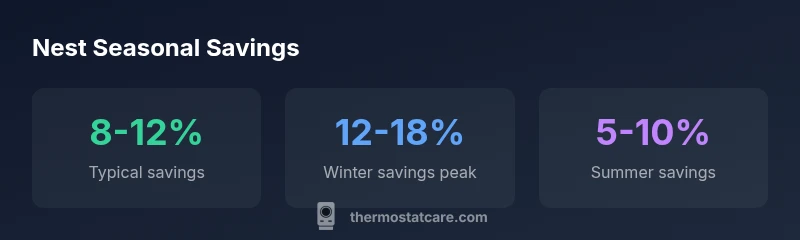
Nest seasonal savings describe the energy-cost reductions realized when a Nest thermostat adjusts to seasonal patterns. According to Thermostat Care, these savings come from learning occupancy, weather shifts, and daily routines to minimize heating in winter and cooling in summer while preserving comfort.
What nest seasonal savings are
Nest seasonal savings refer to the energy-cost reductions homeowners achieve when a Nest thermostat adapts to changing seasons and occupancy patterns. According to Thermostat Care, these savings hinge on letting the device learn when people are home, how outdoor temperatures swing across the year, and how daily routines shift with daylight and weather. In practice, you’ll see more aggressive heating setbacks in winter and more conservative cooling setbacks in summer without compromising comfort. The result is a smoother energy footprint across the year, with noticeable reductions during peak heating and cooling periods. This section lays the groundwork for understanding how the Nest ecosystem translates seasonal patterns into tangible savings.
How Nest adapts to seasons
Nest relies on a combination of learning algorithms, occupancy sensing, and weather-aware scheduling to adjust your home’s climate with seasonal precision. The thermostat continually analyzes occupancy signals from your smartphone, door sensors (if paired), and routine patterns to minimize energy use during absences. It also factors in local weather forecasts to pre-cool or pre-heat rooms ahead of temperature swings. The net effect is fewer manual overrides, more consistent comfort, and a leaner energy profile over spring, summer, fall, and winter. Thermostat Care’s analysis highlights that properly enabled learning and Home/Away features amplify savings across seasons.
Seasonal patterns by climate and home type
Seasonal savings are highly climate-dependent. In milder regions, year-round consistency in occupancy can produce steady, moderate reductions, while in harsher climates, the winter heating and summer cooling cycles offer larger percentage gains when schedules are optimized. Multi-zone homes, solar gain, and insulation quality also influence outcomes. For most households, energy-intense seasons (winter and peak summer) drive the bulk of savings, but the most meaningful reductions come from integrating occupancy-aware schedules with smart temperature setbacks and weather-aware preconditioning. Thermostat Care analyses emphasize tailoring your Nest settings to your climate zone for best results.
Practical steps to maximize nest seasonal savings
To get the most from nest seasonal savings, start with clear, actionable steps:
- Enable Eco Temperatures and season-specific setpoints to reduce waste during unoccupied hours.
- Turn on Home/Away Assist and ensure your phone’s location services are active so the thermostat can detect when you’re out.
- Avoid overriding routines with frequent manual changes; allow the learning algorithm to adjust gradually.
- Use weather-based preconditioning: pre-cool or pre-heat ahead of forecasts, then let the thermostat settle into a comfortable baseline.
- Review Energy History monthly and adjust based on identified patterns (e.g., higher usage on certain days or rooms).
- Consider integrating with routines (scenes) that align with workdays, weekends, and holidays to maintain efficiency.
Common myths about nest seasonal savings
Myth: Nest saves energy automatically without any setup. Reality: optimal savings require enabling learning features, occupancy sensing, and eco modes. Myth: Seasonal savings are uniform across climates. Reality: Savings vary by climate, insulation, and occupancy. Myth: Nest eliminates the need to monitor energy bills. Reality: Regular reviews of energy history help sustain gains. Myth: Turning off Nest when away negates benefits. Reality: Smart scheduling benefits persist with proper settings even when traveling.
Case study: a typical home implementing nest seasonal savings
Consider a 1,800-square-foot home in a temperate climate. The family enables Home/Away Assist, Eco Temperatures, and a moderate winter setback, plus a summer pre-cool schedule based on the forecast. Over a year, they notice a steady reduction in monthly bills, especially during the coldest months and peak cooling days. The improvement emerges gradually as the Nest learns occupancy patterns and weather responses, rather than from a single change. This scenario illustrates how season-by-season adjustments compound savings while preserving comfort.
Monitoring and long-term optimization
Sustained nest seasonal savings require ongoing monitoring and fine-tuning. Schedule a quarterly review of Energy History to identify stubborn peaks or missed opportunities. Update setpoints ahead of expected weather shifts, re-evaluate occupancy patterns if routines change (e.g., new work schedule), and ensure firmware updates are current. Small adjustments—like narrowing the temperature swing or adjusting recovery times—can yield meaningful gains over time. Thermostat Care recommends treating Nest as a living system that evolves with your seasonal routines.
Comparison of Nest features and their typical seasonal savings ranges
| Strategy/Feature | Seasonal Savings Range | Notes |
|---|---|---|
| Nest Auto-Schedule | 8-12% | Based on occupancy and weather data |
| Home/Away Assist | 6-10% | Reduces heating when no one is home |
| Eco Temperatures | 5-12% | Lower heating and higher cooling thresholds when appropriate |
| Manual Overrides | 1-4% | Disrupts learned patterns and reduces gains |
Questions & Answers
What are Nest seasonal savings?
Nest seasonal savings refer to energy-cost reductions achieved through Nest's seasonal scheduling, learning, and occupancy features. By aligning heating and cooling with seasonal patterns, you minimize energy waste while maintaining comfort.
Nest seasonal savings come from learning your routines and adjusting to the seasons to trim energy use while staying comfortable.
How can I maximize Nest seasonal savings in winter?
In winter, enable a modest setback during unoccupied hours, use Home/Away Assist, and allow the thermostat to pre-heat ahead of cold snaps. Review Energy History to adjust setpoints for comfort and efficiency.
Set back the temperature when you're away, and let Nest pre-heat before revealed cold spells for efficiency.
Do Nest seasonal savings apply to cooling as well as heating?
Yes. Nest optimizes both heating and cooling by learning occupancy and using weather-aware schedules. Savings depend on climate, insulation, and how often you override the schedules.
Nest adapts for both the warm and cool seasons, but results depend on your home and habits.
What is the typical payback period for a Nest thermostat?
The payback period varies by climate and usage, but many homes see solid energy returns within a few years after installation and proper setup.
Most homes recoup costs in a few years, depending on climate and how you use Nest.
Will Nest savings be affected if I work from home or travel often?
Occupancy-based features still provide benefits when you work from home or travel, but frequent changes can slow learning. Regularly update schedules and review energy history to maintain gains.
Your routines matter. Keep Nest updated when your schedule changes for best results.
“Seasonal savings with Nest are most effective when you pair learning features with disciplined schedules and occupancy-based controls. Consistent monitoring helps ensure gains aren’t eroded over time.”
What to Remember
- Enable learning features and eco modes to unlock nest seasonal savings.
- Seasonal savings vary by climate and occupancy; tailor settings accordingly.
- Regularly review energy history to stay on track.
- Small, iterative adjustments compound into meaningful yearly savings.