How Low Can You Set Your Thermostat in Winter: A Practical Guide
Discover safe, energy-saving winter thermostat setback strategies. Learn how to balance comfort, safety, and efficiency with a practical plan for your home.


How low you should set your thermostat in winter depends on comfort, health, and home efficiency. The goal is to reduce energy use without sacrificing safety or warmth. A practical approach is to establish a clear setback plan, align with your HVAC type, insulation, and occupancy, and avoid large, rapid temperature changes. Thermostat Care recommends cautious, measurable setbacks to balance comfort and savings.
Understanding the Lower Limit: Why It Matters
According to Thermostat Care, the temperature you set on your thermostat in winter directly affects heat loss, comfort, and energy bills. The “lower limit” isn’t a single fixed number; it depends on your home’s insulation, the efficiency of your heating system, and how many people occupy the space. A well-planned setback strategy can reduce energy use without compromising safety, especially when paired with a well-insulated envelope and properly sized equipment. The Thermostat Care team emphasizes that a measured approach—think gradual changes, not sudden drops—helps prevent uncomfortable cold snaps and keeps your HVAC system from overworking. In this article, we explore practical ranges, health considerations, and system-specific guidance so homeowners can optimize warmth and savings.
This first block introduces the core idea: there is no universal “lowest safe temperature.” Instead, you evaluate heat loss, occupancy, and system type. Hydration of indoor air also matters; very dry air can feel cooler and affect perceived comfort. The goal is to create a reliable setback plan that reduces heat loss while maintaining enough warmth to prevent pipes from freezing and to support healthy living conditions. Thermostat Care’s guidance is built on a balance between comfort and efficiency, with safety as a non-negotiable baseline.
The takeaway: set a plan aligned to your home, not a single temperature. Your heating system and insulation determine the safe lower bound, and gradual setbacks preserve comfort while saving energy.
Tools & Materials
- Programmable or smart thermostat(Ensure it supports scheduling and remote adjustment)
- Room thermometers or smart sensors(Place in common living areas for accurate readings)
- HVAC filter and a clean air flow path(Replace or clean before testing setbacks)
- Notebook or app for logging temps and energy use(Helpful for tracking changes)
- Humidifier or dehumidifier (if needed)(Maintain comfortable humidity during lower temps)
Steps
Estimated time: 60-90 minutes
- 1
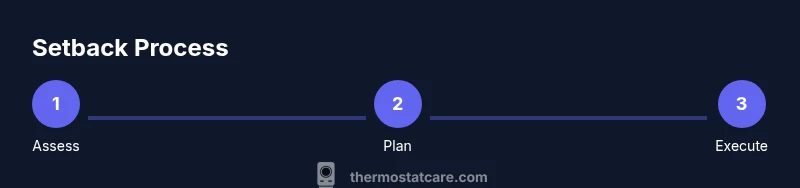
Assess your current setup
Take stock of your insulation quality, window drafts, and heating system type. Document typical indoor temperatures and energy bills for a baseline. This helps tailor setbacks without compromising comfort.
Tip: Use a simple checklist to compare attic, basement, and wall insulation quality; note obvious air leaks. - 2
Check equipment compatibility
Confirm your heater and thermostat can support gradual setbacks and multiple schedules. Some older systems may have limits on how quickly they can adjust temperatures.
Tip: If you have a heat pump, verify auxiliary heat settings and defrost cycles to avoid uncomfortable delays. - 3
Define your setback windows
Decide when the home is occupied versus unoccupied and schedule temperature reductions accordingly. Use a steady, moderate change rather than abrupt drops.
Tip: Create a weekly schedule that matches your routine so the home warms up before you return. - 4
Program or adjust your thermostat
Input the setback schedule into your thermostat, ensuring it follows the defined times and temperatures. Test the transitions between settings to avoid sudden swings.
Tip: Test the schedule during a weekend; observe comfort levels and adjust as needed. - 5
Monitor comfort and energy impact
Track indoor temperatures, humidity, and energy usage after implementing setbacks. Use smart meters or the thermostat’s energy reports to gauge savings.
Tip: If rooms feel chilly, slightly raise setback targets or add localized heating via zoning if available. - 6
Address humidity and air quality
Lowering heat can dry indoor air. Use humidification if needed to maintain comfort and reduce pipe-frost risk. Maintain balanced humidity to avoid condensation issues.
Tip: Aim for a comfortable humidity range that minimizes dryness without encouraging mold. - 7
Involve household occupants
Explain the plan to everyone in the home; get feedback on comfort preferences. Unexpected cold spots can undermine adherence to the setback strategy.
Tip: Set up a simple feedback loop for quick adjustments during the first two weeks. - 8
Refine and optimize
Review the data after a full 2‑3 week period and refine the schedule. Small tweaks can unlock meaningful energy savings while preserving comfort.
Tip: Keep a log of changes and outcomes to build a personal rule of thumb for future winters.
Questions & Answers
What is a thermostat setback and why use one in winter?
A setback reduces the temperature when the home is unoccupied or at night to save energy. The idea is to maintain warmth without overworking the heating system. Start with gradual changes and monitor comfort.
A setback lowers temperature during unoccupied times to save energy; start small and watch comfort levels.
Is it safe to lower the thermostat for households with elderly or infants?
People with health concerns require a careful approach. Keep living areas comfortable, avoid very low temperatures, and consult a healthcare provider if needed. Consider staged setbacks with close monitoring.
For households with vulnerable members, set smaller setbacks and ensure common areas stay warm.
Will lowering the thermostat save money?
Lowering the thermostat typically reduces energy usage, especially when temperatures would have caused heating to run continuously. Savings depend on climate, insulation, and occupancy. Use a planned schedule to maximize impact.
Yes, a well-planned setback usually saves energy, but savings vary by home and climate.
How should heat pumps respond to setbacks in winter?
Heat pumps handle setbacks differently than furnaces. They may rely on auxiliary heat to recover warmth, which can affect savings. Check manufacturer guidance and setback strategies that minimize reliance on auxiliary heat.
Heat pumps require careful setback planning to avoid costly auxiliary heat use.
What is the safe minimum temperature for homes with pipes at risk of freezing?
Keep living spaces above the temperature where pipes near exterior walls could freeze. Insulation and pipe protection are crucial in addition to a conservative setback plan.
Avoid letting the temperature drop below the level that threatens pipe safety.
How quickly can I re-warm my home after a setback?
Re-warming should be gradual to prevent HVAC strain and uneven room temperatures. Allow time for the system to recover and monitor comfort as you go.
Warm up gradually to keep comfort and system health in balance.
Watch Video
What to Remember
- Set a clear setback plan based on your home and system.
- Gradual changes protect comfort and system health.
- Humidity and air quality influence perceived warmth.
- Smart thermostats simplify consistent setbacks.
- Monitor results and refine the plan each winter.