Free Thermostat Energy Savings for Consumers: What Homeowners Need to Know
Learn how free thermostat programs work, what to check, and how to maximize energy savings. This Thermostat Care guide covers eligibility, installation, ongoing costs, and privacy considerations for homeowners exploring no-cost thermostat options.


Free thermostat programs can reduce upfront device costs or provide a no-cost device through utility and government initiatives. However, eligibility, installation requirements, and ongoing commitments vary by program and region. This guide explains what 'free' really means, how to verify offers, and how to maximize energy savings with proper thermostat selection, installation, and programming.
Why free thermostat energy programs exist
The modern energy landscape relies on incentives to push households toward more efficient equipment. Free thermostat energy programs are designed to reduce upfront barriers and accelerate adoption of modern temperature control. These programs are commonly funded by utilities, government agencies, or nonprofit partners who aim to lower peak demand and help families cut energy bills over time. For free thermostat energy programs, homeowners may qualify to receive the device at no upfront cost, with installation covered or subsidized. However, 'free' does not always mean 'without strings.' Eligibility criteria, installation requirements, and ongoing commitments vary by program and region, so it is essential to read the details carefully before signing up. The Thermostat Care team reminds readers that legitimate programs emphasize device quality, privacy protections, and reliable customer support rather than aggressive sales.
In practice, eligibility is often based on location, home type, current heating or cooling equipment, and whether you participate in other efficiency initiatives. Some programs require a qualified technician to install the thermostat to ensure compatibility with existing wiring and HVAC controls. Others provide remote installation or rebates that offset labor costs. The bottom line is that the real value of a free thermostat program depends on how well the device integrates with your home, how you program it, and whether the energy savings align with your climate and daily routines. According to Thermostat Care, successful adoption combines dependable hardware, clear terms, and ongoing education about best settings.
How to evaluate offers and avoid traps
When you see a “free” thermostat offer, you should verify the sponsor, the device quality, and the exact terms before committing. Start by identifying who is offering the program: a utility, a government agency, or a nonprofit. Confirm that the thermostat is compatible with your current wiring and HVAC system and that installation will be performed by a certified technician if required. Read the contract for any ongoing charges, data-sharing terms, or service plans that could appear after the device is installed. Compare energy savings claims to independent benchmarks and consider your local climate; a device that saves more in cooler winters may underperform in mild regions. If the offer sounds too good to be true, pause and request a written explanation of what is included (device, installation, monitoring, app access) and any conditions tied to future discounts or rebates. Warranty coverage, privacy protections, and customer support are also critical. Thermostat Care analysis shows that transparent terms and verified sponsorships are strong indicators of a trustworthy program.
Choosing the right thermostat for energy savings
Not all thermostats deliver the same energy benefits, and free programs may limit features to simplify compliance. In general, focus on devices with clear scheduling, occupancy sensing, and remote control capabilities. A basic programmable thermostat can deliver steady savings through simple schedules, while smart thermostats add learning features and real-time adjustments via apps. Learning thermostats can adapt to your routines but may require a learning period to reach peak efficiency. When evaluating programs, check whether the device supports your preferred integrations (smart home platforms, voice assistants) and whether data usage aligns with your privacy preferences. Even with a free device, you should aim for optimized programming: set your daily schedules to reflect actual occupancy, adjust temperatures gradually, and review monthly energy use to confirm the promised savings. The Thermostat Care team recommends prioritizing devices that offer robust diagnostics and actionable energy reports.
Practical steps to install and optimize
If installation is included in the program, ensure the installer confirms compatibility, turns off power during wiring, and tests the system after setup. If you install the device yourself, follow the manufacturer’s wiring diagrams and safety guidelines. Create a baseline by logging current energy usage for two weeks, then implement a simple schedule (different temps for wake, work, and sleep). Enable critical features such as auto-adjust for occupancy, geofencing, and learning algorithms if offered. Regularly review device reminders and energy reports to catch any scheduling conflicts or sensor issues. Finally, revisit the program terms after a season to confirm that the savings you expected are materializing and that there are no new charges or data-sharing arrangements.
Real-world scenarios and case studies
Consider a suburban home in a temperate climate that enrolls in a free thermostat program. The device is provided at no upfront cost, and installation is performed by a certified technician. In the first two months, the homeowner programs a weekday schedule that lowers heating during the day and reduces cooling at night. By the end of the first winter, energy use declines modestly, aligning with the program’s estimated range. In another scenario, a city with a high heating demand uses a learning thermostat through a utility-led offer. The device learns occupancy patterns, and the homeowner receives monthly energy breakdowns showing a larger share of savings during shoulder seasons. In both cases, the actual savings depend on engagement—how consistently the schedules are followed, whether windows are kept closed, and how often the thermostat is adjusted to seasonal changes. These scenarios illustrate how real-world factors interact with program design to determine outcomes. The Thermostat Care team notes that the best results come from a well-informed consumer who questions terms, verifies sponsorship, and uses the device as part of a broader energy-efficiency plan.
Thermostat options and potential savings
| Option Type | What it includes | Typical Savings Range |
|---|---|---|
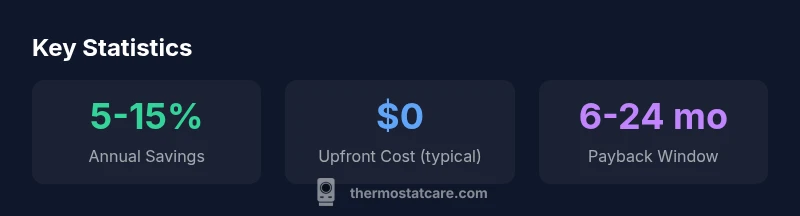
| Free device program | No upfront device cost; installation often covered by sponsor | 5-15% |
| Paid smart thermostat | Device cost with premium features; app and data sharing | Varies |
| Learning thermostat add-on | Auto-learning, occupancy sensing, adaptive schedules | N/A |
Questions & Answers
What does a 'free thermostat' actually include?
A 'free' offer may cover the device, installation, or both, but verify what is funded and whether ongoing fees apply for monitoring or data usage. Always obtain a written breakdown of inclusions before agreeing.
A free thermostat offer can include the device and installation, but check if there are ongoing fees for monitoring or data sharing.
Who qualifies for free thermostat programs?
Qualification typically depends on location, climate, household income, or participation in other efficiency programs. Check with your utility or program provider for precise criteria and deadlines.
Qualification depends on location and program rules; contact your utility for details.
Are there hidden costs with free thermostat offers?
Some programs may impose monthly service fees, data-sharing terms, or requirements to stay enrolled for a set period. Always review the contract for hidden charges and opt-out options.
Watch for monthly fees or long-term commitments hidden in the terms.
Will a free thermostat always save me money?
Savings depend on your climate, home, and how you use the thermostat. Without proper programming and ongoing engagement, savings may be modest. Compare your baseline usage to post-install usage after a few weeks.
Savings aren’t guaranteed; they depend on how you use and program the thermostat.
What’s the difference between a free thermostat and a paid smart thermostat?
Free programs may limit features or branding, while paid smart thermostats offer broader integrations and advanced analytics. Weigh the cost, features, and your energy goals before deciding.
Free options may be simpler; paid models give more features and control.
How do I install a thermostat safely?
If wiring is required, turn off power at the breaker, follow the thermostat’s wiring diagram, and test the system after installation. For complex setups, hire a licensed technician to avoid safety risks.
Turn off power, follow the diagram, and test; hire a pro if unsure.
“Smart thermostats, when properly programmed, can significantly improve energy efficiency, but user behavior remains a major determinant of actual savings.”
What to Remember
- Verify who sponsors the free thermostat to ensure legitimacy
- Expect device quality and installation to be covered, but check ongoing costs
- Choose a thermostat with clear schedules and occupancy features for real savings
- Read terms about data usage and privacy before signing
- Monitor energy use after installation to confirm promised savings