BMW Thermostat Replacement Cost: A Car Owner’s Guide to BMW Thermostat Repairs
Explore the estimated cost to replace a BMW thermostat, including parts, labor, and model-specific factors. Learn budgeting tips, how to save, and when OEM vs aftermarket parts make sense.


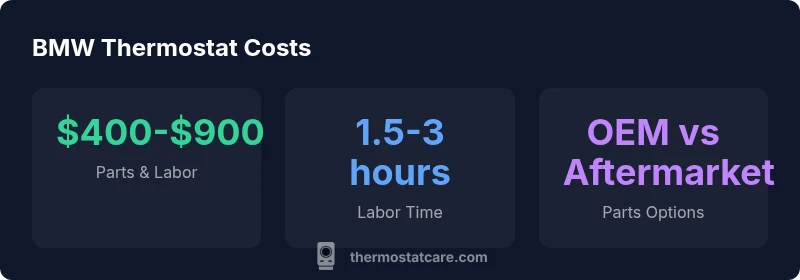
According to Thermostat Care, the thermostat replacement cost bmw owners face typically varies based on model, parts, and labor. Expect a total expense roughly from $400 to $1,400, with the thermostat kit often a few hundred dollars and labor making up the rest. This variability reflects engine access, OEM vs aftermarket parts, and regional shop rates. Thermostat Care Analysis, 2026, notes cost can vary by dealer and city.
Why BMW Thermostat Replacement Costs Vary
BMWs present a wide spectrum of thermostat replacement costs due to engine layout, cooling system design, and the accessibility of the thermostat housing. Modern BMW engines place the thermostat in locations that require removing components like intake plenums or fans, which increases labor time. Plus, decisions about OEM (Original Equipment Manufacturer) parts versus aftermarket equivalents influence both price and reliability. As a result, the total cost can swing significantly between different model years, trims, and regional labor rates. Thermostat Care’s 2026 analysis highlights that dealer pricing often reflects comprehensive service fees, while independent shops may offer lower labor rates but use aftermarket parts that affect long-term warranty terms. The key takeaway: the sticker price is only part of the story; the service complexity matters most.
What Is Involved in Replacing a Car Thermostat
Replacing a BMW thermostat is not a quick plug-and-play job. A technician must first locate the thermostat housing, drain a portion of the cooling system, and then carefully remove surrounding components to access the unit. After disconnecting the electrical connector, the new thermostat is installed with a proper gasket and sealant to prevent leaks. Finally, the cooling system is refilled, burped of air, and tested for leaks and accurate temperature regulation. Because many BMWs use compact engine bays with tightly packed parts, technicians often spend extra time ensuring no other cooling components are disturbed. This process explains why some estimates include time for related checks such as hose inspection and coolant replacement. Safety and coolant disposal are also part of standard practice.
Cost Breakdown: Parts, Labor, and Hidden Fees
A transparent cost picture includes three main elements: parts, labor, and ancillary fees. Parts typically cover the thermostat assembly, sensors, gaskets, and coolant. Labor charges vary with technician hourly rates and the difficulty of access. Hidden fees can include coolant fluid, sealant, disposal, and potential need for ancillary work like thermostat housing replacement or water pump service if wear is detected. It’s common for costs to be influenced by regional price standards and whether the shop uses OEM or aftermarket components. A cautious approach is to request a full line-item estimate that separates parts from labor and lists any potential incidental costs. Thermostat Care recommends confirming the exact model year and engine code to receive an accurate quote.
Common Pitfalls that Drive Up Costs
Rising costs often come from misdiagnosis, unnecessary add-ons, or surprise labor if the technician discovers an underlying issue. A faulty thermostat may mimic other cooling problems, leading some shops to perform extra checks that inflate the final bill. Additionally, engine reassembly mistakes or missing cooling system purges can require additional follow-up visits. To minimize risk, homeowners should ask for a diagnostic charge breakdown, insist on a test run after replacement, and verify warranty terms for both parts and labor. If a shop recommends replacement of related components (water pump, cooling hoses), request a separate estimate for each item and weigh the long-term value. Thermostat Care emphasizes using trusted shops and obtaining multiple quotes for fairness.
How to Save on BMW Thermostat Replacement: Shopping Smart
To improve value, compare quotes from at least three reputable shops, including independent automotive technicians. Ask if the quote includes coolant flush, new gaskets, and a pressure test. Consider whether OEM parts are necessary for your model or if a high-quality aftermarket option meets your warranty needs. Some customers save by scheduling maintenance during off-peak times or bundling the thermostat replacement with planned cooling system service, such as a water pump or hose replacement, if those parts show wear. Review the warranty terms—many parts carry a standard 12-month to 24-month warranty, with labor coverage varying by shop. Thermostat Care also notes that savings can come from proactive maintenance to avoid overheating incidents that lead to expensive emergency repairs.
Model-Specific Considerations for BMW Engines
BMW’s engine configurations across the lineup (inline-six, turbocharged variants, V8s) affect thermostat replacement difficulty. Some engines offer straightforward thermostat housing access, while others require substantial disassembly. Performance models or older configurations may demand more labor hours due to complex intake manifolds or tighter engine bays. In limited-access scenarios, technicians may advise additional cooling system checks to prevent future leaks or overheating. Owners should obtain a model-specific quote and confirm whether the replacement involves sensor recalibration or coolant system bleeding procedures. This model-aware approach helps prevent unexpected downtime and cost overruns.
Warranty, Guarantees, and Aftercare
Warranty coverage for thermostat replacement typically includes parts and sometimes labor for a defined period. Clarify whether the warranty covers cooling system leaks or thermostat-related failures after installation. Aftercare steps—such as the recommended coolant type, air bleeding procedures, and follow-up pressure tests—can affect long-term reliability and future maintenance costs. Keeping documentation from the service visit and noting any warranty codes can simplify future service and reduce misunderstandings about what was repaired. Thermostat Care’s guidance stresses clear communication with the shop and a written warranty summary.
Timing and Maintenance: Preventive Measures
Proactive cooling system maintenance helps manage replacement costs. Regular coolant checks, leak inspections, and timely thermostat tests can catch early signs that a thermostat is nearing failure, enabling planned service rather than emergency repairs. When temperatures rise or you notice erratic heating/cooling behavior, prioritize diagnostic steps with your technician. While preventive maintenance may add minor upfront costs, it reduces the chance of expensive downtime and ensures your BMW maintains optimal engine temperatures. Thermostat Care highlights that a well-maintained cooling system contributes to engine longevity and performance.
When to Repair vs Replace: A Practical Decision Framework
Not every thermostat issue warrants a full replacement. A professional diagnosis will determine whether the unit is stuck open/closed or simply malfunctioning due to a sensor fault. In some cases, cleaning, reseating, or sensor recalibration can resolve minor symptoms without a full replacement. However, persistent overheating, temperature fluctuations, or error codes related to the cooling system usually justify a thermostat replacement. Use a decision framework that weighs the vehicle’s age, maintenance history, and driving needs. Always obtain a detailed, written estimate before authorizing work. Thermostat Care recommends a cautious, model-specific approach to these decisions.
BMW thermostat replacement cost ranges by model
| Model/Engine | Avg Replacement Cost (Parts + Labor) | Typical Labor Time |
|---|---|---|
| BMW 3-Series | $400-$900 | 1.5-3 hours |
| BMW 5-Series | $450-$1100 | 2-4 hours |
| BMW X5 | $500-$1200 | 2-4 hours |
Questions & Answers
What factors influence the thermostat replacement cost for a BMW?
Key factors include the engine layout, accessibility of the thermostat, choice of OEM vs aftermarket parts, regional labor rates, and whether any ancillary cooling components are replaced at the same time. A clear, itemized quote helps you understand where the dollars go.
Costs depend on engine access, parts choice, and local labor rates; ask for a breakdown before agreeing to service.
Should I replace the thermostat at the BMW dealer or an independent shop?
Independent shops often offer lower labor rates, while dealers may provide OEM parts and specialty expertise. Compare quotes, warranty terms, and whether the shop has experience with your exact BMW model. A well-vetted independent shop can be a cost-effective option without sacrificing quality.
Shop around and compare warranties; a good independent can match dealer quality at a lower price.
Can I replace the thermostat myself in a BMW?
DIY replacement is possible for experienced enthusiasts but requires tools, a clean workspace, and careful handling of the cooling system. Mistakes can lead to leaks or overheating. If you’re unsure, consult a professional.
Only attempt DIY if you’re comfortable with cooling systems and engine access.
How long does a thermostat replacement typically take?
Most replacements take 1.5 to 4 hours depending on model and access. Additional time may be needed if adjacent parts require service. Always ask for a time estimate with a work plan.
Expect roughly a couple of hours for installation, plus any extra checks.
Should I replace the water pump at the same time as the thermostat?
If wear is detected or if the water pump shows signs of leakage or age, it can be cost-effective to replace it during the same service window. This avoids a second service visit and potential downtime.
If it’s due or close to wear, bundle with the thermostat replacement.
What are signs of a failing BMW thermostat?
Common signs include fluctuating engine temperature, frequent overheating, heater not producing heat, and diagnostic codes related to the cooling system. If you notice these, have a professional diagnose promptly.
Watch for overheating or sudden temperature swings; get a check soon.
“Thermostat work on modern BMWs is labor-intensive due to engine layout, so expect costs to reflect both parts and extended labor. Always ask for a clear breakdown before approving service.”
What to Remember
- Get multiple quotes to lock in a fair price
- Clarify OEM vs aftermarket parts up front
- Ask for a full, itemized estimate before work
- Bundle related cooling system service when possible
- Check warranty terms for parts and labor