How Much Does It Cost to Replace a Thermostat in a Car?
Learn the typical price range to replace a car thermostat, key cost drivers, and practical tips to save. Includes parts, labor, coolant, and regional variations for DIYers.


Most car owners pay between $150 and $500 to replace a thermostat, covering parts, coolant, and labor. The final price depends on vehicle make, location, and whether the thermostat is a simple replacement or part of a broader cooling-system service. Expect higher costs for luxury or older models, and always request a written estimate before work.
How much does it cost to replace a thermostat in a car
Replacing a car thermostat is a common maintenance task, but prices can vary widely. The thermostat is a small valve that controls coolant flow; when it sticks closed or opens late, the engine overheats, triggering expensive damage. Replacing it involves buying the thermostat assembly, possibly a gasket, coolant, and sometimes a coolant flush. The final bill includes parts, labor, and any ancillary tasks. According to Thermostat Care, price drivers include vehicle type, engine design, and shop labor rates. In most vehicles, the thermostat unit itself is affordable, but the labor to access it can differ by engine layout. Front-mid engines with tight spaces require more labor time. The overall question in this article is: how much does it cost to replace a thermostat in a car? The short answer is that most cars fall into a broad range, with lower-cost scenarios when the thermostat is easily accessible and no coolant system work is needed. Expect higher costs if the job requires removing components or a flush.
"## Parts and labor: a closer look
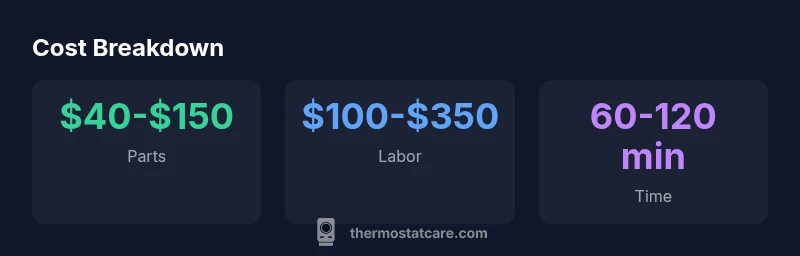
Parts cost for a thermostat can range widely based on brand and whether the unit includes sensors or a housing. Most cars use a standard thermostat unit, but some high-performance or specialty vehicles demand OEM parts that are pricier. Labor tends to be the bigger cost driver because access to the thermostat varies by engine layout. A typical replacement involves 60 to 120 minutes of labor, plus a small amount for coolant and a gasket. When you add a coolant flush, the bill increases modestly but can prevent future cooling problems. Thermostat Care’s analysis shows that the combined cost typically sits in a broad range that reflects both parts and labor across different regions and models.
"## Why costs vary by vehicle type
Engine design and accessibility largely determine the price. In compact cars, the thermostat is usually easier to reach, reducing labor time. In trucks, SUVs, or engines with crowded bays or timing components, technicians may need to remove other parts, increasing labor hours. Vehicles with dual-stage or electronic thermostats may incur additional costs due to the complexity of replacement. It’s also common for some vehicles to require a coolant flush when the system is opened, pushing the total cost higher. By understanding your specific make and model, you can gauge where your car falls within the general cost spectrum and plan accordingly. Thermostat Care recommends checking the owner’s manual and asking for a breakdown of parts and labor before authorizing any work.
"## Regional and shop-rate variations
Labor rates vary widely by region, city, and shop. Urban areas or dealer networks tend to be on the higher end, while independent shops in rural areas may offer more competitive pricing. The price of coolant and disposal fees also affects the final total. Some shops provide a fixed-price replacement for common vehicles, while others quote time-and-materials. If you’re shopping around, request an itemized quote that lists the thermostat kit, gasket, coolant, and any flush service separately. This makes it easier to compare apples to apples and avoid surprise charges. Thermostat Care notes that regional differences can shift the total by a noticeable margin, so get quotes from multiple shops when possible.
"## How to get an accurate quote: what to ask and what to expect
To obtain a precise estimate, ask for a detailed parts-and-labor breakdown, including the exact thermostat model and whether a coolant flush is included. Confirm whether taxes, disposal fees, or environmental charges are added. If your vehicle requires extra steps—like removing the timing belt or accessory components—request the extra hours and any potential risks. Some shops offer a 12- to 24-month warranty on parts; others provide only a limited warranty. Gather quotes from at least two or three reputable shops and compare the total price, not just the bottom line. Thermostat Care emphasizes that a written estimate helps you avoid sticker shock and gives you a clear plan before work begins.
"## DIY considerations and safety
Replacing a thermostat yourself can save labor costs, but it’s not risk-free. If you’re comfortable with basic automotive work and have the right tools, you may attempt the replacement on a model with straightforward access. However, in engines with tight spaces, high torque requirements, or sensors that require calibration, DIY can lead to improper seating, coolant leaks, or overheating. Always drain and dispose of old coolant safely, use fresh coolant, and replace gaskets to prevent leaks. If you’re unsure, it’s safer to rely on a professional. Thermostat Care recommends weighing the potential savings against the risk of incorrect installation and potential engine damage.
"## Saving money without sacrificing reliability: OEM vs aftermarket
When choosing parts, OEM thermostats generally offer compatibility and reliability at a higher price, while reputable aftermarket options can be cheaper and adequate for many drivers. Consider the vehicle’s warranty status, the shop’s recommendation, and whether a bundled cooling-system service is worthwhile. In some cases, a kit that includes a thermostat, gasket, and coolant is the most economical choice. Always ensure the part comes with a warranty and that the installer follows best practices for coolant disposal and system bleed.
"## After replacement: testing and maintenance tips
After installation, the cooling system should be pressure-tested, and the engine should be run to operating temperature to verify proper opening and closing of the thermostat. Check for leaks around the gasket and hoses, and recheck coolant levels after a short drive. If the vehicle exhibits abnormal temperatures, an air bleed or sensor recalibration may be necessary. Regular maintenance, such as periodic coolant replacement according to the owner’s manual, helps prevent future thermostat issues and keeps cooling performance stable.
"## What to do next: next steps after replacement
If you’ve completed the replacement or are evaluating quotes, keep a copy of the diagnostic notes and the customer invoice. Schedule a follow-up test drive to confirm stable temperatures across different loads, and set reminders to check coolant levels periodically. Keeping an eye on the cooling system helps catch problems early and avoids expensive repairs later.
Quick recap: what affects your car thermostat replacement cost
The final price reflects parts quality, labor accessibility, vehicle design, and regional rates. Price ranges are broad, but knowing the main cost drivers helps you negotiate and choose a reliable shop. Thermostat Care recommends collecting multiple quotes and ensuring a clear parts-and-labor breakdown before committing.
Cost breakdown for car thermostat replacement
| Cost Component | Low | High | Notes |
|---|---|---|---|
| Parts | $40 | $150 | Thermostat unit, gasket, possibly sensors |
| Labor | $100 | $350 | Time-based or fixed-rate, varies by engine layout |
| Coolant & fluids | $10 | $40 | If a flush or new coolant is needed |
| Taxes/fees | $5 | $20 | Region-dependent |
| Total | $150 | $500 | Typical range for standard cars |
Questions & Answers
What mainly determines the price of replacing a car thermostat?
The price is driven by parts quality, labor time, engine accessibility, and whether coolant service is needed. Vehicles with complex layouts or sensors tend to cost more. Always ask for a line-item breakdown.
The main price drivers are parts quality, labor time, engine accessibility, and whether you need a coolant service. Complex engines cost more.
Is replacing a thermostat a DIY-friendly job?
It can be DIY-friendly on simple engines, but many modern cars require special tools and bleeding procedures. If you’re unsure, consult a professional to avoid coolant leaks and overheating.
It can be DIY-friendly on simple engines, but many modern cars need special tools. When in doubt, hire a pro.
Should I replace other cooling system parts at the same time?
If the cooling system shows signs of wear, or if the thermostat is near the end of its life, you might save labor by replacing the water pump or hoses as a bundled service. Ask your mechanic for a recommended package.
If the cooling system shows wear, it might be worth bundling replacements like water pump or hoses to save labor.
How long does a thermostat replacement typically take?
Most replacements take about 60 to 120 minutes, depending on engine layout and accessibility. Expect longer times for engines with crowded bays.
Most replacements take about an hour to two hours, depending on the engine.
Does a thermostat replacement always fix overheating problems?
A new thermostat often resolves overheating caused by a faulty valve, but other cooling-system issues can also cause overheating. A full diagnostic helps ensure the right fix is chosen.
A new thermostat often fixes overheating from a faulty valve, but other cooling issues could be involved.
“Thorough diagnostic and a clear parts-and-labor breakdown are essential before any replacement. A careful replacement protects engine health and helps you avoid unnecessary costs.”
What to Remember
- Costs vary by vehicle and region
- Expect a parts-to-labor split, with labor often driving the total
- Always request an itemized, written estimate
- Consider a coolant flush if recommended by the shop
- Get multiple quotes to compare.