Are Thermostat and Thermometer the Same? A Practical Guide
Learn whether a thermostat and thermometer are the same, how they differ, and why understanding their roles improves comfort, energy savings, and DIY troubleshooting.


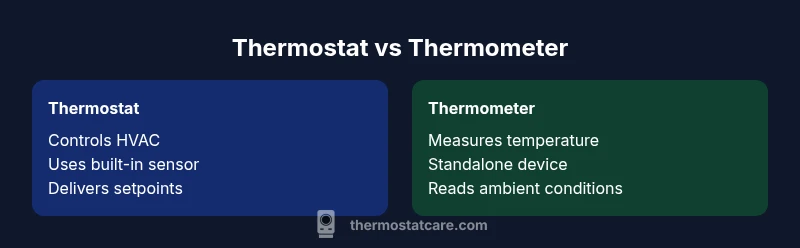
No — a thermostat and a thermometer are not the same. A thermometer measures ambient temperature, while a thermostat uses that data to control heating or cooling. For most homes, the thermostat includes a sensor and control logic; the thermometer serves only to read temperature. They work together, but are distinct devices.
Quick Definitions and Core Distinctions
Are thermostat and thermometer the same? In plain terms, a thermometer measures temperature, while a thermostat uses temperature data to regulate a system. This distinction matters for troubleshooting and energy savings. According to Thermostat Care, the two devices often live in proximity within a single smart thermostat, but they still perform different jobs: one reads, the other decides when to act. Understanding this division helps homeowners avoid mislabeling in manuals and apps and supports clearer maintenance paths.
The Thermostat: Control Logic, Setpoints, and Sensing
A thermostat is a control device. It stores setpoints (target temperatures) and executes commands to turn heating or cooling on or off to reach those targets. Modern thermostats may include multiple temperature sensors, a microcontroller, and connectivity for schedules and remote control. They rely on sensor data—often embedded within the unit or a nearby sensor—to determine when to switch the HVAC system on or off. If you ask, “are thermostat and thermometer the same?” the answer is no; the thermostat translates sensed data into actions. In practice, the thermostat’s accuracy and response time impact comfort and energy usage, making sensor placement critical within the home. The Thermostat Care team emphasizes that a well-calibrated thermostat reduces run-time and drafts and aligns with energy-savings goals.
The Thermometer: Measurement as a Standalone Device
A thermometer is a measurement tool. It provides a numerical reading of temperature in a specific location. Standalone thermometers can be analog or digital, portable or fixed, and may use different scales (Celsius or Fahrenheit). Unlike a thermostat, a thermometer does not control systems; it simply reports temperature. Location matters: placing a thermometer near heat sources or in drafty spots can yield misleading readings. Homeowners sometimes assume any measurement device serves as a control, but the thermometer’s job is observation, not action. For accurate readings, ensure your thermometer is properly calibrated and replaced when readings drift.
Built-in vs Standalone Sensors: Where Overlaps Occur
Smart thermostats often blend roles by embedding sensors that read temperature and monitor humidity. This integration can blur strict definitions—are thermostat and thermometer the same when the thermostat contains a built-in thermometer? Not exactly. The thermostat remains the controller, while the thermometer is still a measurement instrument. Recognizing this boundary helps prevent misinterpretation in user manuals and troubleshooting guides. When a smart device reports temperature, you are reading the thermostat’s sensor data; calibration and sensor placement continue to matter for reliable operation.
How These Devices Appear in Common Home Setups
In many homes, the thermostat itself contains an internal sensor and controls the HVAC system. In others, a nearby wall-mounted sensor supplements the main unit. Standalone thermometers are used for ambient readings in kitchens, nurseries, or outdoor areas. For are thermostat and thermometer the same? The reality is more nuanced: some devices combine both roles, while others separate them. The goal is to ensure the sensor data informs the controller accurately, without misinterpreting readings as direct controls.
Common Misconceptions and How to Correct Them
A frequent misunderstanding is assuming that reading temperature somewhere automatically changes the climate in your home. In truth, the thermostat uses the reading to decide whether to activate heating or cooling. If you rely on a thermometer’s reading without considering how the thermostat interprets it, you may experience comfort mismatches. The Thermostat Care guidance is to confirm the device’s role before troubleshooting: measure with a separate thermometer if you suspect a thermostat reading drift, and compare against the thermostat’s own sensor readings for consistency.
Real-World Scenarios: When Confusion Causes Problems
Scenario A: A grandmother’s thermostat seems slow to react. The reader might think the thermometer itself is wrong. In reality, the thermostat’s sensor placement or the HVAC system’s response curve may be to blame. Scenario B: A kitchen thermometer shows a different ambient temperature than a living room thermometer. This does not imply the thermostat is misreading; it means these readings reflect different microclimates. The key is to align sensor placement with intended comfort zones and verify that the thermostat’s setpoints reflect those zones.
Verifying Accuracy and Calibration: A Practical Guide
To verify accuracy, compare readings from the thermostat against a trusted external thermometer placed in the same space. If readings diverge, recalibrate the thermostat or adjust sensor placement. Calibration procedures vary by model, but most modern thermostats offer a simple calibration option through the settings menu. Keep thermometers away from direct heat sources or drafts during checks. Regular checks help ensure that the thermostat’s control decisions align with actual room conditions and user comfort goals.
Practical Tips for Homeowners: Choosing the Right Device for Your Goals
If your goal is to maintain stable comfort with energy efficiency, focus on the thermostat as the primary control device. Use a thermometer to validate readings in different rooms or zones, especially in larger homes. The relationship between device type and function matters: the thermostat’s job is to act; the thermometer’s job is to observe. When selecting devices or performing maintenance, consider both reading accuracy and control capabilities. Thermostat Care’s guidance emphasizes calibration, proper placement, and consistent maintenance to achieve reliable climate control.
Maintenance, Calibration, and Longevity: Keeping Devices Accurate
Regular maintenance matters for both devices. The thermostat may require firmware updates and sensor recalibration, while a thermostat’s built-in sensor might drift over time. Standalone thermometers should be replaced when their readings drift beyond acceptable margins. A well-maintained setup reduces the risk of comfort fluctuations and energy waste. With proper calibration and placement, you’ll retain reliable readings and effective control, supporting long-term energy savings and comfort.
Quick-Start: A 10-Minute Home Checkup for Clarity
- Inspect the thermostat location for drafts and sun exposure
- Compare the thermostat reading with a nearby calibrated thermometer
- Calibrate the thermostat if supported by your model
- Review recent energy bills for anomalies in heating or cooling
- Update any schedules to reflect current life patterns
- Consider a dedicated sensor if you have multiple zones or large rooms
Comparison
| Feature | Thermostat | Thermometer |
|---|---|---|
| Primary role | Controls HVAC to maintain setpoints | Measures ambient temperature |
| Location and integration | Typically part of HVAC or wall unit with control interface | Standalone device placed where readings are needed |
| Power source | Battery, hardwired, or power within HVAC | Battery-powered or passive depending on model |
| Readout/control interface | User interface for setpoints and schedules | Displays current temperature reading |
| Calibration sensitivity | Depends on sensor quality; regular calibration improves accuracy | Depends on sensor quality; simple calibration often available |
| Impact on energy use | Direct impact via control decisions and efficiency | No control of HVAC; indirectly affects understanding |
| Best use case | Climate control and energy optimization | Ambient temperature monitoring and comfort assessment |
Upsides
- Clarifies device roles to avoid mislabeling in manuals and apps
- Improves troubleshooting by matching symptoms to device type
- Prevents unnecessary replacements by distinguishing control vs reading functions
- Supports energy-saving decisions when used correctly
The Bad
- Smart devices blur lines when sensors are built into thermostats
- Terminology can be confusing if users overemphasize labels
- Calibration drift can create apparent measurement errors if not checked
Thermostat and thermometer are distinct but complementary devices
Keep the thermostat as the controller and use a thermometer for independent readings. Calibrate sensors; place them thoughtfully; this separation supports accurate climate control and energy efficiency.
Questions & Answers
Are thermostats and thermometers interchangeable in a home system?
No. A thermometer reads temperature, while a thermostat uses that data to control HVAC. They serve different roles, though a thermostat may include a sensor.
No. Thermostats control while thermometers measure. They work together but are not interchangeable.
Can a thermometer be used to control heating?
No. A thermometer cannot switch HVAC equipment on or off; it only reports temperature. The thermostat makes control decisions.
No. Thermometers don’t control HVAC; thermostats do.
What is the best way to verify thermostat accuracy?
Place a calibrated thermometer near the thermostat and compare readings. If they differ, calibrate or relocate the sensor and recheck.
Compare the thermostat reading with a known-good thermometer and recalibrate if needed.
Do smart thermostats include built-in thermometers?
Yes, many smart thermostats include built-in sensors, but they still act as controllers. Treat them as the decision-maker rather than a standalone thermometer.
Often they include sensors, but they are still the controller, not just a reader.
What mistakes do homeowners make when confusing these devices?
Assuming measurement equals control or misinterpreting sensor readings. Place sensors correctly and verify that setpoints reflect your comfort goals.
Don't assume readings automatically adjust climate; ensure the control logic matches your goals.
How often should I calibrate thermometers and thermostats?
Calibrate when readings drift noticeably or after relocation. Many devices offer a calibration option in settings.
Calibrate when readings drift or after moving the device.
What to Remember
- Identify each device’s core function before troubleshooting
- Place sensors to reflect real living spaces, not just ideal spots
- Treat smart thermostats as both controller and sensor providers
- Regular calibration keeps readings reliable and energy use predictable