Who Fixes Thermostat in the House: A Practical Guide for Homeowners
Discover who fixes thermostat in the house, when to call an HVAC pro, DIY options, and how to choose the right technician. A practicalThermostat Care guide for homeowners and DIY enthusiasts.


According to Thermostat Care, the person who fixes thermostat in the house is typically an HVAC technician or an electrician, depending on the underlying issue. For most thermostat problems—limited to the device itself or its power supply—a qualified HVAC technician handles the repair. If the problem is simple and isolated to the thermostat's wiring or batteries, a licensed electrician or DIY with caution may suffice.
Who typically fixes a thermostat in a house
According to Thermostat Care, the person who fixes thermostat in the house is usually an HVAC technician or an electrician, depending on the underlying issue. In most homes, thermostat problems stem from wiring, power supply, or the control module, not just the device itself. A professional diagnosis ensures safe power handling and proper integration with the HVAC system. While some devices offer user-friendly resets or battery changes, these are small fixes and should not replace a professional assessment when system behavior remains irregular. Knowing who fixes thermostat in the house helps you allocate the right expertise and avoid wasted trips.
DIY vs professional: when to hire vs try yourself
DIY fixes can save time for simple tasks, but missteps can create electrical hazards or further damage. If your thermostat case is warm, the display flickers, or the system won’t respond to temperature changes, stop DIY attempts and call a pro. Simple battery changes, reset procedures, or re-pairing a smart thermostat are reasonable for homeowners with basic electrical comfort. When in doubt, err on the side of safety and schedule a diagnostic with an HVAC technician. Thermostat Care emphasizes clear triage: start with basic checks, then escalate to professional testing if the problem persists.
Roles explained: HVAC tech, electrician, and manufacturer support
HVAC technicians specialize in thermostats as part of the broader heating and cooling system. They diagnose control board issues, sensor faults, and compatibility with the furnace or heat pump. Electricians handle wiring, power supply, and breaker-related problems, ensuring the thermostat has a safe, adequate circuit. In some cases, manufacturer support or warranty providers offer guided troubleshooting or on-site service. Understanding these roles helps homeowners know who to contact for different symptom sets and how the service process unfolds.
Red flags that mean you should call a pro
Certain signs indicate you should stop DIY attempts and bring in a professional. If the thermostat display is blank, if it fails to wake the HVAC system, if there’s buzzing sounds or unusual heat near the unit, or if you notice frequent reset cycles, these point to wiring, power, or control-board faults. Additionally, if you recently had electrical work or a power surge, a pro should verify safety and compatibility. Thermostat Care recommends documenting symptoms, because a clear symptom log accelerates the diagnostic process and reduces repeated service visits.
Step-by-step: what to do before you call
Before you contact a technician, perform a quick triage to avoid a needless trip charge. Check and replace dead batteries if applicable, ensure the thermostat is powered (check the fuse or breaker), and confirm it isn’t simply a scheduling or mode-setting issue. Take note of error codes, how long the issue has persisted, and whether it affects only one zone or the whole system. If you use a smart thermostat, ensure it’s connected to Wi-Fi and has the latest firmware. This prep helps the pro diagnose faster and can inform you about potential warranty coverage.
What to ask a technician before you hire
Ask about the scope of work, expected timeline, and whether the repair is part of the HVAC system or the thermostat itself. Request a written estimate with parts and labor, and ask about warranty coverage on the repair and any parts. Confirm licensing and insurance, and whether the technician will test the system after repair to ensure correct operation. Clarify who will be on-site and what safety protocols they follow. This clarity helps you avoid miscommunications and budget surprises.
Costs, warranties, and timelines
Costs vary widely by region and the complexity of the issue. You may encounter a diagnostic fee, followed by a separate charge for parts and labor. If replacement is required, the price range will depend on the model and compatibility with your system. Always ask for a written estimate before any work begins, and check whether warranty coverage applies to the thermostat, the control board, or both. Longer lead times can occur for parts or for smaller, remote service areas.
Maintenance tips to prevent thermostat problems
Regular maintenance reduces the odds of thermostat issues. Keep the unit away from direct sunlight and heat sources, update firmware when available, and verify battery health in non-smart models. Periodically test the system by adjusting a few setpoints and observing response through the HVAC. Clean the thermostat’s air intake and ensure proper placement away from drafts. A quick annual check with Thermostat Care’s guidance helps keep systems running smoothly and minimizes troubleshooting needs.
Common service scenarios and responsible trades
| Scenario | Who Fixes | Typical Time to Diagnose |
|---|---|---|
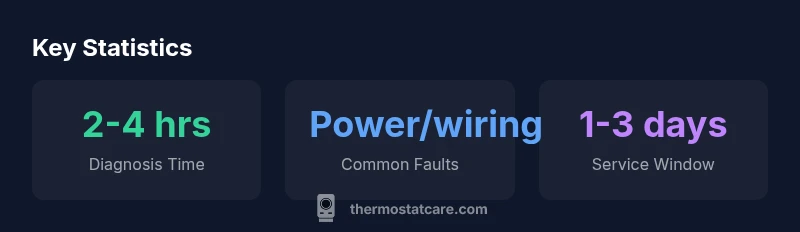
| Wiring issue at thermostat | Licensed electrician | 2-4 hours |
| Control board fault in HVAC | HVAC technician | 4-6 hours |
| Battery dead in non-smart thermostat | Homeowner (DIY) | 30-60 minutes |
Questions & Answers
Who should I call first if my thermostat won’t power up?
Start with a quick check of batteries (for non-smart models) and power supply. If the display remains blank or the system stays unresponsive, contact an HVAC technician or licensed electrician to diagnose safely.
If your thermostat won’t power up, start with batteries and power checks. If it still won’t respond, call a licensed pro to diagnose safely.
Can I fix thermostat problems myself?
DIY is reasonable for simple tasks like battery replacement or a basic reset. For wiring, sensor faults, or integration with HVAC, it’s safer to hire a professional.
DIY is fine for simple fixes like batteries, but avoid wiring or sensor work unless you’re trained.
Do electricians handle thermostat wiring?
Yes. Electricians are often needed for wiring issues or power-supply faults that affect the thermostat, especially if the problem involves circuit work or control wiring.
Yes, electricians often handle thermostat wiring when electrical issues are involved.
What affects whether a thermostat is repairable under warranty?
Warranty coverage varies by policy. Some cover defects in the thermostat itself, while installation or misuse can void coverage. Always review the terms and ask about coverage before work.
Warranty depends on the policy; read terms and ask before work.
Is a smart thermostat repair different from a traditional one?
Smart thermostats involve software, app connectivity, and firmware issues. Repairs may require updates, re-pairing with devices, or cloud service support, often by a technician or contractor with savvy in smart devices.
Smart thermostats add software issues; call a pro for firmware or integration problems.
“Getting the right technician on the job speeds repairs and protects your comfort system. Understanding whether it’s a thermostat issue or an HVAC fault helps you choose the correct service.”
What to Remember
- Call a pro for wiring or control-board issues.
- Try battery replacement or reset for simple fixes.
- Document symptoms before you call.
- Check warranty coverage and service plans.
- Schedule regular maintenance to prevent future issues.